Showing posts with label Tom Prime. Show all posts

Wednesday, February 15, 2023

Spotlight series #82 : Tom Prime

The eighty-second in my monthly "spotlight" series, each featuring a different poet with a short statement and a new poem or two, is now online, featuring Canadian poet Tom Prime.

The first eleven in the series were attached to the Drunken Boat blog, and the series has so far featured poets including Seattle, Washington poet Sarah Mangold, Colborne, Ontario poet Gil McElroy, Vancouver poet Renée Sarojini Saklikar, Ottawa poet Jason Christie, Montreal poet and performer Kaie Kellough, Ottawa poet Amanda Earl, American poet Elizabeth Robinson, American poet Jennifer Kronovet, Ottawa poet Michael Dennis, Vancouver poet Sonnet L’Abbé, Montreal writer Sarah Burgoyne, Fredericton poet Joe Blades, American poet Genève Chao, Northampton MA poet Brittany Billmeyer-Finn, Oji-Cree, Two-Spirit/Indigiqueer from Peguis First Nation (Treaty 1 territory) poet, critic and editor Joshua Whitehead, American expat/Barcelona poet, editor and publisher Edward Smallfield, Kentucky poet Amelia Martens, Ottawa poet Pearl Pirie, Burlington, Ontario poet Sacha Archer, Washington DC poet Buck Downs, Toronto poet Shannon Bramer, Vancouver poet and editor Shazia Hafiz Ramji, Vancouver poet Geoffrey Nilson, Oakland, California poets and editors Rusty Morrison and Jamie Townsend, Ottawa poet and editor Manahil Bandukwala, Toronto poet and editor Dani Spinosa, Kingston writer and editor Trish Salah, Calgary poet, editor and publisher Kyle Flemmer, Vancouver poet Adrienne Gruber, California poet and editor Susanne Dyckman, Brooklyn poet-filmmaker Stephanie Gray, Vernon, BC poet Kerry Gilbert, South Carolina poet and translator Lindsay Turner, Vancouver poet and editor Adèle Barclay, Thorold, Ontario poet Franco Cortese, Ottawa poet Conyer Clayton, Lawrence, Kansas poet Megan Kaminski, Ottawa poet and fiction writer Frances Boyle, Ithica, NY poet, editor and publisher Marty Cain, New York City poet Amanda Deutch, Iranian-born and Toronto-based writer/translator Khashayar Mohammadi, Mendocino County writer, librarian, and a visual artist Melissa Eleftherion, Ottawa poet and editor Sarah MacDonell, Montreal poet Simina Banu, Canadian-born UK-based artist, writer, and practice-led researcher J. R. Carpenter, Toronto poet MLA Chernoff, Boise, Idaho poet and critic Martin Corless-Smith, Canadian poet and fiction writer Erin Emily Ann Vance, Toronto poet, editor and publisher Kate Siklosi, Fredericton poet Matthew Gwathmey, Canadian poet Peter Jaeger, Birmingham, Alabama poet and editor Alina Stefanescu, Waterloo, Ontario poet Chris Banks, Chicago poet and editor Carrie Olivia Adams, Vancouver poet and editor Danielle Lafrance, Toronto-based poet and literary critic Dale Martin Smith, American poet, scholar and book-maker Genevieve Kaplan, Toronto-based poet, editor and critic ryan fitzpatrick, American poet and editor Carleen Tibbetts, British Columbia poet nathan dueck, Tiohtiá:ke-based sick slick, poet/critic em/ilie kneifel, writer, translator and lecturer Mark Tardi, New Mexico poet Kōan Anne Brink, Winnipeg poet, editor and critic Melanie Dennis Unrau, Vancouver poet, editor and critic Stephen Collis, poet and social justice coach Aja Couchois Duncan, Colorado poet Sara Renee Marshall, Toronto writer Bahar Orang, Ottawa writer Matthew Firth, Victoria poet Saba Pakdel, Winnipeg poet Julian Day, Ottawa poet, writer and performer nina jane drystek, Comox BC poet Jamie Sharpe, Canadian visual artist and poet Laura Kerr, Quebec City-area poet and translator Simon Brown, Ottawa poet Jennifer Baker, Rwandese Canadian Brooklyn-based writer Victoria Mbabazi, Nova Scotia-based poet and facilitator Nanci Lee and Irish-American poet Nathanael O'Reilly.
 
The whole series can be found online here.
Monday, January 17, 2022

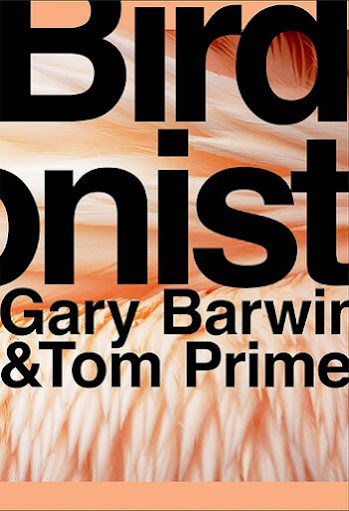
Gary Barwin and Tom Prime, Bird Arsonist


Dibble Wing

parentheses mountains

the debt horizon brailles
crow. I am here        to shoot
the bruise-shaped

smoke

The second full-length collaboration by Hamilton writer Gary Barwin and London, Ontario poet Tom Prime, following their collaborative full-length debut, A CEMETERY FOR HOLES, poems by Tom Prime and Gary Barwin (Guelph ON: Gordon Hill Press, 2019) [see my review of such here], is Bird Arsonist (Vancouver BC: New Star Books, 2022). This is, in fact, a third full-length collection for Prime, as his solo debut appeared last year, his Mouthfuls of Space (Vancouver BC: A Feed Dog Book/Anvil Books, 2021) [see my review of such here]. Noted in the press release as a collection “[w]ritten with four hands,” Bird Arsonist is composed via short bursts of language across a dense and surreal landscape of collaged and distorted words, sound shapes and images. Twin-penned, one might say, and composed through the one mind between them, Bird Arsonist displays a language of sound poetry shaped to the page, writing poems that play with the distortions of meaning, image and sound. There is such a delight displayed through these bursts of speech, as the second half of the sixth and final poem in the sequence “Fair Semiramis” reads: “Alphagetti skinhole / still-housed a mega-church / crusty Hubble / the dictionary purrs / beards [.]”

It might seem that Barwin’s collaborative game came out of nowhere only recently, but he’s been engaged with a variety of collaborative works for years (although he has stepped up his game). Some of his collaborative works over the years include the full-length collections Frogments from the Frag Pool (with derek beaulieu; Toronto ON: The Mercury Press, 2005), The Obvious Flap (with Gregory Betts; Toronto ON: Book*hug, 2011), Franzlations: the Imaginary Kafka Parables (with Craig Conley and Hugh Thomas; New Star Books, 2011) [see my review of such here] and the collaborative novel The Mud Game (with Stuart Ross; The Mercury Press, 1995), as well as chapbook-length collaborations with Alice Burdick, Amanda Earl, Tom Prime and even myself.

There is something of Vancouver writer George Bowering’s “baffle,” a name he used to describe an external structure utilized for the sake of composition, but for the combined entity of Barwin and Prime, the structure here is one that plays around the meaning that words can’t help but retain, set against each other in unexpected and unusual ways, and how words, narrative and sound interact to form the shape of meaning. In certain ways, these poems lean less into the layers of comparatively-pure surrealism of A CEMETERY FOR HOLES, moving instead into a series of gestures of guttural speech, pushing a surrealism wrapped around a playful, joyful sequence of contortions, cross-outs, interruptions and explosions. “ate their hot facepalm / the hot-wired egg therein // I ruddied / bandaged,” they write, to open to the poem “Prior Tongues,” “the midnight feed-hole / compression bed / furtive, boiled as glands [.]”

Tuesday, November 23, 2021

Tom Prime, Mouthfuls of Space


I Held Your Hand

walked a fog over the German Club’s
half-melted January waterfront

petrified by the raw-bone cheeks of god, two
police cars idled languid as alligators

under a crippled Moses-tree. we
walked for hours past ice-mud rivers. hot

sun. apple trees exist in purgatory
halcyon chickadees chirped bright

blossoming bloodroot

After a variety of solo and collaborative chapbooks, including his full-length collaborative volume with Gary Barwin, A CEMETERY FOR HOLES, poems by Tom Prime and Gary Barwin (Gordon Hill Press, 2019) [see my review of such here] (with a second volume forthcoming, it would appear), London, Ontario poet, performer and musician Tom Prime’s full-length solo poetry debut is Mouthfuls of Space (Vancouver BC: A Feed Dog Book/Anvil Books, 2021). Mouthfuls of Space is a collection of narrative lyrics that bleed into surrealism, writing of existing on the very edge, from which, had he fallen over completely, there would be no return. As a kind of recovery journal through the lyric, Prime writes through childhood abuse, poverty and trauma. “I am awarded the chance to die / smiling,” he writes, to close the short poem, “Capitalist Mysticism,” “clapping my hands [.]” Prime writes a fog of perception, of homelessness and eventual factory work, and an ongoing process of working through trauma as a way to return to feeling fully human. “I died a few years ago / since then,” he writes, to begin the opening poem, “Working Class,” “I’ve been / smoking cheaper cigarettes // I like to imagine I’m still alive / I can smoke, get drunk / do things living people do // the other ghosts think I’m strange / they busy themselves bothering people [.]” Or, as the last stanza of the poem “Golden Apples,” that reads: “if I loved you, it was / then, your pea-green coat and / fucked-up hair—staring out of nowhere / your cold October hands [.]”

Through the worst of what he describes, there remains an ongoing acknowledgment of beauty, however hallucinatory or surreal, and one that eventually becomes a tether, allowing him the wherewithal to eventually lift above and beyond the worst of these experiences. “we trudge across fields of hornet tails,” he writes, as part of the sequence “Glass Angels,” “planted by hyper-intelligent computer processors— / the moon, a Las Vegas in the sky // glow-worm light synthesized with the reflective / sub-surface of cats’ eyes [.]” Despite the layers and levels of trauma, there is a fearlessness to these poems, and some stunning lines and images, writing his way back into being. “life is a ship that fell / off the earth and now // floats silently in space,” he writes, to close the poem “Addictionary.” Or, towards the end, the poem “Immurement,” that begins: “I’m a large Tupperware container filled with bones [.]” The narrator of these poems has been through hell, but he does not describe hell; one could almost see these poems as a sequence of movements, one foot perpetually placed ahead of another. These are poems that manage that most difficult of possibilities: the ability to continue forward.

Thursday, December 12, 2019

Meet the Presses’ Indie Market (part five,


[Stuart Ross at his two-cornered Proper Tales Press + Anvil Press tables, being both "ace" and "trendy"]


Hamilton/London ON: It would seem that, furthering the work they accomplished in their recently-published collaborative trade poetry collection, A CEMETERY FOR HOLES, poems by Tom Prime and Gary Barwin (Gordon Hill Press, 2019) [see my review of such here], Gary Barwin and Tom Prime are still pushing ahead with their collaborative efforts, with the chapbooks Throat Fixtures {an Almanack of Dazzle} (2019) and Birds are the birthmarks of flight: A Manifesto. (2019), both appearing from Barwin’s serif of nottingham. These two chapbooks, each constructed as a single poem-sequence, both read as very different in tone and flavour from Barwin and Prime’s collaborative full-length work, and I’d be curious to hear how their process of writing collaboratively may have evolved since those first few poems, and even up to and beyond that first, full-length collection. What is curious, as well, each poem/chapbook suggest the possibility of the opening sections of much larger, longer manuscripts, although they could both, just as easily, be part of an eventual single collection. The first chapbook, Throat Fixtures {an Almanack of Dazzle}, is composed as a prose-quartet of short pieces, each of which opens with an image (assembled, in part, via collage), and seems to pilfer an antiquated language, allowing it a certain kind of tone, a certain kind of lyrical heft. As the second section, “{Sec2ndo},” opens:

I DO NOT DISDAIN but I dowel. A word fitly spoken is like apples of gold in a setting of silver. Certes, most Reapers receive so much plimsoll tiptapping on the mortal floor as may make worthy the gaseous (0.934%—9340 ppmv) tincture of their perusal, if not too greatcoat or too busy mandraking their small lease. The confrontation concerning the imbroglio of what is here offered to their burdened lexical centipedes; and if the last prove too severe, as I have often been torrid with lichens of a wavelength from 10 nm to 400 nm, a neophyte serving all centipedes equally and on murders of cloud. The Reaper will append the simplest conversation in line as the greengrocer’s to one both laminate and profound.

While the first chapbook has a weight to it, the second, Birds are the birthmarks of flight: A Manifesto., feels lighter in tone; but still holds the attention as both a real and faux-manifesto, as the writing both illuminates and obscures the writing even as it floats through and across a delightful surrealism. As the first section reads:

All birds must wear smoke and be bleak after no more than 12 cloud deadlines. This reinforces their humor and gives them comedy wings in a soft land where the impression of flight is diminished. Younger woodlands need to use 10 birds to process the childminding of eggs wrapped in balaclavas of shadow. This reminds us of the ongoing process where the sky is a cleft oyster, the moon a fluke pearl, and which focuses on the cleaving palate of the watershed and blotch from blotch, blotch from blotch, blotch from blotch. Since the 1970s the feathered truth of a billion birds has disappeared. This is also a start.

London ON: London, Ontario poet Emily Lu’s chapbook debut is Night Leaves Nothing New (Baseline Press, 2019), a collection of eleven poems that appear, on first glance, to be relatively straightforward lyric poems, but are anything but. I am finding myself very taken with Lu’s line breaks, the bends in her narrative through-lines and thought, and her attention to small details. These poems really are delightful, and I am happily startled by them. What else can I tell you?

EARLY SEASON

This ending between your arms & drowning.
Its shape & contour seeping through the train
platform. Don’t worry, I was dreaming
into public. The dream expanding empty
city corridors. Passenger-side, I encountered
ten thousand refracting fish & their march through
stale houses. I was Typhlosion running

naked through an early season. Peach petals
in your hair last February while we skated
on domed lake-ice trembling
for fear of overstep & no bystanders
& dying. Don’t worry. A thorough kiss
still contains loneliness. A love
creasing, another mountainline.