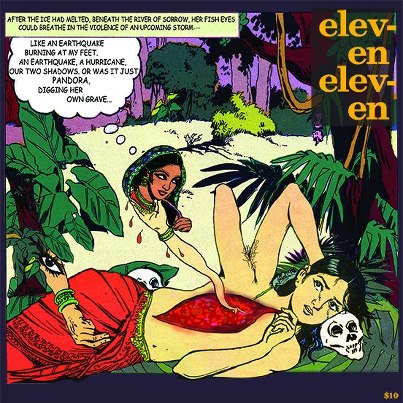
Rebecca Loudon lives and writes on Camano Island in
Washington. She is the author of three collections of poetry Tarantella and Radish King from Ravenna Press and Cadaver Dogs from No Tell Books and two chapbooks Navigate, Amelia Earhart's Letters Home
from No Tell Books and TRISM from
Horse Less Press. Rebecca teaches violin lessons to children and tends three
cats and a huge unruly garden.
1 - How did your first book or chapbook
change your life? How does your most recent work compare to your previous? How
does it feel different?
My first book changed my life in a small but powerful way
financially as my editor at Ravenna Press let me pre-sell the books and keep
the profit. I had just lost my job at Microsoft and was a single mother in a
tight squeeze. It was also a lesson on how to choose my poems carefully for
publication. I pretty much just stuck everything in Tarantella and let it fly. My most recent work is not that
different than my previous. I just work more carefully and slower. I have
discovered that prolificacy is not and should not be a goal for me. I still
feel driven and always have.
2 - How
did you come to poetry first, as opposed to, say, fiction or non-fiction?
My grandfather was born on Robert Burns’ birthday so I was exposed to poetry starting from the time I could walk. My grandfather had a great Scottish brogue and a deep booming voice and he read not only Burns but Don Marquis Don Blanding anything he had in his house truly. I was entranced by the music and rhythm of these poems and I was the only grandchild allowed in his study because I listened. I started writing poetry at five the same time I began violin lessons. This was such luck because I have never differentiated poetry from music.
My grandfather was born on Robert Burns’ birthday so I was exposed to poetry starting from the time I could walk. My grandfather had a great Scottish brogue and a deep booming voice and he read not only Burns but Don Marquis Don Blanding anything he had in his house truly. I was entranced by the music and rhythm of these poems and I was the only grandchild allowed in his study because I listened. I started writing poetry at five the same time I began violin lessons. This was such luck because I have never differentiated poetry from music.
3 - How
long does it take to start any particular writing project? Does your writing
initially come quickly, or is it a slow process? Do first drafts appear looking
close to their final shape, or does your work come out of copious notes?
I wrote my third book on the heels of my second book. My writing
came fast and hot. My first drafts then looked nothing like the finished poems.
I am a furious reviser. The poems in Queer Wing-ed are different. They were
born fully formed like ugly babies but they took forever for me to research and
to write and it took me a year to distance myself from the project before I
could write again or put the manuscript together. I have a ton of copious notes
for my current project. Way too many notes.
4 - Where
does a poem usually begin for you? Are you an author of short pieces that end
up combining into a larger project, or are you working on a "book"
from the very beginning?
After my first collection which was piecemeal and disconnected I began
to write as part of a continuum with a whole manuscript in mind. Radish King was written as a love
letter. Even the shape of the book resembles a post card. I knew exactly where
I wanted it to go. I wrote Navigate
in my car every day on my way to work in the morning in a fever dream ill with
pneumonia scribbling in a large notebook as I drove. Dangerous. I wrote the
poems for Cadaver Dogs my fourth book
one after the other in the exact order in which they appear in the book. The
manuscript I’m finishing up now Queer
Wing-ed has taken me almost ten years to write. To be more direct poems
begin with an idea floating through my brain. If I don’t jot it down somewhere
it will disappear. I used to carry a notebook with me all the time. Now I email
ideas to myself with my phone.
5 - Are public readings part of or counter
to your creative process? Are you the sort of writer who enjoys doing readings?
Oh I absolutely love to perform my work. Before my first public reading I had my son videotape me (raise your hands if you remember videotape) practicing and I was horrified by the results it was like watching a video of myself eating. No one ever needs to see that. I had been told to make eye contact with my audience to capture the attention of every person in the room not to move or act out the words etc. This just didn’t work for me. I found that the best way for me to present my poetry was to connect with the poems themselves to be wildly in love with them to let the poems do the work to speak from the dark places from which much of my work springs. I am in One True Love with my new poems and when I read them I sing I bark I sway I move my arms around and I never make direct contact with my audience instead I pull the audience in. All my years as a professional musician all my years on stage help a great deal. I have absolutely no stage fright.
Oh I absolutely love to perform my work. Before my first public reading I had my son videotape me (raise your hands if you remember videotape) practicing and I was horrified by the results it was like watching a video of myself eating. No one ever needs to see that. I had been told to make eye contact with my audience to capture the attention of every person in the room not to move or act out the words etc. This just didn’t work for me. I found that the best way for me to present my poetry was to connect with the poems themselves to be wildly in love with them to let the poems do the work to speak from the dark places from which much of my work springs. I am in One True Love with my new poems and when I read them I sing I bark I sway I move my arms around and I never make direct contact with my audience instead I pull the audience in. All my years as a professional musician all my years on stage help a great deal. I have absolutely no stage fright.
6 - Do
you have any theoretical concerns behind your writing? What kinds of questions
are you trying to answer with your work? What do you even think the current
questions are?
In my work right now in my current book I attempted to solve a murder and to explore the inner life of the “outsider” artist and writer Henry Darger. I succeeded beyond my wildest dreams though I have yet to send the finished manuscript to a publisher. I am spending time with it. I am dancing with it. I have no formal education and barely a high school education and so have escaped theoretical concerns in my work. I tend to read voraciously and I write from the gut. I try to be fearless and engage in deep play at the same time a delicate balance.
In my work right now in my current book I attempted to solve a murder and to explore the inner life of the “outsider” artist and writer Henry Darger. I succeeded beyond my wildest dreams though I have yet to send the finished manuscript to a publisher. I am spending time with it. I am dancing with it. I have no formal education and barely a high school education and so have escaped theoretical concerns in my work. I tend to read voraciously and I write from the gut. I try to be fearless and engage in deep play at the same time a delicate balance.
7 – What
do you see the current role of the writer being in larger culture? Does s/he
even have one? What do you think the role of the writer should be?
My role as a writer is to write the truth as I see it and to support other poets other presses young poets beginning writers. I taught a poetry workshop in my house for over eleven years. We met once a week. Eventually the workshop grew up and the poets either kept on writing or gave up. It was a huge learning experience for me.
My role as a writer is to write the truth as I see it and to support other poets other presses young poets beginning writers. I taught a poetry workshop in my house for over eleven years. We met once a week. Eventually the workshop grew up and the poets either kept on writing or gave up. It was a huge learning experience for me.
8 - Do
you find the process of working with an outside editor difficult or essential
(or both)?
Oh I find that process absolutely essential. I have had such joyful good fortune to work with my three editors Kathryn Rantala Reb Livingston and Jen Tynes. All three editors worked openly and lovingly with me. Lucky indeed.
Oh I find that process absolutely essential. I have had such joyful good fortune to work with my three editors Kathryn Rantala Reb Livingston and Jen Tynes. All three editors worked openly and lovingly with me. Lucky indeed.
9 - What
is the best piece of advice you've heard (not necessarily given to you
directly)?
Ignore advice.
Ignore advice.
10
- What kind of writing routine do you tend to keep, or do you even have
one? How does a typical day (for you) begin?
I want to be the person who writes every morning but this is hard to navigate for me. This has changed for me since I retired from my 40 years of factory work. I used to write at work and during rehearsals for the orchestra of which I was a member for 20 years. Now I am infatuated with living on an island in a forest. Now my forest and my beach dictate when I write. I’d still like to be the person who writes every morning. I think it’s possible since I practice my violin at a set time every single day.
I want to be the person who writes every morning but this is hard to navigate for me. This has changed for me since I retired from my 40 years of factory work. I used to write at work and during rehearsals for the orchestra of which I was a member for 20 years. Now I am infatuated with living on an island in a forest. Now my forest and my beach dictate when I write. I’d still like to be the person who writes every morning. I think it’s possible since I practice my violin at a set time every single day.
11 - When
your writing gets stalled, where do you turn or return for (for lack of a
better word) inspiration?
I return to beloved fiction. When my writing gets stalled I try
not to read poetry because I don’t want the influence of outside poets and
writers to influence my work. I am a fierce re-reader. I read books I adore and
wallow around inside them until I feel a spark.
12 - What
fragrance reminds you of home?
Lilacs.
Lilacs.
13 -
David W. McFadden once said that books come from books, but are there any other
forms that influence your work, whether nature, music, science or visual art?
I am a professional musician and music inspires me first and
foremost always and forever. Visual art has heavily influenced my work
especially the poems in Queer Wing-ed
which are poems about an artist. In researching this book I traveled to Chicago
to Vermont to New Hampshire and to New York and saw and devoured the most
amazing art in these places. Nature inspires me every day but I rarely write
nature poems.
14 - What
other writers or writings are important for your work, or simply your life
outside of your work?
I recently met the poet Elisabeth Workman during April when we were both participating in National Poetry Month writing a poem a day. I had not read her work before and it completely amazes me. Don Mee Choi is an incredible writer who is also doing brilliant translation work. I read every thing I can by Aase Berg. Her poetry is incredible and honest and translucent. There are too many writers to name here but those three are my right now inspirations.
I recently met the poet Elisabeth Workman during April when we were both participating in National Poetry Month writing a poem a day. I had not read her work before and it completely amazes me. Don Mee Choi is an incredible writer who is also doing brilliant translation work. I read every thing I can by Aase Berg. Her poetry is incredible and honest and translucent. There are too many writers to name here but those three are my right now inspirations.
15 - What
would you like to do that you haven't yet done?
Live on a boat.
Live on a boat.
16 - If
you could pick any other occupation to attempt, what would it be? Or,
alternately, what do you think you would have ended up doing had you not been a
writer?
I would love to be a painter. I used to be one but I finally realized I would never find excellence inside painting. If I did not have writing I suspect I would have died. Art truly does save lives.
I would love to be a painter. I used to be one but I finally realized I would never find excellence inside painting. If I did not have writing I suspect I would have died. Art truly does save lives.
17 - What
made you write, as opposed to doing something else?
Music noise escape a desire to map out my brain.
Music noise escape a desire to map out my brain.
18 - What was the last great book you
read? What was the last great film?
The last great book I read was American Gods by Neil Gaiman.
The last great book I read was American Gods by Neil Gaiman.
The last great film I saw was David Lynch’s Twin Peaks: The Return.
19 - What
are you currently working on?
I am putting the finishing touches on Queer Wing-ed just cosmetics now it’s near completion. I’m also working on a strange hybrid manuscript that chronicles the nine years I spent writing Queer Wing-ed. It is titled Strangle Town and it includes my Henry Darger research my travels during my research as well as what it was like to write the book while losing my job and living in poverty. I also have a manuscript on the back burner titled Spokane which consists of brutal poems about my childhood.
I am putting the finishing touches on Queer Wing-ed just cosmetics now it’s near completion. I’m also working on a strange hybrid manuscript that chronicles the nine years I spent writing Queer Wing-ed. It is titled Strangle Town and it includes my Henry Darger research my travels during my research as well as what it was like to write the book while losing my job and living in poverty. I also have a manuscript on the back burner titled Spokane which consists of brutal poems about my childhood.