Showing posts with label signature editions. Show all posts

Saturday, November 08, 2025

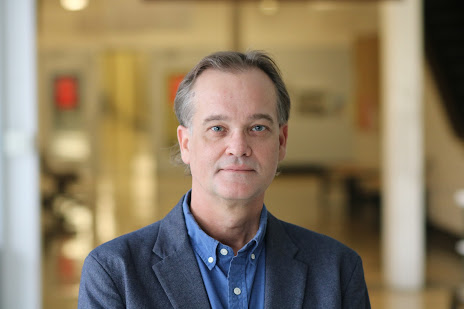
12 or 20 (second series) questions with Meg Todd

Meg Todd [photo credit: Anick Violette] grew up in the Alberta prairies. She is a two-time finalist for the CBC Short Story Prize, and her work has appeared in Ploughshares, Prairie Fire, PRISM international and elsewhere. Her debut short story collection, Exit Strategies, was a finalist for both the ReLit Award and the Danuta Gleed Literary Award. Her debut novel is Most Grievous Fault (Nightwood Editions, 2025). She holds an MFA in Creative Writing from the University of British Columbia and a BA in Religious Studies from the University of Calgary. She lives on Vancouver Island.

1 - How did your first book change your life? How does your most recent work compare to your previous? How does it feel different?

My first book, Exit Strategies, came out during COVID when everyone’s life was turned upside-down. I’m not sure what I expected to feel when the book was released, but the news that it would be published and the work leading up to that publication were thrilling and, in some ways, more significant than the actual publication. Once it was a physical book, it felt apart from me. A child that had grown up and had to find its own legs, its own place in the world.

            Exit Strategies is a collection of short stories, most of which had been published in literary journals before they ended up in the book. My new book, Most Grievous Fault, is a novel. No part of it was published before the book as a whole. It feels huge. A whole world that has been created and is now accessible for others to participate in. Again, I had the initial excitement when I heard that the book would be published, and again, I am now looking at something that stands on its own: it is no longer mine.

2 - How did you come to fiction first, as opposed to, say, poetry or non-fiction?

I don’t know that this was a choice. I have a vivid imagination, and perhaps that’s detrimental to the writing of non-fiction, in particular. My mind either wanders happily away from the truth, or my memory is just too poor to hold onto it. Not that imagination isn’t beneficial to the other two forms. I’m sure it is. But for me, imagination seems to take over. Also, I enjoy reading fiction, and just as I like to get lost in the reading of a story, so too do I like to get lost in the writing of one. However, it’s also the case that, after the exhilarating and sometimes frightening freedom that is the first draft, I have to lean into what I imagine are the artistic skills of a poet and the detail-exacting talents of a non-fiction writer.

3 - How long does it take to start any particular writing project? Does your writing initially come quickly, or is it a slow process? Do first drafts appear looking close to their final shape, or does your work come out of copious notes?

Most Grievous Fault is my first novel to be published, and writing it was a long process. The first draft was written quickly, without thought or plan. The ideas and images and characters were there, but there was no form, no proper structure, and it was the wrong protagonist, the wrong tense and perspective. Sorting through all of that took more than a year. After that initial restructuring, I turned to short fiction, looking at the novel occasionally, but mostly coming to terms with the fact that I was planning to abandon it. But my protagonist, Crystal, stayed with me, and at some point, I made a commitment to her and pushed through. The fact that she is unlikeable made the work difficult. I needed her to be sympathetic even though, really, she isn’t.

            I am not a note taker. I write and rewrite, starting over and then starting over again. I have many versions of Crystal’s story. Many versions, in fact, of all my stories. I write quickly, but I edit slowly.

4 - Where does a work of fiction usually begin for you? Are you an author of short pieces that end up combining into a larger project, or are you working on a "book" from the very beginning?

Ideas come from anywhere. Something I see or hear, a truck at the side of the road, someone’s gait, the tilt of a head, a conversation. A short story begins from there: not much more than nothing at all. Ideas for novels, however, seem to appear in my head like movies. They roll around for a long, long time before I sit down to pay attention to the script. I’m inclined to start a short story anywhere and at any point. For a novel, I need time and space. It’s a commitment. Long term.

5 - Are public readings part of or counter to your creative process? Are you the sort of writer who enjoys doing readings?

When I am working on something, I prefer not to share it for fear it will stifle, thwart, or disrupt my creativity. However, when I have a finished project, I’m happy to read. Writing is meant to be shared and the kind of sharing that readings present opens me to other ways of interpreting the work and other ways of understanding what I have written. I also really enjoy reading aloud in a general sense, whether it’s my work or the works of others.

6 - Do you have any theoretical concerns behind your writing? What kinds of questions are you trying to answer with your work? What do you even think the current questions are?

My writing, no matter which direction I think I’m headed in, veers towards the morally murky, the struggle of the human to be and do good, the challenges in determining right from wrong, the questions of faith in self, in others, in God, and the fallibility of the human body. I’m interested in what it means to be human, where and how we find meaning in life, and the difficulties in sustaining honest relationships. For me, these are questions that are universal and that stay with us, relevant whether the story is told through the perspective of believers or non-believers, thinkers or doers, whether it’s set in a pre-industrial period or in a time of the internet and AI.

7 – What do you see the current role of the writer being in the larger culture? Do they even have one? What do you think the role of the writer should be?

We all have stories, big stories and little stories and in-between stories. They are all relevant and interesting, always. It seems to me that the writer is attempting to find meaning in these stories and then to translate them into something that is accessible.

8 - Do you find the process of working with an outside editor difficult or essential (or both)?

Both. The fact that the story has become part of me, that I feel it internally and know every version of it on a visceral level, including what has been removed and what was never put in but is germane peripherally, can stand in the way of clarity for a reader. This is where the sharp eye of an editor is invaluable and essential. Knowing when and why outside opinion is necessary is the job of the writer. At a certain point, we can be too close to the story to see what’s happening and what’s missing.

9 - What is the best piece of advice you've heard (not necessarily given to you directly)?

My father used to say, “Doe gewoon.” I’m not sure if it was his or if it’s a typical Dutch saying, but it means “be natural,” “be yourself.” In other words, behave without artifice, without theatrics.

10 - What kind of writing routine do you tend to keep, or do you even have one? How does a typical day (for you) begin?

Although it depends on where I am in a piece, I don’t think I can say I really have a routine. Perhaps I even avoid rigidity in my writing practice. When things are going well, my project is open on the dining room table and I write in fits and starts throughout the day, using what I’m doing between bursts of writing to work things out in my mind. I am fully in it, dreaming it and living it. Public writing, writing in the car, in a park, at the side of the community pool, in a coffee shop—every place and everything gets channelled somehow into the piece. No gatekeepers until I sit down to edit, which is, in some ways, where the real writing work happens, and which can be either enjoyable or frustrating.

            I start my days early with coffee and my laptop. I like to see the sun rise.

11 - When your writing gets stalled, where do you turn or return for (for lack of a better word) inspiration?

I find it helpful to write with other people, which is something that’s not always possible. A long walk can also serve (sometimes) to generate ideas or to move things forward. I suppose it’s also true that when I’m not writing, I can’t imagine ever writing again, and when everything is going well, I can’t imagine a project ever stalling or my mind ever not being productive. Sometimes it’s difficult not to feel unsettled by a lack of inspiration, and even though I tell myself that it will pass, there is a part of me that is unsure. Sometimes it’s a big part; sometimes it’s smaller, quieter.

12 - What fragrance reminds you of home?

The smells of goat’s milk, Bantam chickens, Earl Grey tea, prairie grasses—these I associate with my childhood home. My late grandmother’s perfume, Arpège by Lanvin, reminds me of home in general, home as a place that is warmly familiar. The smell of teak, as well, because of her teak cupboard, which is now my teak cupboard.

13 - David W. McFadden once said that books come from books, but are there any other forms that influence your work, whether nature, music, science or visual art?

I think a lot about the process of painting when I write, this rendering of what one sees, either physically or mentally, into something that others see as well. Making something from nothing. And I listen to the radio, absorbing whatever comes my way, choosing nothing but the station itself. Talk, music, political discussion, opera, news—it all floats past me and I can only assume it influences me, even though often it’s hard to pinpoint exactly why and what will serve as a muse.

14 - What other writers or writings are important for your work, or simply your life outside of your work?

This changes for me. Currently, I am drawn to Deborah Levy, all her works really. I love the way she looks at things, her thoughtfulness and intelligence and the way she sees her work as part of the continuum that is the world of writing. I like how she struggles to understand what it is she does—her introspection. I also love Rachel Cusk’s writing.

15 - What would you like to do that you haven't yet done?

A very difficult question. I don’t have a bucket list and am inclined to be open to whatever comes my way, and, at the same time, I tend to be rather careful not to let too much come my way. In my mind, I’d like to be a spy—to observe without anyone knowing I’m there. I’d like to be invisible.

16 - If you could pick any other occupation to attempt, what would it be? Or, alternately, what do you think you would have ended up doing had you not been a writer?

I think I might have been a teacher, and I also think I could not have been a teacher. I love to observe and attempt to understand why a person is the way they are. In other words, I like to step into other people’s shoes. When I’m waiting for my car to be fixed, I am a mechanic; when I’m in the doctor’s office, I’m the one with the stethoscope. I’m a barista, a grocery clerk, a dental hygienist, a road worker, a horse trainer, a mountain climber. And I am none of those things. If I hadn’t started writing, I would be dreaming of writing.

17 - What made you write, as opposed to doing something else?

I still remember this intense excitement I felt in grade 1 when I opened my notebook to a blank page and had a pencil in my hand. I remember my first reader with its simple images and vivid colours. I remember learning the word “why”. To read a book was to be transported. To write a book? This was the pinnacle. Unreachable. I was and am in awe of writers.

18 - What was the last great book you read? What was the last great film?

While I can’t really say what the last great book I read was, some recent reads that impacted me and still linger include M.A.C. Farrant’s memoir My Turquoise Years and Jente Posthuma’s very poignant novel What I’d Rather Not Think About, as well as Arlene Heyman’s short fiction collection Scary Old Sex. These books are very different thematically and otherwise, but they all convey “story” beautifully. Also, Edward St Aubyn’s Patrick Melrose and John Fowles’s Daniel Martin. Recent films that have stayed with me include Maestro and Conclave, as well as the limited series, Adolescence and Secrets We Keep. Also, films by Andrea Arnold.

19 - What are you currently working on?

I am always writing short stories and at the moment these seem to be focussed on vulnerability, the fragility of our minds and bodies. I am also searching, mentally, for the characters who will together shape my next novel, which might be about sibling relations, or dying parents, or the interplay of helping and hindering, or the search for our place in life, or all of these.
12 or 20 (second series) questions;

Sunday, February 20, 2022

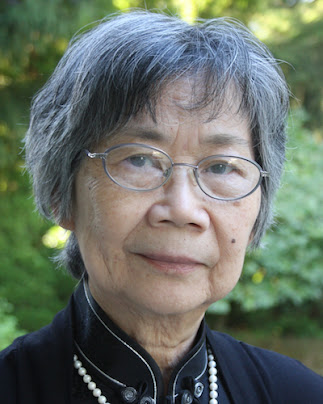
12 or 20 (second series) questions with Caroline Wong

Caroline Wong is from a blue-collar immigrant family. A graduate of Simon Fraser Universitys The Writers Studio, she writes fiction and poetry. Her work has appeared in a number of Canadian literary journals. Primal Sketches, her first book of poetry, was published (Signature Editions) in the spring of 2021. She lives in Burnaby, BC, with her family.

1 - How did your first book change your life? How does your most recent work compare to your previous? How does it feel different?

When I first started writing, sending my work out, I thought that having my first book published would mysteriously change my life in some way. It hasnt. After the initial surprise and great excitement, life is once again back to its old routines, allowing me to move on to new writing projects. I always enjoy writing, creating; the only difference is that with one book out there, I now throw myself at the task with more confidence and intention.

2 - How did you come to poetry first, as opposed to, say, fiction or non-fiction?

I grew up with little nursery songs and simple chants my mother and grandmother taught us when we were living in China, Later in school we recited poems by the Tang poets Li Po, Du Fu, Wang Wei and others. The magic and musicality of words stayed with me. When I started writing, it was poetry I leaned toward, for its power to encapsulate thoughts, feelings and emotions in a heightened language, with an economy of words I find harder to achieve in prose.

3 - How long does it take to start any particular writing project? Does your writing initially come quickly, or is it a slow process? Do first drafts appear looking close to their final shape, or does your work come out of copious notes?

Once I am inspired and have an idea for a poem, the initial draft is written fairly quickly as my mind goes into that special place of deep concentration. I do edit a bit as I write, but Id generally let it sit for a while before I go back to revise it. Usually the first drafts appear pretty close to the shapes they finally appear, but sometimes a poem can end up looking entirely different.

4 - Where does a poem or work of prose usually begin for you? Are you an author of short pieces that end up combining into a larger project, or are you working on a "book" from the very beginning?

For me, a poem always comes from the heart first. Words come to me when I fall into a certain mood. I gather them into lines, into short pieces. My first book is composed of poems I had written and put aside, and poems I had recently generated. Im now working on a new collection of poems with a book”in mind. So it’s more focused and integrated.

5 - Are public readings part of or counter to your creative process? Are you the sort of writer who enjoys doing readings?

I’m not a public person, but when I have the opportunity, I do read my work in public as a way to take my work out there. It helps to know that Im not writing in a vacuum.

6 - Do you have any theoretical concerns behind your writing? What kinds of questions are you trying to answer with your work? What do you even think the current questions are?

The concept of art for arts sake has always intrigued me. Do I strive to create a kind of pure poetry that solely conveys beauty and gives enjoyment? And if it has a social, humanistic, altruistic purpose, does it lower the poems poetic value? Mostly, I follow my own inclinations. If my writing can evoke in the reader the same strong emotions and feelings and passions I have for my subjects I would be more than satisfied.

7 What do you see the current role of the writer being in larger culture? Does s/he even have one? What do you think the role of the writer should be?

I think every person has a role in making the world a better place by speaking out against injustice, inequality, bigotry and violence. Through the pen, writers can speak so much more loudly, their messages more likely heard. By advocating tolerance, fairness, empathy and compassion, a writer can contribute toward making a better future for later generations.

8 - Do you find the process of working with an outside editor difficult or essential (or both)?

It was wonderful working with  my editor, Clarise Foster, on Primal Sketches and a great learning experience for me.

9 - What is the best piece of advice you've heard (not necessarily given to you directly)?

Never stop learning. The more we learn, the more we know our own ignorance. Each new wisdom gained humbles us a little more. Tolerance for and understanding of othersfaults and differences comes from knowing that no one is born perfect.

10 - How easy has it been for you to move between genres (poetry to short stories)? What do you see as the appeal?

What I write is mostly motivated by what I read, and other times, by my reflections on the various personal and outside events unfolding around me. Whether Im writing poetry, fiction, creative non-fiction, all three genres allow me to explore subjects that are important to me: family history, our cultural past, memories of my girlhood in China and in Vancouver’s Chinatown.

11 - What kind of writing routine do you tend to keep, or do you even have one? How does a typical day (for you) begin?

When Im working on a project, I tend to keep a fairly regular routine. Id write four to five hours in the morning each day. Then Id go out for a walk to clear my head. Often though I find the writing continues in my head: reviewing, editing, even when Im away from the my desk.

12 - When your writing gets stalled, where do you turn or return for (for lack of a better word) inspiration?

I usually re-read what I have written before I continue with more writing. I find this process opens up other possibilities, points to different approaches.

13 - What fragrance reminds you of home?

This may sound strange. The smell of moth balls takes me back to my grandfathers old desk at home, opening drawers, rummaging through bits of string, old bronze coins, rags, to find a yellowed, string-bound, picture book depicting gruesome tortures that the wicked suffer in Hell. It was the only book I ever came across in the house when I was a child.

14 - David W. McFadden once said that books come from books, but are there any other forms that influence your work, whether nature, music, science or visual art?

Because I spent my early years in a rural setting with open fields, orchards, hills, streams, themes of Nature, memory, journey occupy a large part of Primal Sketches.

15 - What other writers or writings are important for your work, or simply your life outside of your work?

Impossible to name the long list of great writers I admire over the years, but all great writings, whether in English or in Chinese, have a great influence on my work. When Im not writing, I read, hike, garden, lunch with old friends, travel (before Covid-19).

16 - What would you like to do that you haven't yet done?

Learn to speak Mandarin fluently so that when I travel in China, I would feel less out of place, more at home, if only to fool myself. I know one can never step into the same river twice.

17 - If you could pick any other occupation to attempt, what would it be? Or, alternately, what do you think you would have ended up doing had you not been a writer?

I was at one time working as a Medical Laboratory Technologist.  If I hadnt become a writer, I would probably have gone back to the lab. I liked the the investigating, testing and analyzing aspects of the work.

18 - What made you write, as opposed to doing something else?

Writing enables me to get my stories out and share them with others, as a way to have my voice heard, and also as a means to discover their underlying significance. What they mean to me. Why I feel they are important to me.

19 - What was the last great book you read? What was the last great film?

The Men Who Killed Me. Reading the womens stories shocked me out of my complacency and narrowness. The world is not getting better and better as Id thought. Human nature never changes. For the voiceless and defenseless, their stories become a means for them to speak out against violence and abuse, to have their voices heard.

Gravity. Although it takes place 600 kilometers high above Earth, the storys central theme is very much grounded: a young mothers journey from grieving for the loss of her daughter to final acceptance.

20 - What are you currently working on?

A collections of elegiac poems on Vancouvers Chinatown: its scandalous beginning, its heartbreaking decline, personal family history, stories of the girls and women whose lives and mine had briefly commingled in Chinatown.

12 or 20 (second series) questions;

Monday, February 14, 2022

12 or 20 (second series) questions with James Scoles

James Scoles is the author of The Trailer. He holds degrees from Arizona State, North Dakota & Southern Illinois Universities & he has lived, traveled & worked in over 90 countries. His poem “The Trailer” won the 2013 CBC PoetryPrize & his short stories are featured in Coming Attractions 13 (Oberon Press) & his writing has been nominated for The Journey Prize, the Pushcart Prize & both the Western & National Magazine Awards. He lives in Winnipeg, where he teaches creative writing and literature at the University of Winnipeg & also helps run a small, 120-year-old family farm.

1 - How did your first book change your life? How does your most recent work compare to your previous? How does it feel different?

If you write, any publication changes your life a little bit & my first book was a beautiful little chapbook (Coming Attractions 13, Oberon Press) featuring my short stories & it was exhilarating & unbelievably satisfying. Several publishers were interested in my story manuscripts but Coming Attractions series (and Fiddlehead) editor Mark Anthony Jarman had rejected enough of my work over the years to have confidence in me, strangely enough. Publishers were also interested in rejecting my poetry over the years, but my first full-length poetry collection—The Trailer—was submitted, accepted & published within a year & surprised the hell out of me. Immediately, it put me on a stage I’d only dreamed of being on. It was disheartening not to be able to launch in-person & tour The Trailer, but it still feels magical to see a dream come true.

2 - How did you come to poetry first, as opposed to, say, fiction or non-fiction?

I fell in love with language & poetry at an early age & have never lost that love. I was encouraged by my mother, who read to me from the womb onward. She read voraciously all her life & a huge variety of books. She bought me books that opened my mind to that creative world of words & imagination. I’ve always felt that poetry is the most efficient, intimate road between writer & reader, words & wonder, sound & the page.

3 - How long does it take to start any particular writing project? Does your writing initially come quickly, or is it a slow process? Do first drafts appear looking close to their final shape, or does your work come out of copious notes?

Not that I’m any good at it, but at this stage I can write at will, when I need to, under deadline, etc. & when it comes to poetry & fiction & memoir, each beautiful idea can fly or fester off the hop. I can sit down & start & finish a poem or story in a single sitting & I can also find myself ‘wallowing in complexity’ for a while, drafting, starting and stopping, seeking the right voice or tense. I have whole shelves full of chapters, drafts of novels in one tense, another with the tense & voice altered; poems on one page in free verse while on the opposing page I’m trying to force it into a sonnet, etc. Over the course of my life I have had many ‘inner-mad-scientists’ that love the craft & writing & playing with words so much that the end-product isn’t the aim—it’s about the journey, not arriving. That said, if you want to make a living or 'part of your living’ (as I like to think of things), you need to focus. Sue Goyette talks about being able to ‘start at the seventh draft’ & that’s what I try to aim for, even if some pieces are perfect first drafts on a bar napkin or take years to make their public appearances.

4 - Where does a poem or work of prose usually begin for you? Are you an author of short pieces that end up combining into a larger project, or are you working on a "book" from the very beginning?

My writing process varies between projects & because I tend to write for myself first & foremost, my projects have a personal connection & importance, so I take the work very seriously—like a job that needs to be done. With poems I’m seldom thinking ‘book’ as I write them, except a little more so now that I have a book out there.

5 - Are public readings part of or counter to your creative process? Are you the sort of writer who enjoys doing readings?

I tell my students & truly believe that reading poetry aloud changes the world. With that sort of pressure I love doing readings & wish there were more opportunities.

6 - Do you have any theoretical concerns behind your writing? What kinds of questions are you trying to answer with your work? What do you even think the current questions are?

When I write, I’m always just trying to write, to get it down, do the work & understand something about the world in me & around me or tell a story, express some emotion & try to not consider my creative work in a theoretical way.

7 – What do you see the current role of the writer being in larger culture? Does s/he even have one? What do you think the role of the writer should be?

The writer’s role is to explore the important questions in our world, those to do with our climate & environment, human rights & identity, race, family & relationships & we have a responsibility as communicators to consider those questions as we try to entertain, inform & persuade in our creative work. In this world where people can instantly ‘publish’ their words to a worldwide audience we must be held constantly accountable for the ideas we share.

8 - Do you find the process of working with an outside editor difficult or essential (or both)?

With the amount of rejection I’ve had, I could say my work with editors over the years has been absolutely disastrous. But I’ve been blessed to have had only wonderful experiences with the editors I’ve been given the opportunity to work with & I just had an incredible experience working with Clarise Foster (The Trailer would not be The Trailer without her).

9 - What is the best piece of advice you've heard (not necessarily given to you directly)?

I taught creative writing for a short time in a women’s prison in Arizona & the university was hosting Adrienne Rich for a reading & lecture & we invited her to come to the prison & she actually agreed to visit my class. As the two of us were walking through the yard, I decided to ask a master for advice. I told her that I had no problem writing lots every day, just a hard time revising my work & she grabbed my arm & pulled me in close & looked me in the eye & said: You have to revise. Revise. Revise. Revise. That’s where the art is in writing: revision.

10 - How easy has it been for you to move between genres (poetry to short stories)? What do you see as the appeal?

It’s easy for me to move between genres, especially when I change my special hats that I wear: my fiction-hat is an Irish flat cap & of course the poet-cap is a jaunty beat-up beret. Actually, I tend to focus on one genre in a writing session. It might be poetry in a morning session, then work on a short story or novel in the afternoon, or vice versa. I’ve always challenged myself to work on & explore different forms & genres (my non-fiction-cap is a crooked old Captain’s hat). The appeal is the range of speakers, voices, characters, narratives, soundscapes & settings (among so many more literary elements) you get to play with when you blend writing with feeling, imagination & action.

11 - What kind of writing routine do you tend to keep, or do you even have one? How does a typical day (for you) begin?

Early morning sessions work best for me, when the world is mostly asleep & there’s a deeper silence to the day. Cinnamon coffee & focus: pen on paper, even if it begins with a to-do list for the day (that always includes writing time). Then I dive into whatever project is on that list until I can at least partly check that off. That moment satisfies my deep desire to create & satisfies it early. To be able to keep listing & checking that ‘writing time’ off as much as possible throughout the mornings, days, weeks & months is the aim & I’ve worked hard to cultivate a worth ethic that I can adapt to different settings & times of day, depending upon the deadline or the project. Sometimes, if I’m miraculously-able to have a short nap, I can ‘trick’ myself into believing I’m into another ‘morning’ session & have a really good burst. The process can be fun, at times, but it’s 95% work the rest of the time for me. As one ‘successful’ writer told me once: Making a living as a writer isn’t all fields of daffodils & daisies & sunshine once you get there. Always lingering is that dark, spider-filled shit-house without any paper.

12 - When your writing gets stalled, where do you turn or return for (for lack of a better word) inspiration?

Outside of a good, long sit in a spider-filled shit-house, usually a long walk will snap me back. I also know I can always return to my teachers—the great writers on my bookshelves that I look up to & still learn from. I can take down a collection or novel or biography & open in up & read & get inspired & be reminded that everyone fights their fight. My mother also painted me some simple little sayings on boards that line my book shelves & desk & remind me to: Dare to dream! Keep Focused! Stay Strong! Never Give Up! & Believe!

13 - What fragrance reminds you of home?

Childhood home: Old Spice, Chanel No. 5 & fresh muffins, baby! Old family cottage: crackling fires, wet bathing suits, du Maurier cigarettes, Old Vienna beer, sawdust & the acrid smell of someone ‘getting a perm.'

14 - David W. McFadden once said that books come from books, but are there any other forms that influence your work, whether nature, music, science or visual art?

Music, for sure, especially whatever I’m listening to as I write—I’ll often loop a song or put a certain album on repeat. I sometimes have a sort of soundtrack playing in my head as I write; especially with fiction, for some reason. I’m also a huge fan of silence & nature & natural soundscapes—early mornings, my cabin on our old family farm, long walks under the elms & in the back alleys of Winnipeg.

15 - What other writers or writings are important for your work, or simply your life outside of your work?

I have a deep respect & admiration for a lot of Irish & Northern Irish writers & poets—from Patrick Kavanagh to Yeats, Heaney to Wilde, Joyce to Behan, Longley to Muldoon & poet-fighters like Bobby Sands. People who have persevered, writers that made me want to write in the first place, who lived ‘full’ lives, stood up for what they believed in & never stopped dancing with their dreams.

16 - What would you like to do that you haven't yet done?

In no special order: travel two continents I haven’t been to (Antarctica & South America), publish a travel memoir, short story collection & novel (then repeat); become the eleventh poet in space; find lots more dimes.

17 - If you could pick any other occupation to attempt, what would it be? Or, alternately, what do you think you would have ended up doing had you not been a writer?

As a writer, I love teaching writing & literature, but having worked at various occupations & attempted (not-so-admirably) others, it’s a clear toss-up between five: carpenter, cosmonaut, dime-finder, professional golf caddy & dentist. I love working with wood & the idea of letting ten poets forge a path into space before me (plus cosmonauts are allowed to drink en route); dimes find me, I don’t even have to look; caddies have far less pressure, carry the weed & have full access to the world of leprechauns & I’d only do dental work on myself & leprechauns.

18 - What made you write, as opposed to doing something else?

Those same former teachers, bosses, bullies, lovers, leprechauns & the like all made me write, for various reasons. It started with poetry & a journal that became a daily habit of not only having a conversation with myself, but with creativity itself. Getting out the ‘complaints’ & ‘passions’ & deep emotions, or exploring a surface-level issue or relationship is part of wanting to write. Playing with form & structure. Understanding that a story wants & needs to be told, whether it be in my journal or a poem. Reading definitely made me write, as well as the idea of storytelling, getting a reaction or especially a laugh was something I really enjoyed—the opportunities to do that on the page seemed open & endless to me & I went to work writing in every genre I could (poetry, short stories, novels, screenplays & travel writing), regardless of the outcome.

19 - What was the last great book you read? What was the last great film?

Burning in this Midnight Dream, by Louise Halfe. Her history & journey—the stories & trauma of her experiences in & out of residential school—is real & raw & inspiring & we can all learn so much from her. I’m teaching her collection in a course & want my students to deeply consider how history & language shape us.

20 - What are you currently working on?

A trilogy of Irish novels based on my Irish family history & a card game (Spit in the Ocean) set in 1840s Ireland, a travel poetry collection (The Stone Roses of Sarajevo), a collection of short stories (The Electricity of Crime) & a travel memoir (Around the World in 800 Days).

12 or 20 (second series) questions;

Wednesday, August 04, 2021

Lori Cayer, Searching for Signal


step crisply out with your message
sideways eyes
                       
say you’re likely

pissing blood again
despite that defiled organ

                                   
        carried
                       
away like

                                   
        an air balloon

(likely)
(again)
I think in muted tones

                                   
    of bending
                       
clenching

gleaning for a meal
                                   
what was shed here

Winnipeg poet Lori Cayer’s fifth full-length poetry collection, after Stealing Mercury (The Muses’ Company, 20040, Attenuations of Force (Frontenac House, 2010), Dopamine Blunder (Tightrope Books, 2016) and Mrs Romanov (The Porcupine’s quill, 2017) is the book-length poem Searching for Signal (Winnipeg MB: Signature Editions, 2021). Composed as a long poem that reveals itself through a sequence of accumulative, self-contained lyric fragments, there are some curious structural echoes in Searching for Signal with some of those first Winnipeg poetry titles I discovered throughout the 1990s and into the early 2000s: titles by Rob Budde, Dennis Cooley [see my review of his latest three here], Sarah Gordon, Kristen Wittman and Todd Bruce (all produced, interestingly enough, through Turnstone Press; and it is hard to specifically know if this type of writing is something Turnstone has evolved away from, or is simply not utilized in the same way, but for poets such as Cooley). The echoes are those of pacing, rhythm and structure, leaning into what Saskatchewan poet Andrew Suknaski self-described as his “loping, coyote lines,” allowing the breath and the break on the page to articulate cadence.

this is the bent
branch indicating our direction
                       
        abandoned winter

                                                           
    nest
brought to your sudden bedside

                       
                                so
we might replace

                       
        your presence
                       
        on the trail


Cayer’s Searching for Signal is composed as an elegy for her father, writing sketches on and around him, as well as the implications of their settler-space. She writes of and for a father, through his old age and across his long life, writing against his drifts and into a kind of clarity. As each page begins a particular thought, memory or sketch, there is an echo here, also, of Georges Perec’s classic I Remember, something George Bowering picked up on as well, through his memoir The Moustache: Memories of Greg Curnoe (Toronto ON: Coach House Press, 1993). Cayer writes to remember her father before memory is all she is left with. Addressing reminiscences and some difficult paths, she writes the loveliest of lyric threads, from his failing health and the inevitabilities to come. Cayer writes her father through a sequence of short lyric bursts that don’t connect in any particular narrative order, but offer short scenes, ideas and memories, collaging together into a portrait not only of him, but of their relationship. “I am replacing you / in my own words,” she writes, mid-way through the collection, “the feeling is / gravel / shredding dermis / no bike / my list of topics incomplete [.]” This is a striking collection, one propelled by a strong sense of lyric and rhythm, and the possibility of a story that unfolds as memory does, in short bursts and out of sequence. There is much here to admire. And then, of course, the final page, that reads:

the sky

            should have

                                    but didn’t

fall in after you