
Showing posts with label New Directions. Show all posts
Showing posts with label New Directions. Show all posts
Sunday, January 18, 2026
reading in the margins : Susan Howe and Stephen Collis
Saturday, October 04, 2025
Susan Howe, Penitential Cries
To Whom It May Concern, It’s time for an update. Insertion of needle into vein for collection of blood sample deeper than ruins are
I’ve been lucky I say to the indifferent universe
“There is a great river this side of Stygia”
Geriatric tachycardia murmurs pounding or fluttering even chaotic; an echocardiogram can only tell so far
7:15 am. It’s hard to make out the numbers on my watch because it’s an ordinary Timex with a small face under glass and a narrow leather strap made to fit around a widow pariah’s thin arm while the Connecticut River flows to a cosmic unknown place where the “elderly” get lost. “The River of Rivers in Connecticut,” Wallace Steven’s great poem, is a poem of resignation. “The river is fateful, // Like the last one. But there is no ferryman, // He could not bend against its propelling force.”

Morning. Early light where have they lain him? Mary come running the door is open the Lord is gone. We don’t want to say goodbye even if we have to leave the “present” present with other groups of retirees, pariahs, and ancestral stutterers. It is up to us even if we are dead even if there is nothing in the tomb. I know this, but someone is waiting at the top of the steep hill covered in sand we must climb to reach the lost family fable. It’s easy, no pain in the knees, no balance, canes thrown away—when we finally arrive there is Lady Honoria Dedlock seated at her deck to Chesney Wold reading old love letters, even older than the ones our mother kept in a cardboard box beside the washing machine in the cellar. Children can see a thousand miles off
Heart pictograph little frills.
As the back cover of this new title offers, Howe is the author of numerous collections, including more than a dozen through New Directions, including: My Emily Dickinson (1985; reissued 2007), The Europe of Trusts (1990), The Nonconformist’s Memorial (1993), Frame Structures: Early Poems 1974-1979 (1996), Pierce-Arrow (1999), The Midnight (2003), Souls of the Labadie Tract (2007) [see my review of such here], That This (2010), Sorting Facts, or Nineteen Ways of Looking at Marker (2013) [see my review of such here], Spontaneous Particulars: The Telepathy of Archives (co-published with Christine Burgin Books, 2014) [see my review of such here], The Quarry: Essays (2015), Debths (2017) and Concordance (2020). Over the years, her lyric collage has expanded across multiple structural points or perspectives within each collection: a prose section, a visual/collage poem sequence section, and, in this particular collection, a (relatively) more straightforward poem, each of which offer her usual density, collage and clipped language. Sometimes a line or sentence is cut off or without period, even in prose, allowing that line or phrase to hang in the air, having already provided its point, not requiring ending or punctuation; either way, we know the thought will continue, further down the line, down the page, through the collection or the one or ones that might follow. However thorough, complete or self-contained, is any thought or idea finished? Other times, the poem-collage of her phrases and fragments overlay to a point of unreadability, showcasing a sense of visual cluster; providing, in its own way, tone and a clipped, blended and collaged information all at once.
Through the four sections of Penitential Cries—from the opening, title prose sequence, the visual collage sequence of “Sterling Park in the Dark,” the shorter prose sequence “The Deserted Shelf” and closing, clipped lyric density of the poem “Chipping Sparrow”—one might feel that this is Susan Howe (born in 1937, for point of reference) feeling her age. She writes of, or quickly references, medical appointments and widowhood, managing a freshness across a lyric prose and stitched collage that manages such remarkable depths, while simultaneously suggesting a skimming across the archive, literary references and deep reading, across personal details and observations, across the boundaries of time and the distances of human limitation.
I woke up this morning half out of a dream and thought Widows and Pariahs was a good title—for to be one or both is to be anonymous in soft rain on a quiet street waiting quietly alone. We feel even more alone Saturday and Sunday. Nevertheless, in suburb twilight there is happiness in listening before leaving the simplicity of life, no matter what supernatural messages are nesting in physical therapy and distinguishing marks. Frailty means nothing Night of my soul, not yet forced to go paperless, branches and brilliance, willing to run the risk of whistling dust beside lists of other authors and what admiration and affection means disclosed to a worldwide interpreter who whispers low in each baby’s ear no one knows what chrism in cradle. Little wandering sonic Juvenilia formed to body likeness you seek nothing but authentic substance, still depths of the mighty forest. Thank you love of the sea under whose breaking waves
Enjambment tipped in with wings extended
before forgetting the intellectual part not even two syllables not the least sting in the arm—sometimes even exultation
Hello Usurper
Tuesday, March 25, 2025
12 or 20 (second series) questions with Elizabeth T. Gray, Jr.

Elizabeth T. Gray, Jr. is a poet, translator, critic, and corporate consultant. Previous collections of poetry include Salient (New Directions, 2020) and Series | India (Four Way Books, 2015). Let Us Believe in the Beginning of the Cold Season (New Directions, 2022), her translations of Iran’s major modern woman poet, Forough Farrokhzad (1937-1962), were a finalist for the 2023 PEN Prize for Poetry in Translation. The Green Sea of Heaven, a 30th Anniversary Edition of her translations of Iran’s major medieval mystic poet, Hafiz (d. 1389), appeared from Monkfish Publishing in 2024. She currently serves on the Boards of Kimbilio Fiction, The Beloit Poetry Journal Foundation, Friends of Writers, and the Abdorrahman Boroumand Center for Human Rights in Iran. She was a Founder and Managing Partner/CEO of Conflict Management, Inc. and Alliance Management Partners, LLC, boutique corporate consulting firms. She holds a BA and JD from Harvard University and an MFA from Warren Wilson and lives in New York City.
1 - How did your first book change your life? How does your most recent work compare to your previous? How does it feel different?
My first
published book was The Green Sea of Heaven, translations of 50 ghazals
from classical Persian, from the Díwán of Hafiz of Shiraz (d. 1389),
Iran’s most famous lyric poet. Some had appeared in small literary magazines,
and the collection was originally going to be published by the Imperial Academy
in Tehran in the mid-70s. The Iranian Revolution happened and I went to law
school and into business. Twenty long years later White Cloud Press reached out
looking for the manuscript and published it in 1995.
I had no idea, at the time, the effect it would have on my life. I thought I was done with Hafiz, Persian, and Iran. But Hafiz introduced me to scholars and translators of Rumi and other classical Persian poets, and New Directions asked me to translate a selection of poems by Forough Farrokhzad (1934-1967), which were published as Let Us Believe in the Beginning of the Cold Season in 2022. And I’ve served on the boards of two NGOs documenting human rights violations in Iran since the 1979 Revolution. The Green Sea of Heaven, now with 80 ghazals, was issued in a 30th Anniversary Edition in December 2024.
My first
book of my own poems, Series | India, a lyric sequence centered on
hippie pilgrims to India in the 1970s, came out from Four Way Books in 2015,
and formally owes a debt to John Ashbery’s Girls on the Run. Salient,
geographically centered in Belgian Flanders in 1917, came out from New
Directions in 2020.
These are
both very different from my most recent book, After the Operation
(2025), which grew out of my experience of brain surgery in 2021 to remove a
benign tumor. Assembling ATO was an excruciating process: not only did I
have to revisit drafts I’d written during the months of dread and recovery, but
it was a “first person” book. I generally dislike writing in the voice of an
identifiable “I,” but this book demanded to be written, such evasions were “off
the table,” and here we are.
2 - How did you
come to poetry first, as opposed to, say, fiction or non-fiction?
I’ve always been a poet, for as long as I can remember. My mother read me nursery rhymes and poems, and they were magical. I figured a poet was the only thing to be. When I was six, she made a “Collected Poems” edition out of everything I’d written so far. Clearly I was an aspiring formalist.
3 - How long does
it take to start any particular writing project? Does your writing initially
come quickly, or is it a slow process? Do first drafts appear looking close to
their final shape, or does your work come out of copious notes?
I try to write daily, I try to resist instant revision and polishing. My unit of composition seems to be the book-length series or sequence, so I go in search of something, in some direction, not quite sure what will appear. I write longhand, type up that draft, and put it into a box. When I have 50-60 draft poems in the box I open it up and see what, in fact, I’ve been writing.
Salient, built from WWI British military field manuals and medieval Tibetan
texts on protective magic, required somewhere between 5 and 40 years of
obsession and research, depending on how you count. After the Operation
required none—just me and my brain tumor and a pen.
4 - Where does a
poem usually begin for you? Are you an author of short pieces that end up
combining into a larger project, or are you working on a "book" from
the very beginning?
Poems
usually begin with a piece of language that seems incandescent, plus some
long-standing interest (or obsession). I often begin writing by mimicking the
formal moves of another poet using my own material. For example, Series |
India began because I was trying to reverse-engineer Ashbery’s moves in his
late book Girls on the Run. The collaged texts in Salient owe
something to Rosmarie Waldrop’s Curves to the Apple and Rachel Blau
DuPlessis’s Drafts.
Sometimes I have a sense for a “book,” but what I thought I was going to write is usually not what heads to the publisher. I thought Series | India was going to be about The Boyfriend, it turned out to be about Mothers, and the Hindu pantheon, particularly Durga and Shiva.
5 - Are public
readings part of or counter to your creative process? Are you the sort of
writer who enjoys doing readings?
I enjoy doing readings. I learn (and take energy from) the reactions and questions and enthusiasms from fellow-poets and readers. Readings require that one select and connect poems that will work for listeners. That ordering, and the inter-poem commentary that’s permitted, offers opportunities to open the work to an audience. It forces me to frame or look at the work in a different, and often new, way. It’s also a constraint, especially for those of us who work in larger units of composition: a poem that picks up resonance as part of a sequence may be less engaging out of context.
6 - Do you have any
theoretical concerns behind your writing? What kinds of questions are you
trying to answer with your work? What do you even think the current questions
are?
I am always interested in what can be done with and to language. How at the level of lexicon, syntax, sequence, constellation, can maximum pressure be placed on language in the service of whatever the poem seeks?
I never
think of my poems as trying to answer anything. They are engaged with seeking
and asking. And the question I am always focused on is: How to use language
to express or conjure—directly or in some space created by language—something
that cannot be said? A lot of poets are working in that rich vein, bringing
to light much which has been (or remains) silenced or unspeakable.
7 – What do you see
the current role of the writer being in larger culture? Do they even have one?
What do you think the role of the writer should be?
Song, poetry, and tale-telling have been “brain stem” activities for humans for tens of thousands of years. The (hopeful) idea was that “if we get the words just right, then the gods must do as we ask.” The role of the singer and story-teller has changed in different contexts and eras, but perhaps the subject matter hasn’t.
Writers
celebrate, lament, console, spin stories and histories, relay the news, sound
alarms—these remain important. In our current moment of algorithms and
concentrated communication channels, the creation and exchange of songs and
stories in communities is of vital importance.
8 – Do you find the
process of working with an outside editor difficult or essential (or both)?
I have been blessed with great editors for both translation and my own poetic work, and they used a very light touch. Their questions and insights have been a gift to me and to the work.
9 - What is the
best piece of advice you've heard (not necessarily given to you directly)?
Health. Food. Friend(s). A safe place to live. Everything else is gravy.
10 - How easy has
it been for you to move between genres (poetry to translation)? What do you see
as the appeal?
Curiosity about poems by Hafiz drew me to learn classical Persian. Translating Persian was an intense education about English, about poetry, and about writing my own poems in English. To bring something into your own language forces you to push your assumptions about what your language can and might do. It forces you to consider innovative syntactical or lexical moves you might never have considered.
In
translation you push your own language, and it pushes back. For example, in
Persian, there are no gendered pronouns and no capital letters. This forces you
to make, or evade, difficult choices in your English translation—and these discoveries
enrich your own repertoire.
Translation is also a way to train and exercise your “writing muscles” in a fallow time. It’s the ultimate close read of an author’s work. It opens a world.
While
there is the danger that the voice of the work/author you’re translating can
enter and overwhelm your own, I’ve only found that intrusion to be valuable,
expanding the range of possibilities in my own work.
I love
moving back and forth between them.
11 - What kind of
writing routine do you tend to keep, or do you even have one? How does a
typical day (for you) begin?
The morning, early morning: coffee plus an hour or two of quiet time is when I am most creative, most able to absorb difficult poetry or critical work by others. Revision, corporate work, the administration of daily life, that can all be done later in the day.
12 - When your
writing gets stalled, where do you turn or return for (for lack of a better
word) inspiration?
I read literary criticism, preferring brilliant readers/critics on complicated or difficult writers. I find constraints or procedures that may provoke interesting work—in a fallow time I used pairs of random Tarot cards as a prompt, or lines from other poets. I translate, or pore over someone else’s translations from languages I know slightly or well.
13 - What fragrance
reminds you of home?
Since my brain surgery I have no sense of smell. What I miss most is the scent of a southwest wind coming over the Atlantic in late August, laden with honeysuckle and the promise of fog on the New England coast.
14 – David W.
McFadden once said that books come from books, but are there any other forms
that influence your work, whether nature, music, science or visual art?
Archaeological artifacts and the excavated ground from which they came, the drawings from those expeditions. Megaliths, as on Orkney or in central Turkey. Visual art, largely sacred in nature, preferably Tibetan. The music that interests me most is improvisational music from India or Iran.
15 - What other
writers or writings are important for your work, or simply your life outside of
your work?
Oh gosh. What a list that would be after 50+ years of reading and writing. I truly don’t know where to begin. It’s possible that the writer who most recently (ten years ago) blew apart my assumptions about what writing can do is W. G. Sebald, especially Austerlitz and The Rings of Saturn. Poets Rosmarie Waldrop, Rachael Blau DuPlessis, Mei-Mei Berssenbrugge, Nathaniel Mackey, Renee Gladman, have also been important recently. Heimrad Bäcker, Eugene Ostashevsky, Donna Stonecipher, Uljana Wolf. Critics DuPlessis, Norman Finkelstein, Peter O’Leary, Joseph Donahue.
16 - What would you
like to do that you haven't yet done?
There’s nothing left on my bucket list. Somehow my ferocious self got all those boxes got checked… I feel pretty blessed.
17 - If you could
pick any other occupation to attempt, what would it be? Or, alternately, what
do you think you would have ended up doing had you not been a writer?
I love the law, I love negotiation and complex decision-making. I loved being an entrepreneur and corporate consultant. I still work with individuals and their organizations to develop and implement strategy, to help them reorganize themselves or their operations, or to manage a collaboration with another organization.
18 – What made you
write, as opposed to doing something else?
Writing poetry was the most important thing, I had to do it, regardless of talent or product. It was a spiritual practice. Of course, I needed a day job…
19 - What was the
last great book you read? What was the last great film?
I just finished the first two books of Danish author Solvej Balle’s On the Calculation of Volume, in which the speaker finds herself trapped in an day that endlessly repeats—but that doesn’t begin to explain the book, or why I’m completely drawn into it. If I could explain, I would.
20 - What are you
currently working on?
I am picking up the various threads (sequences/series)
of poems I was working on in 2020, before the decision to have brain surgery.
Once that decision was made, the poems in After the Operation appeared
and shoved all of this late 2010s work aside. Neolithic archaeology,
divination, and the loss of an imaginary beloved who in fact never existed. I
have no idea what will come of it all.
Friday, May 10, 2024
Sylvia Legris, The Principle of Rapid Peering

Friday, January 21, 2022
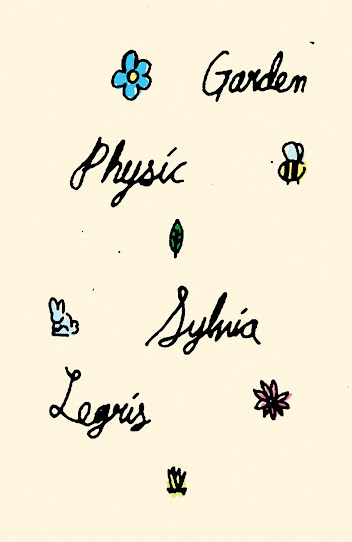
Sylvia Legris, Garden Physic
Equisetum hyemale (Rough
Horsetail)
after a photograph by Karl Blossfeldt
Let the fossil records show:
Green of two winters;
Small scale fluctuations;
Multi-tempoed scouring-rush;
Rough scrub-music
horsetail;
Amplified 40-fold brusque
bray;
Silica-encrusted
corrugations;
A living fossil
cross-section;
Reedy wetland habitat;
Pewterwort the sonorous
tin-herb;
Cone an E-flat apiculate
pitch.
Bladder-fern. Adder’s-tongue.
Where horsetail intersects
string.
Where tone color is
quillwort.
Spiny-spored or
large-spored?
Bristle-tips or
conspicuous tufts?
Upper bout an upswept
moonwort.
Lower bout a smooth woodsia.
Diminutive growing in low
fronds.
Rhizomes erect to
ascending in perfect fifths.
The cover-copy to the collection offers a comparison to Louis Zukofsky’s 80 Flowers (Stinehour Press, 1978), and her work is long-known for its foundational influence by another of the Objectivists, Muriel Rukeyser, but I would offer, also, that Garden Physic seems akin to a lyric exploration in the veins of the botanical books that Emily Dickinson used to put together for friends and family. These are poems that approach the minutae of flora and fauna, both through the plant itself and its descriptions through language, nearly set on the page as research notes, marking and remarking on movement, growth and the unfurling of speech. If Lorine Niedecker’s “Lake Superior” emerged out of the poet absorbing a study of nature and carving out her thinking directly to the page, so, too, as Sylvia Legris writing her Garden Physic. As her short poem “Violet” reads:
A garland to rend off the
dizzies.
A garland to keep the
quinsy at bay.
March closes the seeded umbilicus.
April opens the musty
secundina.
Equinox the half-melt
rot.
Easter the thin
asquintable light.
“The yard wants what the yard wants.” she writes, as part of “The Garden Body: A Florilegium.” Garden Physic is a detailed study of wildflowers and herbs composed through the lyric, citing a multitude of possibilities, and her language is densely-specific. Legris explores the Latin names and intimacies of plants, and there is something comparable to Toronto poet Kate Siklosi’s recent leavings (Timglaset Editions, 2021) [see my review of such here] in a shared approach to plant life on its own terms, from the opening poem of Legris’ collection, “Plants Reduced to the Idea of Plants,” that begins: “The flourish, the fanfare, the febrifugic feverfew. // An oleaginous emplastrum—with horehound leaf, / olive over olive, the oily parts, the dry. // An antidote for the unblessed, the blistering, / the dourly flowering flora, the corpse flora. // Greek turned Latin turned inordinately / angled and filed.” There really isn’t anyone else working this kind of study, blending scientific language through a language-centred lyric. One could cite St. Catharines, Ontario poet Adam Dickinson, for example, who works a more straightforward metaphor-driven lyric, and Toronto writer Christopher Dewdney, who was at the forefront of this kind of writing throughout the 1970s and 80s, hasn’t produced a new volume of poetry since Demon Pond (Toronto ON: McClelland and Stewart, 1994). Her third section, “Floral Correspondences,” composes, as she writes, “an entirely invented exchange” between English author and garden designer, Vita Sackville-West (1892-1962) and her husband, the British politician and writer Sir Harold George Nicolson (1886-1968). They are know for, among other things, co-designing “the celebrated garden at Sissinghurst,” and Legris’ explores a floral call-and-response that bounces through a language of gardens, including the poem “Oh Darling,” that reads:
Midges and techiness.
A constantly muddy mood.
In my impatience for mail
it strikes me that the perianth is a floral
envelope—a cloak
concealing the reproductive organs …
Alas, I forbear. A capacity
for waiting defines both the gardener and the
letter-writer (the
growing season longer than my endurance). I throw
myself into work and
diversion but progress so slowly I fear there will be
frost by the time this
reaches you. snow on your salpiglossis.
– H.
Tuesday, September 07, 2021
Rosmarie Waldrop, The Nick of Time
Meanwhile you cling to
your book. Do the words still float you to Prospero’s island? Or drop, separate
coins, bringing no dew from the Bermudas? I put my hope in the fundamental
difference between local time and time at a distance. Make a show of clearly
contoured identity, no matter if you can connect it to family structure. A
stable body with only occasional modification. Rather than molecules and
feelings in violent agitation. Let alone quanta dissolving into vibrations of
light. You stare at your left little finger, which is crooked. (“BITS AND
PIECES”)
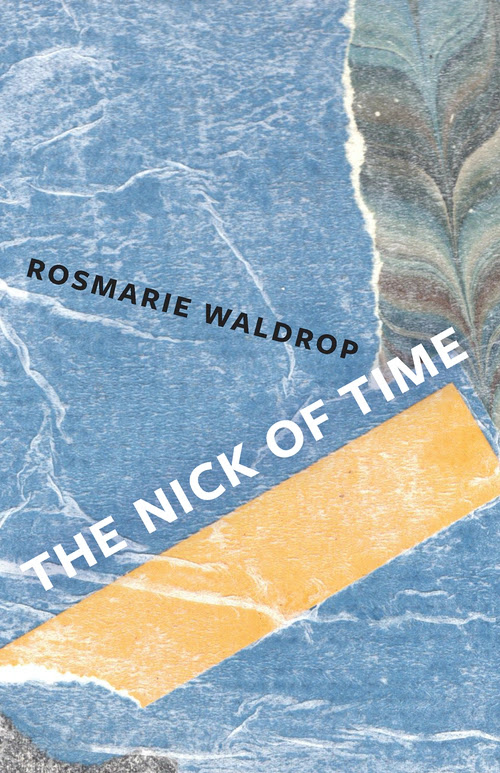
The Nick of Time is a book of mortalities, writing her book-length suite of prose poem sequences and short bursts, each of which are constructed as collages of strands that form new quilts of meaning. “The difference of our bodies makes for different velocities.” she writes, as part of the final poem in the collection, “AGING,” the final poem of the suite “REHEARSING THE SYMPTOMS,” “But gravity / is always attractive, and my higher speed. Cannot outrun the inner / fright we seem made of. Though I gesticulate broadly. As in a silent / movie. Running after the train, waving goodbye.” As one could speak of her writing at any point across her lengthy publishing history, Waldrop writes on language, reading and perception, and the ways through which we think of the relationships between and amid meaning. The poems that shape to form The Nick of Time also incorporate and investigate concepts such as America, mortality and aging, crafting each poem as a furthering of her decades-long investigations into language, theory and philosophy. As she writes as the third of the eight-part “INTERVAL AND HIGH TIME”:
Am I one of those immigrants who never discover America? Never truly arrive? Am I trying to reconstruct the places I left behind with French wine and books from Germany? Though words like raccoon, skunk, hickory, Narragansett, Pawtucket, and Pawcutack. Have entered my vocabulary. Am I focused on the wake behind the boat that brought me rather than its destination? But you, through from heartland Kansas, are not all forward-looking either. You see a shimmer of sun on water. And don’t go build a boat.
As part of her conversation around mortality, the poem-sections are interspersed with a string of single, self-contained “Laments,” each composed for late friends and literary contemporaries: Barbara Guest, Robert Creeley, Anne-Marie Albiach, Michael Gizzi and Edmond Jabès. “My book is the fall of a body, you said.” she writes, to open “A COMLICATION OF GRAVITY,” her “Lament for Anne-Marie Albiach, 1937-2012,” “Yours, fragile, premeditated. / Into the depth of the page, where mysteries might still speak. And / time passes with infinite resources of slowness and is its own project / of erasure.” Through The Nick of Time, Waldrop writes more overtly of mortality, but her writing has always been aware of not only the passage of time, but time’s measure, cadence and relation. In an interview conducted by Matthew Cooperman in 2006 for Denver Quarterly (an excerpt of which is included in Keeping / the window open: Interviews, statements, alarms, excursions), she responds:
In language, it is the space between words that lets us recognize the words as words. And in poetry, it is the interval, the empty space from one line ot the next that defines the verse. It sets the rhythm and also makes visible the nothing, the not-said, against which we pit our words. For the fraction of a moment, this void stops everything. It suspends the assurance of statement to reintroduce uncertainty, doubt, potential. It makes visible the possibility of language, of representation, of music.
There
is such a music to her writing, one that (in recent conversation) Christine McNair suggested was in part due to the fact of Waldrop composing
English-language sentences and phrases utilizing German-language structures (as
German was Waldrop’s first language, naturally), something that might not have occurred
to omnilingual me. Perhaps in no small part to her existing within that space
between and amid multiple languages (both through writing in English as someone
raised in German, or her lengthy career as a translator), Waldrop’s work has always
been attuned to the minutae of how language is structured and constructed,
allowing the collisions that emerge from unexpected assemblages and phrasing. How
she is saying impacts and reveals the what of her communication, propelling the
possibilities of language across her lyrically-dense sentences. And through her
longer prose sequences, she pulls at the threads of expected meaning,
furthering a thought and a line out into such wonderful spaces. As she writes
as part thirteen of the nineteen part poem “WHITE IS A COLOR”: “I make random
forays. From your gravitational pull. As if there were / paths out of orbit. As
if not every second were unraveled. As if I were / not locked in lost for
words. You cling to your bed as if it were the / frame you’re painted into.”
Subscribe to:
Posts (Atom)


