Showing posts with label Dundurn Press. Show all posts

Sunday, February 16, 2025

12 or 20 (second series) questions with Kathleen Lippa

Kathleen Lippa is a Canadian journalist, born in Toronto and raised in St. John’s, Newfoundland.
Kathleen trained as a professional dancer at The Quinte Ballet School and The School of the Toronto Dance Theatre before embarking on a journalism career.

At Memorial University, from which she graduated with a BA (English) in 1998, she worked on the student newspaper, the muse. Following graduation, she worked at a number of Canadian newspapers including The Express (St. John’s) where she won a Canadian Community Newspaper Association award for arts reporting, The Hanover Post (Ontario), a number of newspapers under the corporate umbrella of the Northern News Services, 24 Hours (Toronto), and the Calgary Sun.

For Northern News Services, after a short stint in Yellowknife, Kathleen served as Bureau Chief in Iqaluit, Nunavut.

Her experience includes writing, editing, page layout and design, and photography. Her Northern experience was in a cross-cultural setting primarily reporting news from Inuit communities.

After spending many years in Iqaluit, Kathleen now lives with her husband in Ottawa and St. John’s.

1 - How did your first book change your life?
Arctic Predator (AP) is my first book, and it changed my life considerably, first and foremost by making me an author - not just a newspaper journalist writing “the Ed Horne story.” The writing was very different than newspaper writing. It took time. There were dozens of very difficult interviews with victims of childhood sexual abuse. I had never taken on such a major story before. And when Ed Horne agreed to be interviewed, I knew my life had really changed. I had never interviewed such a devious criminal before. I had to be stronger. My writing had to be clearer and bolder than it had ever been. And I’ve had to give interviews to journalists - something I’m not used to at all, I’m serious! - about AP. So yes, my world changed with Arctic Predator.
 
2 - How did you come to journalism first, as opposed to, say, fiction or poetry?
I was always much more interested in writing non-fiction as opposed to fiction or poetry. I read widely and secretively as a child, because the books I liked were mostly adult, non-fiction books – the ones I’d get from my family’s bookshelves in my home which were, much to my parent’s credit, at child-eye level, close to the floor. My mom had a particularly good collection of books on the Kennedy presidency, his assassination, and I was absolutely drawn to those at a young age. She also had books like Go Boy! by Roger Caron and books by humourist Erma Bombeck, and the fabulous The Tomb of Tutankhamen by Howard Carter and Arthur Cruttender Mace. I was in heaven with those. As soon as I could start working for a newspaper I did because I wanted to be close to non-fiction stories every day. Now, don’t get me wrong. I love fiction and poetry. I studied great works when I did my English degree at Memorial University. But my heart is in reading and writing non-fiction work.
 
3 - How long does it take to start any particular writing project? Does your writing initially come quickly, or is it a slow process? Do first drafts appear looking close to their final shape, or does your work come out of copious notes?

Normally I write quickly then go back and edit a lot. I am not so afraid to “kill my darlings” or that sort of phrase I hear fiction writers use sometimes. I write in notebooks with a pen. I use yellow legal pads too to get out big ideas and write long passages that may or may not make it into a book. I record many interviews as well, and then painstakingly transcribe them. Then everything goes into WORD on my computer. Shaping and re-writing and editing – that all took years for Arctic Predator. When I was a newspaper journalist I could write stories quickly and I was good at it, I believe. For this book, I had collected information from many different sources over the course of several years. Then I had to hear the story in my head and then write it. The final version of Arctic Predator took four years of solid work before I was ready to send it to a publisher. And I’d first started thinking about the story 20 years ago.
 
4 - Where does a project usually begin for you? Are you an author of short pieces that end up combining into a larger project, or are you working on a "book" from the very beginning?

With Arctic Predator I was working on a book, and only a book, from the beginning. People would say “You should do a podcast! People love True Crime podcasts!” I was like, No. AP is going to come out as a book first. That was my focus.
 
5 - Are public readings part of or counter to your creative process? Are you the sort of writer who enjoys doing readings?
I’m not sure I enjoy doing readings. But I will do readings if I am asked to. This story, Arctic Predator, is true crime, so it’s not easy to read aloud. It’s emotional. It can be very upsetting for people to hear a reading from this book.
 
6 - Do you have any theoretical concerns behind your writing? What kinds of questions are you trying to answer with your work? What do you even think the current questions are?
I had one big question that guided me for 20 years : WHAT HAPPENED? In the case of Arctic Predator, it took a long time to answer that question. And it took a long time to answer simple questions, like, WHO HIRED ED HORNE? WHERE DID HE WORK IN THE NORTH, and WHEN? HOW DID HE GET CAUGHT? IS HE STILL ALIVE? These questions are just some examples of simple things that took me years to sort out and get AP to a place where I felt OKAY, I have a book here that is of interest to the Canadian public.
 
7 – What do you see the current role of the writer being in larger culture? Do they even have one? What do you think the role of the writer should be?
A writer digs inside of themselves, knows what they can do, has a real feel for that, and then gets it onto the page somehow. That’s my view of a real writer.
 
8 - Do you find the process of working with an outside editor difficult or essential (or both)?

I love working with an editor. I guess it would be terrible if your editor didn’t have a feel for you and your work and its value. I had editors on AP that got me: They were very astute, very hard working, and really believed that AP should get out into the world. I am very thankful for them.
 
9 - What is the best piece of advice you've heard (not necessarily given to you directly)?
Don’t let the bastards get you down! I saw this written across the Whitehorse Star’s building in Whitehorse, Yukon, and thought YES. Thank you!
 
10 - What kind of writing routine do you tend to keep, or do you even have one? How does a typical day (for you) begin?
The earlier in the morning the better. When I wrote AP I was up at 4 a.m. every morning writing the book until I had the bulk of it done. I left the last chapter until the bitter end and agonized over every word. I mean, I agonize over every word anyways, but for AP the last chapter was tough to write.
 
11 - When your writing gets stalled, where do you turn or return for (for lack of a better word) inspiration?
I’ll pick up Joan Didion’s The White Album and read some of that. Or George Orwell’s essays. These people just strike a match for me and my writing. Then I’ll do some stretches (I have a yoga mat stretched out on the floor in my home office) and drink some green tea and go back to work.
 
12 - What fragrance reminds you of home?
Lavender and pine.
 
13 - David W. McFadden once said that books come from books, but are there any other forms that influence your work, whether nature, music, science or visual art?
I agree with McFadden. I also listen to a lot of classical music when I’m deep into writing – Mozart, and big Hollywood movie score-like stuff. And the Icelandic group Sigur Ros.
 
14 - What other writers or writings are important for your work, or simply your life outside of your work?
I’ll get into the authors of a place I’m in – like if I’m in Newfoundland for a longer stretch than usual, I’ll make sure to refresh my knowledge of Newfoundland writers and what’s going on, like – read some Lisa Moore I haven’t read, some more Michael Crummey, some more Wayne Johnston.
 
15 - What would you like to do that you haven't yet done?
Travel to Japan and soak in the hot springs there and explore their amazing cuisine.
 
16 - If you could pick any other occupation to attempt, what would it be? Or, alternately, what do you think you would have ended up doing had you not been a writer?
I could have been a dance choreographer. That would have been fun I think. But the writing completely took over my life, and I’m fine with that.
 
17 - What made you write, as opposed to doing something else?
Well, the writing always won out because I’d do it whether I was getting paid or not. If you do something no matter what; if you do something all the time that’s actually really hard and painful at times, and no one is watching and patting you on the back, and there is no guarantee of money? You know that’s real. That’s love! That’s what you’re about. Arctic Predator, the book, reveals the real me out in the world, doing my thing.
 
18 - What was the last great book you read? What was the last great film?
The last great book I read was Childhood, Youth and Dependency by Tove Ditlevsen. The last great film was Conclave.
 
19 - What are you currently working on?
Writing Arctic Predator was very emotionally draining for me, so I’m taking a break from all writing projects at the moment, and focusing on my health by taking pilates and yoga classes.

12 or 20 (second series) questions;

Wednesday, January 10, 2024

12 or 20 (second series) questions with Josie Teed

Josie Teed lives in Montreal, Quebec and grew up in the Niagara Region of Ontario. She is currently completing an MA in creative writing at Concordia University. Her first book, British Columbiana, was published in March 2023 at Dundurn Press and is available at your favourite bookseller now: https://linktr.ee/britishcolumbiana

1 - How did your first book change your life? How does your most recent work compare to your previous? How does it feel different?
My first book changed my life in so many ways. It shoved my foot in the door of an industry that many people struggle to break into. It taught me that I am capable of finishing something, of finishing something worth sharing. Most importantly, it showed me that my voice and subjectivity, which I always felt kept me from being close to people, is something that some people can appreciate and even love. That is very special and was genuinely transformative for me.

2 - How did you come to memoir first, as opposed to, say, fiction or poetry?
It wasn’t my decision. My publishers weren’t looking for any fiction when we were in talks about the book. I had been hoping to explore the subject of my memoir from a more fictional perspective, but I’m sort of glad my first book was a memoir because I think it was a more manageable entrypoint for me to write a full-length book for the first time. Now, I have all of this wonderful experience writing about myself and my lived experiences to apply to my new writing, fiction and otherwise.

3 - How long does it take to start any particular writing project? Does your writing initially come quickly, or is it a slow process? Do first drafts appear looking close to their final shape, or does your work come out of copious notes?

I would say it depends, but the beginning of a project is always much easier than the middle and end. Or, rather I give myself more time to work on the beginning, and then the end is a rush and feels like pulling teeth. I would say I revise a lot as I go, so my first draft feels a lot like what I’m hoping the end product will be a lot of the time.  

For my current project, I have been thinking about it for I think two years. I have other projects that have been in my back pocket for longer, waiting for me to be ready.

4 - Where does a work of prose usually begin for you? Are you an author of short pieces that end up combining into a larger project, or are you working on a "book" from the very beginning?

I like to start at the beginning (ha ha) and go from there. I usually go in with an intended length, but I’m not a big planner. I am letting my current project go wherever it’s going to go based on what feels best. This may change as I get better at writing and planning.

5 - Are public readings part of or counter to your creative process? Are you the sort of writer who enjoys doing readings?
To be honest, I’ve never done any public readings. In the past I’ve been kind of suspicious of participating in a community of writers or any community at all, because I have trouble in group settings and I feel very susceptible to comparison, competition and what I perceive to be the petty cruelties of cliques. I’m afraid someone will come up to me and tell me they’ve determined exactly how much value I have and what my limitations are as a person and writer, and that I will fall into the box they’ve drawn and it’ll be all over for me.

While I think sometimes people do try to do this, I think it happens less when you get older, and when they do it’s easier to ignore them and do your own thing. Most people are nice, I think. I’d like to let go of this insecurity and one of my goals for 2024 is to participate in a reading.

6 - Do you have any theoretical concerns behind your writing? What kinds of questions are you trying to answer with your work? What do you even think the current questions are?
I think I’m very curious about the gaps between what we know and don’t know about ourselves and the people around us. I still feel mystified by the behavior of other people and myself, and all of the interesting and frustrating things that happen when we bump up against one another. I feel like we’re always torturing each other and asking each other for things, and we rarely know exactly why we do it or why others do it to us.

I think this also extends to bigger divides. For instance, right now I’m really curious about how someone born 100 or 1000 years ago would be similar and different to myself, and how I might show an audience that while also being honest about who they would have been, and telling a story that feels true. Is it actually possible to do that? What concessions will I have to make to do that?

7 – What do you see the current role of the writer being in larger culture? Do they even have one? What do you think the role of the writer should be?
That’s a big question! I think the role of the writer is determined by individual writers and readers, who are looking to do different things in the act of writing and reading, respectively. I think, for me, I want writers to represent an authentic picture of the world as they see it. I won’t agree with each vision but I think it’s important that I get to see it, and that it’s not dishonest (either on purpose or by mistake).

8 - Do you find the process of working with an outside editor difficult or essential (or both)?
I think it can be either! I’ve only had positive experiences with editors thus far, but I have had experiences where unhelpful and unkind feedback has been a setback in my process. Ask me again in five years.

9 - What is the best piece of advice you've heard (not necessarily given to you directly)?

Fawn Parker said in an interview or blog post (I can’t remember where) that she tries not to concern herself with the question of whether her writing is any good or her project has any merit when she’s doing it, and instead takes that as a given. I may be misquoting, but I try to do the same when I’m writing, or doing anything.

In general, though, I think a lot of advice-giving fails because the giver is actually thinking about themselves and their own problems, however well-intentioned. The best advice is solicited (ideally begged for), indirect, or otherwise wisdom that becomes relevant to the receiver years later.

10 - What kind of writing routine do you tend to keep, or do you even have one? How does a typical day (for you) begin?
I’m a big morning writer, and morning person. My cat wakes me up at around 7 for breakfast, and if I’m not already awake I’ll get up and get started as soon as possible if I can. There’s nothing I like better than leaving the house before most of the world is awake, and to watch things come to life slowly. I love to keep the momentum of the morning going. If I let it lag I can be ruined for the day. If my home is quiet or empty I will write there, otherwise I’ll go to the library or a coffee shop. I don’t mind where I write too much, I think when I get too caught up on details that’s when I know I’m not really in a good place concentration-wise and I need to get back to the task at hand. I don’t drink coffee, but I’ll have tea if I’m at a cafe and if I’m at home I’ll sometimes indulge in a morning Diet Coke.

I’d say I usually write for 2-3 hours a session, then I get to have an afternoon knowing I’ve accomplished something, which makes the rest of the day feel so much nicer.

11 - When your writing gets stalled, where do you turn or return for (for lack of a better word) inspiration?
This is another big question! I have to say it really depends on what I am working on, and what is interesting to me at a given time. I always find talking to my siblings, or to my friend Rebecca, very creatively generative.

12 - What fragrance reminds you of home?
Cats!

13 - David W. McFadden once said that books come from books, but are there any other forms that influence your work, whether nature, music, science or visual art?
I’m a big movie watcher, I’m going to the movies twice next week. I also watch a lot of television. That said, I’m not the most visual person. I think I’m of the belief that if you consume narrative media and pay attention, you will become a good storyteller in your chosen medium. I have a private joke with myself that I’ve got my 10,000 hours in watching movies, which makes me an expert on it (it’s not very funny, that’s why it’s a private joke!).

14 - What other writers or writings are important for your work, or simply your life outside of your work?
The Brontes, Elif Batuman, Daphne Du Maurier, Louis Sachar and Alice Munro are all very important to me, each in different ways. Joanna Newsom’s music, too.

15 - What would you like to do that you haven't yet done?

I’d like to fall in love.

16 - If you could pick any other occupation to attempt, what would it be? Or, alternately, what do you think you would have ended up doing had you not been a writer?
I wanted to be a historian, curator or an archaeologist before I started pursuing writing, but I was bad at it. I think I actually just wanted to tell stories about history, and live in it somehow. I didn’t actually have what it takes to do the painstaking work to uncover the nitty gritty of the past that we take for granted, unless it is for narrative ends I think.

17 - What made you write, as opposed to doing something else?
I tried to do a lot of things before I became a writer, even though I think it’s probably the only thing I’m really good at. I think I maybe avoided pursuing writing earlier because I am not the biggest reader in the world. I was also afraid of failure, and I sort of find the pursuit of fame tacky and humiliating, which is unavoidably wrapped up in the desire for success in any creative field. I was so lucky to have a champion in Julie Mannell who thought I was funny, and who thought other people would too, and encouraged me to pursue writing as a career.

18 - What was the last great book you read? What was the last great film?
The last great book I read was Wolf Hall by Hilary Mantel. The last great movie I saw was Ferrari by Michael Mann.

19 - What are you currently working on?
I’m working on a historical fiction novel! Wish me luck!

12 or 20 (second series) questions;

Monday, September 04, 2023

12 or 20 (second series) questions with Denise Da Costa

Denise Da Costa [photo credit: Samuel Engelking] is a Canadian author and visual artist whose debut novel And the Walls Came Down, was published in Summer 2023. She studies Creative Writing at the University of British Columbia and is an alumna of the Humber School of Writers and the Diaspora Dialogues mentorship program. Her work explores the complications of love and the impact of gender, race and class on identity formation.
 
1 - How did your first book change your life? How does your most recent work compare to your previous? How does it feel different?
And the Walls Came Down is my debut novel and though there have been few, if any, material changes in my life thus far - it feels like I'm finally on the right path with my writing journey.

2 - How did you come to fiction first, as opposed to, say, poetry or non-fiction?
I naturally gravitated to the narrative format that I enjoyed reading and writing most.
 
3 - How long does it take to start any particular writing project? Does your writing initially come quickly, or is it a slow process? Do first drafts appear looking close to their final shape, or does your work come out of copious notes?
When I'm fortunate enough for timing and inspiration to occur in unison, writing can be fluid, however, it can happen in ebbs and flows over long periods of time which can impact the subsequent drafts significantly for someone early in their writing practice.

4 - Where does a work of prose usually begin for you? Are you an author of short pieces that end up combining into a larger project, or are you working on a "book" from the very beginning?
In most cases, shorter pieces are generally summaries or glimpses into a much larger idea. I tend to set out to write novels but I'm learning how to enjoy the practice of writing shorter works. It's a great way to exhaust myself of old pent up ideas and once those have been documented I can access fresh material.

5 - Are public readings part of or counter to your creative process? Are you the sort of writer who enjoys doing readings?
I have never done a public reading ! However, my first such event is soon approaching. I'll let you know how it goes.

6 - Do you have any theoretical concerns behind your writing? What kinds of questions are you trying to answer with your work? What do you even think the current questions are?
I try to pose questions through my work, rather than answer them. Though ideas and interests will change over time, the construction of identity is something I enjoy exploring. What lies at the core of the individual, and how do the constraints of one's culture, place, race, gender and class impact the construction of our individual identities?

7 – What do you see the current role of the writer being in larger culture? Do they even have one? What do you think the role of the writer should be?
I like to think of the writer as one who catalogues the human experience - imaginative and factual. We attempt to extract the observable and unobservable qualities of lives that can be experienced by anyone with access. We create and interpret the story behind the photograph. The words behind the music. The dialogue that frames the film. We share a responsibility (with other artists) who aim to communicate the essence of living.   

8 - Do you find the process of working with an outside editor difficult or essential (or both)?
My own experience working with external editors has been both an essential and pleasant part of the journey to bringing a project to completion.

9 - What is the best piece of advice you've heard (not necessarily given to you directly)?
"It's not ready. Hire an editor."

10 - How easy has it been for you to move between genres (fiction to essays to visual art)? What do you see as the appeal?
As a multi-disciplined artist, I find moving from visual art to writing to be as natural as switching between typing up screenplay and writing a short story the next day. One creation inspires the next - a continuation of an evolving story.

11 - What kind of writing routine do you tend to keep, or do you even have one? How does a typical day (for you) begin?
I do not have a writing routine - but I'm working on it. A demanding career makes it difficult but working with a writing group keeps me accountable.

12 - When your writing gets stalled, where do you turn or return for (for lack of a better word) inspiration?
I read. I read books that make me want to write (often I turn to non-fiction!).  

13 - What fragrance reminds you of home?
Burning wood.

14 - David W. McFadden once said that books come from books, but are there any other forms that influence your work, whether nature, music, science or visual art?

Film, Music and Cooking seems to seep through my work quite a bit.

15 - What other writers or writings are important for your work, or simply your life outside of your work?
I find it important to read essays on narrative, get lost in a literary magazine, and read genres other than what I'm writing at the time.

16 - What would you like to do that you haven't yet done?
See a film produced from a screenplay I've written.

17 - If you could pick any other occupation to attempt, what would it be? Or, alternately, what do you think you would have ended up doing had you not been a writer?
I work in corporate, focusing on people leadership and technology so writing is the occupation I'd like to move into.

18 - What made you write, as opposed to doing something else?
I've been writing as long as I can remember, but wasn't brave enough to commit to it the first time around.

19 - What was the last great book you read? What was the last great film?
Truth Telling, Michelle Good and Oppenheimer.

20 - What are you currently working on?
A speculative fiction.

12 or 20 (second series) questions;
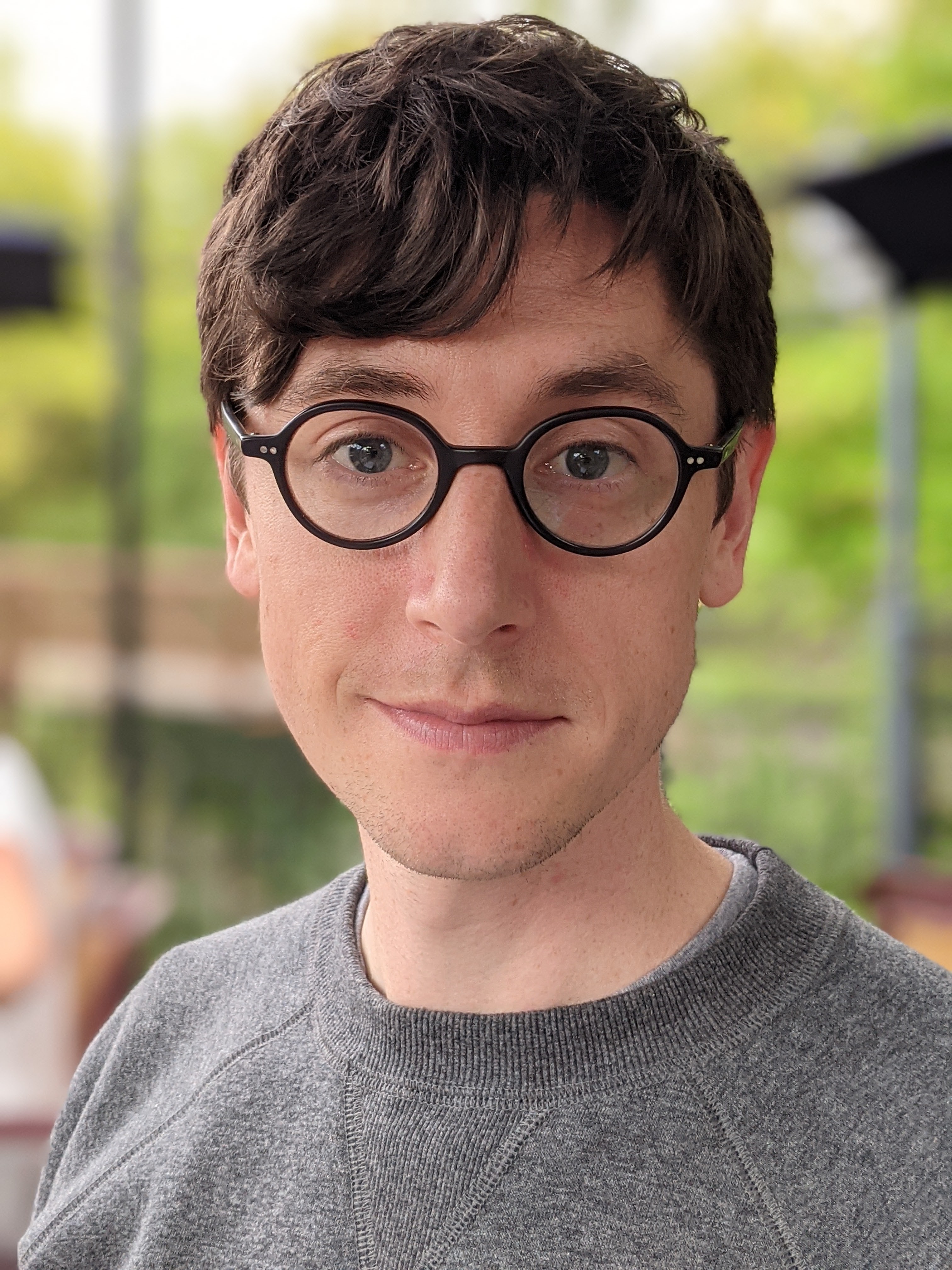
Saturday, August 20, 2022

12 or 20 (second series) questions with Cian Cruise

Cian Cruise has a degree in film studies and philosophy, and works as a freelance writer, strategist, and consultant. Dad Bod is his first book of essays. His cultural criticism has appeared in Hazlitt, Maisonneuve, Playboy, Vulture, and Little Brother Magazine. You can find him on Twitter @CianCruise. Cian lives in Almonte, Ontario, with his family.
Image Credit: Jennifer Snider Cruise
1 - How did your first book change your life? How does your most recent work compare to your previous? How does it feel different?
More than anything else, Dad Bod taught me to let go of perfectionism. I wrote it under a fairly tight deadline, while working full time, moving out of Toronto, and taking care of my son (we had little childcare due to the pandemic). I accepted those constraints and attempted to write something that mirrored those circumstances: a lack of control, melange of intersecting influences, and exceedingly limited bandwidth. It was freeing. This feels very different from my previous work, in both fiction and non-fiction, which was often characterized by tighter reins.

2 - How did you come to non-fiction first, as opposed to, say, poetry or fiction?
Luck of the draw. I've been working in both fiction and non-fiction for as long as I've been publishing, and continue to oscillate between those two registers. The fact that my first book is non-fiction largely stems from having a better pitch for Dad Bod than for the novels I'm working on, and the material connecting with my editor.

3 - How long does it take to start any particular writing project? Does your writing initially come quickly, or is it a slow process? Do first drafts appear looking close to their final shape, or does your work come out of copious notes?
Getting started is the fun part, for me. I love looking at a blank page and covering it with scrawl. The first draft is probably my favourite part of the creative process, sometimes too much fun, because revision can be extremely difficult when I carve too deep a pathway the first time through those unknown woods. Especially in non-fiction, where I tend to write to fill a somewhat pre-determined thesis-emotion-structure, and each aspect of the weave feels load bearing to the greater whole. That means I often approach revision like a web, tugging on each change to see what elements it affects within the piece. It's something I'm always trying to wrap my head around, and understand deeper, to be able to revise in a more intentional way.

4 - Where does a work of prose usually begin for you? Are you an author of short pieces that end up combining into a larger project, or are you working on a "book" from the very beginning?

It all begins from a single skeleton key something-or-other. Often it's a sentence, or the title. Or the juxtaposition between the two. Or, in fiction, a particular scene. If it's the right skeleton key, then it unlocks everything. Everything falls out of that one key moment (or sentence, or paradox, or what have you) and as long as I can carry that in my heart/mind as I work on the piece then I know I won't go too far afield, and I'll also know when it's done because that thing will be exhausted, captured alive, articulated, transcended, or transformed. When that key feels like it fits many, many locks at once — too many that I can't explicitly contain them, that's when I know I'm working on a "book" from the very beginning.  

5 - Are public readings part of or counter to your creative process? Are you the sort of writer who enjoys doing readings?
I do enjoy readings, since my first love of writing is fun wordplay and ripping yarns and the momentum of the spell that carries you through a work of prose. Public readings feel like a chance for a writer to experience that feedback loop firsthand with their audience, rather than having to imagine it from your garret. I also really want people to be entertained and engaged with my writing, and readings helped me understand (especially when I was starting out) what worked, what didn't, and how absolutely incorrect my assumptions could be about which was which.

6 - Do you have any theoretical concerns behind your writing? What kinds of questions are you trying to answer with your work? What do you even think the current questions are?

This question honestly stumps me. I entertain plenty of theoretical scaffolding within my work, but I don't feel comfortable explicating the theoretical concerns behind my own writing. That feels a bit like trying to bite my own teeth. As far as the questions I'm trying to answer with my work, it's different for each project. With Dad Bod the question was something like, "Can I take a profoundly ridiculous conceit and turn it into something meaningful, while having fun along the way?" Sort of a self-parody that simultaneously stretches towards authenticity.   

7 – What do you see the current role of the writer being in larger culture? Do they even have one? What do you think the role of the writer should be?

To make books people will actually read. To hurt people in interesting ways. To co-create hallucinations. Not necessarily in that order.

8 - Do you find the process of working with an outside editor difficult or essential (or both)?
Ha. Definitely both, now that I've had the luck of working with some really outstanding editors. Difficult to stretch yourself after you've already put everything you had into something, essential to pull you past your own limitations.

9 - What is the best piece of advice you've heard (not necessarily given to you directly)?
Keep going.

10 - How easy has it been for you to move between genres (nonfiction to fiction)? What do you see as the appeal?
Not easy at all. I write non-fiction because criticism is a big part of who I am and how I understand myself in the world. I'm pretty sure the first decade of cultural criticism I wrote was basically an oblique defense of my own inchoate storytelling aesthetic, told through dissection of all the narrative art that shaped me. I write fiction because I have these stories clanging around in my mind, and I want to see them out in the world. I want stories *like these* to be real. I want to contribute to the existing pile of stories, rather than only analyze. So the two registers fuel each other, in my spirit, but that does not necessarily mean that the development of craft in either genre supports the other, despite them both being prose. The appeal would be if I could manifest the critical awareness gained in non-fiction to produce better fiction. Fingers crossed.

11 - What kind of writing routine do you tend to keep, or do you even have one? How does a typical day (for you) begin?
When I have one, it's to write in the morning, edit in the afternoon. Nowadays, a typical day begins with a toddler deciding that breakfast is 5:45am, so I punch it in a lot more at night, which is rank chaos.

12 - When your writing gets stalled, where do you turn or return for (for lack of a better word) inspiration?
Books. Usually ones that share nothing in common with what I'm trying to do. Or walks. Or conversation with a few close friends.

13 - What fragrance reminds you of home?
Freshwater lake rot. I grew up where the St. Lawrence River joins Lake Ontario, so nothing hits my olfactory quite like the admixture of algae, fish decay, and the tang of ozone.  

14 - David W. McFadden once said that books come from books, but are there any other forms that influence your work, whether nature, music, science or visual art?
Film, television, and video games have played a major impact on my development as a writer, in part because I've written about them so damned much, but in part because I've been so ensconced within the visual metaphors and vocabulary of those media so often, for so long, especially as a child, that they helped form my fundamental creative imaginary. My creative metaphysic, as it were, was shaped by narrative visual art at least as much by literature. That bleed is very fun and also very hard to harness appropriately, since so much of what sings in one medium would be left on the cutting room floor of another.

15 - What other writers or writings are important for your work, or simply your life outside of your work?
As far as informing my approach to non-fiction: Sheila Heti, Dave Hickey, Geoff Dyer, Joan Didion, Robert Louis Stevenson, Lin Yutang, Anne Carson, Steven Erikson, Alan Watts, Zhou Zuoren, and Mary Beard. At least, that's who I can see on the bookshelf across from me right now.

16 - What would you like to do that you haven't yet done?
Publish a novel.

17 - If you could pick any other occupation to attempt, what would it be? Or, alternately, what do you think you would have ended up doing had you not been a writer?
Maybe a historian, if I could grow bushy enough eyebrows.

18 - What made you write, as opposed to doing something else?
I love writing and I am absolutely miserable when I don't write.

19 - What was the last great book you read? What was the last great film?
Jurassic Park, just crackerjack. Locke.

20 - What are you currently working on?
The audiobook narration for Dad Bod and a fantasy novel.

12 or 20 (second series) questions;

Sunday, January 31, 2021

12 or 20 (second series) questions with Jael Richardson

Jael Richardson is the author of The Stone Thrower, a book columnist on CBC’s q and the founder and the Executive Director for the Festival of Literary Diversity (FOLD). Her debut novel, Gutter Child, arrived January 26, 2021.

1 - How did your first book change your life? How does your most recent work compare to your previous? How does it feel different?

The Stone Thrower is really special to me. Maybe first books always feel special in that way, but writing my father’s story feels like a particular kind of gift to me and to my family. When I started writing The Stone Thrower, I didn’t plan to keep writing, not seriously at least. That was never my intent. And yet, here I am, debuting a novel eight years later, discovering my passion and my purpose as I moved through my 30s.

Gutter Child is rooted in that same passion for storytelling that I enjoyed while working on the memoir. But it feels really different too because it’s mine in every way. I made it up. I wrote it out, and with the help of a great editor and some excellent readers, it became a story from a place I imagined and created. This book showed me something I didn’t really know I was capable of – that I can imagine amazing worlds and tackle tough subjects in ways that are really exciting to write and to read.

2 - How did you come to memoir first, as opposed to, say, fiction or poetry?

Technically, I started in theatre. I studied acting in university, so my first work was in playwriting. I started to write plays because there weren’t enough monologues for me as a Black actor. I wrote plays because I had to, and my first play, my upside-down black face, was about an actor facing those frustrations. I came to prose because I wanted to write my father’s story, and it was working on my father’s story that really showed me that writing was something I loved to do outside of theatre. I think I chose fiction in the end, or for now, because I like to create and imagine. I’m not as interested in being fixed in a story that’s already been figuratively written. I want to ask questions and imagine possible outcomes and answers through interesting characters.

3 - How long does it take to start any particular writing project? Does your writing initially come quickly, or is it a slow process? Do first drafts appear looking close to their final shape, or does your work come out of copious notes?

New projects seem to start the day after I submit the final draft for the story that came before it. I don’t really take a break and I tend not to work on more than one project at a time. But aside from that, the process for writing each book has been different. I’m quite organized in general when it comes to professional work. You might say, I’m a little obsessed with efficiency. And that applies to my writing as well.  I typically plan out the frame work of the story, and then I work from beginning to end on the plot, editing again and again from start to finish in layers. The first draft is short and terrible, like a detailed outline. The next layer is about filling in details and making decisions. It’s not until the fourth or fifth draft that I’ve got something worth reading (longer if I’m not sure what I’m doing, which happened with Gutter Child). By the time I submit a manuscript I’ve worked through the whole thing about fifteen times. Minimum.

4 - Where does a work of prose usually begin for you? Are you an author of short pieces that end up combining into a larger project, or are you working on a "book" from the very beginning?

I’m always working on a book. I find short pieces really stressful. I don’t know how to focus. I don’t know how to make it about just one thing. There’s always multiple things happening for me in a book.

5 - Are public readings part of or counter to your creative process? Are you the sort of writer who enjoys doing readings?

I started in theatre, so I’m one of those strange writers who loves readings and public events. I’m also an extrovert, so the hardest part of the writing process for me is actually all of the quiet, detailed focus. I love connecting with readers. It’s one of my favourite things about the writing cycle.

6 - Do you have any theoretical concerns behind your writing? What kinds of questions are you trying to answer with your work? What do you even think the current questions are?

Gutter Child is very much about colonization and the experiences of Black folks and those who face systemic oppression. The final product – the ending – really came about at the late stages of editing, so one of my major concerns is how Black readers will see the book and the characters. I can’t please everyone and I don’t write books to do that, but when you’re a member of a marginalized community, it’s common to be concerned about how your community will see your work. One of my deep seeded questions is often about how to remain true to my story without doing damage. I don’t think you can really know if you’re successful at that until the work comes out and reaches people you don’t know. So my current question is definitely about the effect it will have on Black readers in particular.

7 – What do you see the current role of the writer being in larger culture? Does s/he even have one? What do you think the role of the writer should be?

I think writers are storytellers. Our job is to tell the stories that have been gifted to us in the best way that we can. I think with any role, you should have some morals and convictions that guide you – for me, I’m certainly thinking about things with a social justice lens. But I’m not operating to change readers with my books, and I’m not sure that’s a good approach to writing.

I’m writing about things that I’m curious about and I’m passionate about, but in the end, I’m telling stories. And once those stories are with the readers, my job is done. I hope my books make people think. I hope my books change the way people interact with one another for the better. I hope my books have a practical impact. But my goal is to tell stories that get people to question what they see. That’s all I’m trying to do as a writer.

8 - Do you find the process of working with an outside editor difficult or essential (or both)?

The editing process is one of my favourite parts of the writing process. Editors see your book with fresh eyes, and they have a skilled way of seeing gaps and identifying opportunities. I love working with an editor. It’s the copyediting that breaks me a little bit because it’s about breaking apart what you’ve done and defending it against “rules”. It can often veer into a place that feels less about storytelling and more about language of law and order, and I feel inherently resistant to systems and processes like that.

9 - What is the best piece of advice you've heard (not necessarily given to you directly)?

There’s two that I repeat over and over throughout the process of writing that are actually connected, despite coming from two different sources over the last five years. In a writing workshop, author Helen Humphreys once told me, “Everything in service to the reader.” It’s about giving readers what they need to follow the story. For me, this has meant letting go of what sounds good or clever in my writing and moving scenes along so that a reader gets the most authentic story. But it’s also an approach that made me think about who my reader is and that awful question of who you write for. As a Black writer who read a lot of stories growing up that were not for or about Black people – this has been hard to decipher. Did I even know the difference between writing for a mystical white or non-white reader having grown up in a literary system that often fed me the same kinds of stories? Do I even know what the difference is? In an interview I did with Indigenous icon Eden Robinson, Eden said that for every book, she writes to one person – a very specific person she knows. I’ve stolen that approach. Rather than thinking about a collective blur of readers, I now write to serve that one person – that one reader. It’s been the most helpful craft advice I’ve ever received.

10 - How easy has it been for you to move between genres (memoir to fiction)? What do you see as the appeal?

In The Stone Thrower, there was a scene in each chapter that I fictionalised – where I imagined what could have happened without rooting it in firm research. These were my favourite scenes to write, so I think fiction was a natural transition for me. I love being able to bend and create stories. I’m not particularly interested in re-creating real places in my work post-memoir. And I’ve been wondering of late if my fiction will ever be set in a real place, or if I’ll always want to create cities and places that I can bend to my preferences. Science fiction may just be the exact opposite of non-fiction – in terms of inventing worlds and making everything up. And I love that. I’m very comfortable here.

11 - What kind of writing routine do you tend to keep, or do you even have one? How does a typical day (for you) begin?

My best writing days happen when I wake up and start writing at 7am or so and I have until noon to just write. I can usually go 3-5 hours straight pretty easily, but after noon or after any other kind of work the process is a little more fractured. It takes me longer to get into the writing and I’m generally less productive.

12 - When your writing gets stalled, where do you turn or return for (for lack of a better word) inspiration?

When I get stuck in my writing it’s usually because I’m torn about the direction it should go or the adjustments that are necessary. I tend to watch stories that are about similar kinds of problems and settings for inspiration. I find watching documentaries and real stories helpful in this regard. Because it’s easy to take a real story and use it as inspiration for your fiction.

13 - What fragrance reminds you of home?

Food. Especially homemade pizza. My mom used to make homemade pizza every Friday night, and that particular smell definitely reminds me of home.

14 - David W. McFadden once said that books come from books, but are there any other forms that influence your work, whether nature, music, science or visual art?

I would say I’m largely influenced by other books. Gutter Child happened because I read Sula by Toni Morrison. I loved that little novel. I loved how it made me think about things. I’m sure nature and other things shape my ideas in ways I should probably think more about, but I am most heavily influenced by the books I read and the tv and movies I watch. I’m most motivated by what I feel is missing or what I think is being overlooked in those places – stories I might be well-suited suited to writing.

15 - What other writers or writings are important for your work, or simply your life outside of your work?

I heard a writer share this recently and it’s true for me as well. Each of my books has mentors – books that shaped the content and structure and style. For Gutter Child, Sula by Toni Morrison, Brother by David Chariandy, The Break by Katherena Vermette, and The Hunger Games were definite influences. But for my next book, there’s a whole new suite of mentors that are shaping the story.

16 - What would you like to do that you haven't yet done?

I’d like to have a book turned into a television series or a movie. And not for the book glamour, although that would be nice. I just really want to see that evolution of a story. I’d love to be involved in the writing and to learn how that kind of storytelling works differently than the styles I’ve done before.

17 - If you could pick any other occupation to attempt, what would it be? Or, alternately, what do you think you would have ended up doing had you not been a writer?

I happen to plan a literary festival, and I love doing that. But I left teaching to do more writing and to plan FOLD, so if I wasn’t doing FOLD and writing, I think I might be a college professor. 

18 - What made you write, as opposed to doing something else?

I write because I’m compelled to. It really is that simple. I remember when I was in labour, trying to deliver my son. I had been pushing for a while, maybe an hour or more. He was stuck, and the midwife said that on the next contraction I could rest, but the next contraction came and my whole body just needed to push. I realized I couldn’t rest. I had to just do it, just keep working at it. That’s how writing feels. On my tired days or during the worst parts in the writing process, I still hear these characters. I still feel their stories, so it’s best to just hunker down and work. It’s what I’m supposed to be doing, and it’s too hard to fight against a force like that.

19 - What was the last great book you read? What was the last great film?

I could never pick just one, so Transcendent Kingdom by Yaa Gyasi, The Vanishing Half by Brit Bennet, and Indians on Vacation by Thomas King. They hit me for very different reasons, but they affected me as a writer, and for me those are the best kinds of reads – when I’m not just drawn in by the story but by the storytelling as well. The films that are most on my mind these days are the entire Hunger Games Series and the Jumanji series. I know they’re not perhaps what people might expect me to watch or read or be thinking about, but they are relevant to what I’m working on and I think what strikes me about those two series is how each consecutive film brought something new while remaining really rooted to the world established in the initial film.

20 - What are you currently working on?

Well, I think that’s going to have to remain a secret for now. But I think if you read closely about what I’m reading and watching, you might just be able to figure it out.

12 or 20 (second series) questions;

Friday, August 26, 2016

12 or 20 (second series) questions with Stephen Maher

Stephen Maher is a novelist and journalist based in Ottawa. In 2012, he published his first novel, Deadline, a political thriller. As an investigative journalist, he has received a National Newspaper Award, a Michener Award, a Canadian Hillman prize and two Canadian Association of Journalism awards. He is a 2016 Harvard Nieman fellow. Maher was born in France and raised in Nova Scotia. He has lived in Toronto, Newfoundland, Jamaica, Japan, France and the United States.  He lives in Ottawa with his partner, Camille, and his old sailboat, Free Spirit.

1 - How did your first book change your life? How does your most recent work compare to your previous? How does it feel different?

My first book, Deadline, didn't change my life hugely. It did change the way some people saw me in the world where I spend a lot of time: the political bubble in Ottawa. It's a Canadian political thriller, so that's where it had the most impact.

It was an attempt to do something that is really journalistic, to explain the world of politics, this world that often looks quite dark and cynical, full of power-grasping, ruthless people. I wrote it, in part, because I felt that I couldn't tell the whole truth through journalism.

My second book, Salvage, is more personal. It's set on the South Shore of Nova Scotia, a part of the world that I love. I have more mixed feelings about the political world here in Ottawa.  

2 - How did you come to fiction first, as opposed to, say, poetry or non-fiction?
I had been poking away at fragments of fictional things since I was a child, but never stuck with anything long enough to finish it until I put myself on my old sailboat at anchor and started writing Salvage. I put myself in a situation where I would either write every day or waste my vacation sitting on a boat by myself. I had a gasoline generator, to power my laptop, and two uninterrupted weeks. I spend 14 to 16 hours a day writing by myself. By the end of my vacation, I had finished the first draft of Salvage.

3 - How long does it take to start any particular writing project? Does your writing initially come quickly, or is it a slow process? Do first drafts appear looking close to their final shape, or does your work come out of copious notes?
I start by writing 75 pages or so, trying to feel my way through the material, then stop, set the work aside and think about the story, the characters, the structure. In my next burst, I design the plot, scene by scene, figuring out what should happen, making notes, structuring the story but not writing anything much. That feels odd, strangely unproductive, but I think it is a more productive process for me than trying to feel my way forward. Then, when the story is designed, I set it aside again. When I return to it, I might rewrite the first bit I wrote and then proceed, putting flesh on the skeleton story. Then, when that is done, I put it aside again, and begin the rewriting process, which is the hardest, least fun part.   

4 - Where does a work of fiction usually begin for you? Are you an author of short pieces that end up combining into a larger project, or are you working on a "book" from the very beginning?

I am usually thinking about the next book while I am writing the current one. I will sometimes have a few ideas that I go back and forth to, trying to decide what would be more interesting. So far, I have finished everything I started. I don't write short stories or poetry or non-fiction, except for journalism. My writing has two modes: daily political journalism and fiction.

5 - Are public readings part of or counter to your creative process? Are you the sort of writer who enjoys doing readings?
I enjoy doing them, but not hugely. It's nice to get the sense of how your words come alive to people, but I think public readings are fairly low on the scale of satisfying public performance. Compared to a play or a concert, they can be kind of flat. I've been to a fair number of readings, including some by great writers, and I find the reading part is often kind of flat. The question-and-answer part is usually better. The best I've attended was with David Sedaris, who just had everybody laughing and feeling good. 

6 - Do you have any theoretical concerns behind your writing? What kinds of questions are you trying to answer with your work? What do you even think the current questions are?
I don't have theoretical concerns in my writing, I don't think, but I am working with themes. My first book, Deadline, was about power, its uses and abuses. Salvage is about love, death and community solidarity. My next book is about social media, the changing sense of self and narcissism, more current questions.   

7 – What do you see the current role of the writer being in larger culture? Does s/he even have one? What do you think the role of the writer should be?
Writers are story tellers. Humans need stories as much as we need food. Stories allow us to order the chaotic world. The role of the writer is to tell stories that help people come to terms with the world, and themselves, by telling stories that feel right. Any other role is necessarily subordinate to that, and hugely less important. For instance, I enjoy Stephen King's political commentary, which seems to spring from the same passionate sense of decency that we see in his stories, but it not hugely significant. He is a writer. His stories matter. His commentary doesn't matter much. There are occasional figures -- like Andre Malraux -- who play a significant political role, but they are rare.

8 - Do you find the process of working with an outside editor difficult or essential (or both)?
I don't find it difficult. I welcome it and I have been fortunate to have good editors.

9 - What is the best piece of advice you've heard (not necessarily given to you directly)?
Don't talk about what you're writing, because it will kill the impulse to tell the story and you will end up speaking it instead of writing it.

10 - How easy has it been for you to move between genres (fiction to journalism)? What do you see as the appeal?

Fiction is harder than journalism, because in journalism you are basically telling people stories you have learned about. If you have information people want, they need to read your stories. With fiction, you must invent stories that touch something in people. I am drawn to it, though, because it is deeper, more meaningful, and because of the creative high when the writing is going well.  

11 - What kind of writing routine do you tend to keep, or do you even have one? How does a typical day (for you) begin?

I write fiction in spurts, in isolation, on my old sailboat or in a cabin or beach house. When I can set aside time for writing, it is all I want to do. Wake up, write. Go for the odd run. Write more. Eat a sandwich. Write. I like to be alone and I like to do it all day, for days at a time, so that I get into a different place. I can't do the thing that many writers do, where they get up early every day and write for an hour before they do some other job.

12 - When your writing gets stalled, where do you turn or return for (for lack of a better word) inspiration?
I sometimes like to float in the water, hanging onto my anchor line, with my ears in the water and my eyes closed, and will the story to reveal itself to me. Running can also be good.

13 - What fragrance reminds you of home?

There's a distinct low-tide mud-flat smell that tells you you're in the Maritimes, and there are mussel beds nearby. 

14 - David W. McFadden once said that books come from books, but are there any other forms that influence your work, whether nature, music, science or visual art?
Movies. Gore Vidal wrote a piece for New York review of Books in 1973 where he showed how many bestselling novels can be thought of as warmed over movies. Cinema has had a huge influence on our thinking and reading, and it's as true for me as for anyone. These days, TV as well. I've been watching Better Call Saul, The Night Manager and other series that are, arguably, as good as anything you can read. Annie Proulx, in an essay about Brokeback Mountain, wrote that the movie is in a way a better, more complete version of the story than her original story. Film and TV have swallowed fiction. 

http://www.nybooks.com/articles/1973/05/17/the-ashes-of-hollywood-i-the-bottom-4-of-the-top-1/

15 - What other writers or writings are important for your work, or simply your life outside of your work?

Mordecai Richler. Margaret Atwood. John le Carré. Michel Houellebecq. John D MacDonald. Patricia Highsmith. Elmore Leonard. Gillian Flynn.

16 - What would you like to do that you haven't yet done?
Sail my boat to the Caribbean.

17 - If you could pick any other occupation to attempt, what would it be? Or, alternately, what do you think you would have ended up doing had you not been a writer?
I sometimes think that I would like to be a private detective. As an investigative journalist, you are always limited by ethical constraints -- the requirement to always be honest and forthcoming -- restraints that don't bind detectives. I imagine it makes it easier and more fun. On the other hand, you are pursuing private interests, and the great thing about journalism is that it's in the public interest.

18 - What made you write, as opposed to doing something else?
I have had the urge to write since I was small. It comes from the love of reading, I suppose, and the desire to be useful.

19 - What was the last great book you read? What was the last great film?
I don't know if it's great, but this week I reread The Deep Blue Good-by, the first novel in John D MacDonald's Travis McGee series of Florida thrillers. It's certainly really good. I find MacDonald a not-very-guilty pleasure. He writes so well that from time to time you think: this isn't really pulp. It is, I suppose, but it's really good.

20 - What are you currently working on?
I'm about to start rewriting a book with the working title Social, a thriller set in the world of social media marketing in New York City. 

12 or 20 (second series) questions;

Friday, June 10, 2016

U of Alberta writers-in-residence interviews: Curtis Gillespie (2005-6)


For the sake of the fortieth anniversary of the writer-in-residence program (the longest lasting of its kind in Canada) at the University of Alberta, I have taken it upon myself to interview as many former University of Alberta writers-in-residence as possible [see the ongoing list of writers here]. See the link to the entire series of interviews (updating weekly) here.

Curtis Gillespie has written four books, including the memoir Playing Through: A Year of Life and Links Along the Scottish Coast, and the novel Crown Shyness. He has won numerous awards for his fiction and non-fiction, including the Danuta Gleed Literary Award and three National Magazine Awards. His journalism has been widely published, and he is the editor and co-founder of Eighteen Bridges magazine. He lives in Edmonton with his wife and two daughters.

He was writer-in-residence at the University of Alberta during the 2005-6 academic year.

Q: When you began your residency, you’d already published a couple of books. Where did you feel you were in your writing? What did the opportunity mean to you?

A: I’d published three books by that time, though one was tiny, a collection of short biographies of people with developmental disabilities, so it didn’t really get a ton of notice. But I felt at that time pretty much where I feel I am right now! Which is still learning, still getting better, still digging into both my craft and the meaning of my craft. I was in the middle of working on the novel that became Crown Shyness and so I was in the middle of a phase where I really wasn’t sure if I even had it in me to write a novel…or at least write a publishable novel. I was actually enjoying the phase, but it was also unnerving at times—a lot of groping around in the dark. It was rather ironic at times that I was in the middle of this process while doling out advice to so many writers who came to visit me. But the irony flipped itself over, in that I ended up talking to so many people about things that you might be tempted to describe as “basic” but which too many of us so-called professional writers often forget, which is that readers like to be entertained, readers like to be captivated, readers don’t want to be made to feel stupid, readers are people we need to challenge AND delight. So all the time I spent with emerging writers, particularly in the first half of the residency, actually ended up helping me focus on what I was doing. It gave me some clarity and helped strip away some hindrances, all of which did end up helping me complete the novel I was working on.

The opportunity to be WiR was great in other ways, too. I’d been an undergrad in the English Dept at the U of A, and so I enjoyed every minute of being there as WiR, hanging around the English office, walking the halls, drinking coffee with students. It was great fun. Of course, it was also a nice slice of financial freedom. Mostly, though, it was a kind of affirming nod that I wasn’t utterly hopeless at what I was doing. I was pleasantly surprised to be asked, and automatically assumed they’d exhausted all other avenues, but I said yes immediately so they wouldn’t change their minds. In the end, it was a hugely positive year, in that it gave me time to work on my own writing and really allowed me to encourage writers and writing in the local community. A side benefit that I didn’t really fully understand at the time was that it helped hone my editorial skills, which I have continued to use in editing Eighteen Bridges magazine and in my work at the Banff Centre.

Also, I might add that I did publish in the U of A arts mag, the year after finishing, a Top Ten things to Remember for Future WiRs. You might find it semi-amusing, and of course feel free to use it if you see fit.

Top Ten Pieces of Advice for Future Writers in Residence

10. Practice clairvoyance by staring at ringing telephone. This will assist you at the office in deciding whether to answer (if it’s a promising writer grateful to simply be in the presence of your talent, generosity and good looks) or to not answer (if it’s a rude wannabe who only wants to know the amount of your last advance and an introduction to your agent).

9. Memorize names, numbers, locations and office hours of all other Writers in Residence across the city so you know where to quickly refer rude wannabes should clairvoyance fail you.

8. Despite the odd wannabe, prepare to have your faith in writing and reading reaffirmed on a daily basis – it will happen.

7. Be kind and considerate to the office staff – they will always be there for you when you need them, and you will need them.

6. Be ready to use the phrase (or variations of it), “I suggest you learn the difference between a comma and a period first – you can worry later whether Tom Cruise or Clive Owen should play you in the movie version of your memoir.”

5. Drop the words Writer in Residence at social functions if conversation embarrassingly begins to flag. According to the immutable laws of nature, the question that will follow (“Oh…and what precisely does a writer in residence do?”) will allow you to stammer, fudge, make unwitty witticisms, and generally appear so inarticulate that you will be absolved from having to talk to anyone for the rest of the evening.

4. Learn to enjoy work by elderly citizens of first-generation ethnic heritage about their disorienting arrival to the prairies/Canada/Alberta/Edmonton and their struggle to deal with winter/summer/drought/flooding. Sarcasm aside, learn to enjoy these books because they matter to the people who wrote them, often a great deal more than the work of “professional” writers.

3. Be realistic about how much of your own work you’ll get done. Be conservative, set low expectations, plan on writing almost nothing…and then cut that number in half.

2. Poets must take full and immediate advantage of having a benefit plan, instead of continuing to be on the lookout for a dentist and a pharmacist to be friends with. Get those teeth fixed, and load up on Prozac! Let the good times roll!

1. Smile the first day, the last day, and every day in between – because you’re lucky to have found such a great home for a year.

Q: Was this your first residency?

A: Nope, I’d been WiR at MacEwan College (now Uni) a couple years before…

Q: How does your experience at University of Alberta compare to Grant MacEwan, or any other residencies you’ve done?

A: The U of A experience was longer, in that it was a full academic year, whereas the Mac was just three months. So it really felt as if you were setting up a true home base at the U of A. It also allowed me to interact with many more people, obviously. The Mac experience was wonderful, but the U of A was very special. Here’s an interview with me for the U of A Faculty of Arts that perhaps explains why, which, again, you should feel free to use…if it’s even remotely interesting!


Q: How did you engage with students and the community during your residency? Were there any encounters that stood out?

A: Basically, I engaged a lot! Not as many students as I expected, but much more community involvement. The most memorable meeting was when a guy, maybe about 25, came in and showed me his work and said it was a memoir of his life on the street as a drug dealer...and that he wanted to know what I thought, now, like today, because he was scheduled to report to jail to do his time a couple days later. It was raw and rough, but real, and I stayed in touch with him for a time. I was also pleasantly surprised to see how many faculty came to me. That was enjoyable. None of them ended up in jail, at least not as far I knew.

Q: The bulk of writers-in-residence at the University of Alberta have been writers from outside the province. As an Edmonton-based writer, how did it feel to be acknowledged locally through the position?

A: It was a real pleasure to be a “local” at the U of A. I was born in Edmonton and went to the U of A for undergrad, so I felt like I really understood Edmonton and the U of A. I also had many contacts in the local arts and culture community, so that allowed me to integrate the role and the dept into the community at large. It made it a lot of fun. I think it also acted as an encouraging factor for many local emerging writers to visit me, as perhaps they felt more comfortable around a local. There was certainly a lot more activity and traffic through my office than I expected!