
Showing posts with label Chuqiao Yang. Show all posts
Showing posts with label Chuqiao Yang. Show all posts
Thursday, September 18, 2025
2025 Ottawa Book Awards shortlist : On Beauty: stories,
Thursday, December 19, 2024
VERSeFest (mini) 2024 : a report from the ground,

And you caught my report on our spring 2024 festival as well, yes?


It had been a while since I'd heard Vancouver poet Stephen Collis read in person (most likely in spring 2013; I have a recollection of him reading in Ottawa back then), here to launch his latest poetry title from Talonbooks, The Middle (2024) [see my review of such here]. It is interesting to hear how his work has progressed, becoming more expansive and thoughtful as he moves ever forward, extending his lyric reach ever outward, even as his work becomes more grounded, intimate.


Thank you to our host and our venues, and everyone who helped out! Thank you to the City of Ottawa and the Dutch Embassy for support! Thanks to Brian Pirie for his web design and ongoing assistance! And to the current VERSe Ottawa board, without whom this couldn't have happened at all.
Keep an eye on our website! We're hoping to announce an occasional series of in-person poetry workshops in the new year, and of course our spring festival! We've already been having meetings, you know. And did you hear we're hoping to announce the next nominees for our Hall of Honour come spring? Stay tuned!
Saturday, November 09, 2024
VERSeFest (mini) festival, Fall Into VERSeFest: Nov 28-30, 2024 : schedule now online!

readings and performances by Manahil Bandukwala, Alice Burdick, Stuart Ross, Véronique Sylvain, Sergio Guerra aka Cheko7even, Apollo the Child, Playto aka Panos, Stephen Collis, Chuqiao Yang, Faith Paré [pictured], Armand Garnet Ruffo, Erik Lindner and Chimwemwe Undi, and an in-person afternoon workshop with Alice Burdick! Urban Legends! Plan99!
Tickets now available for Thurs via RedBird! https://www.verseottawa.ca/en/versefest
Tuesday, July 09, 2024
12 or 20 (second series) questions with Chuqiao Yang
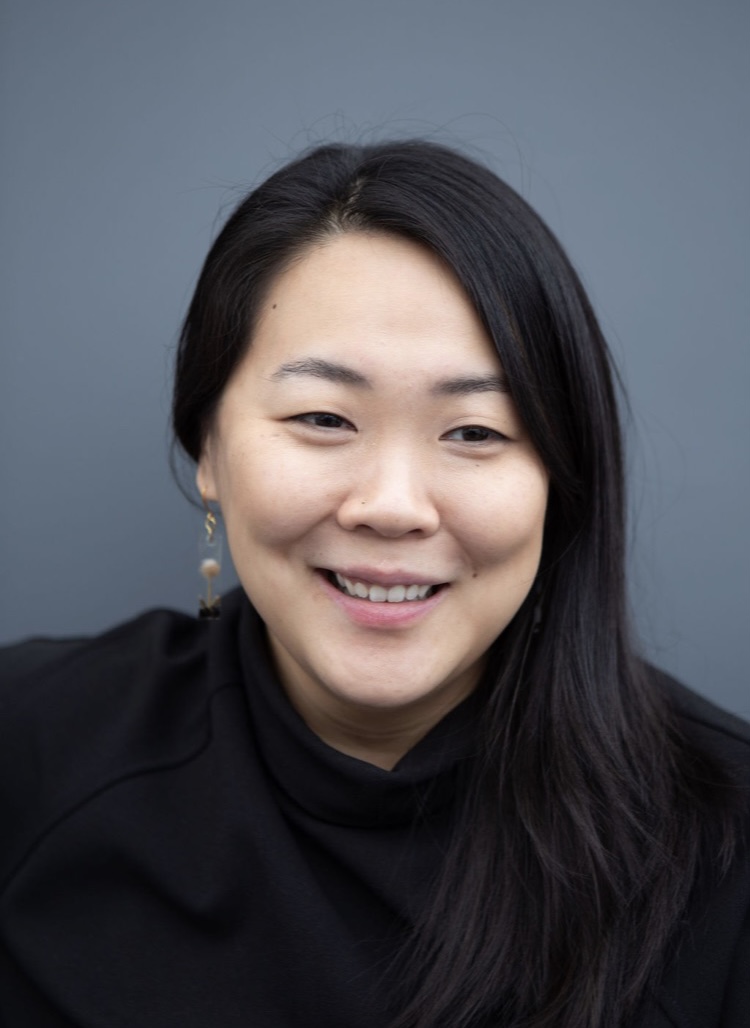
1 - How did your first book or chapbook change your life? How does your most recent work compare to your previous? How does it feel different?
Hi rob! Thank you for inviting me to do this. It means a lot.
My first chapbook, Reunions in the Year of the Sheep won the bpNichol Chapbook Award which was a huge honour. I have that chapbook, and baseline press (Karen Schindler, I am talking about you!), and the RBC Writers' Trust to thank as all of that led to my first collection, The Last to the Party with Goose Lane Editions' icehouse poetry imprint.
I am answering your questions immediately after the book's release so I really don't know how things will have changed yet. So far, my friends and family and community have been really supportive, which is wonderful especially since this is my first full-length book. Things feel a bit different because I wrote a lot of the book in my 'youth' and early 20s and left the poems alone while I was in school. Revisiting them and reworking them now in my 30s and adding new poems to the collection felt a bit like I was greeting and bidding farewell to who I used to be when I wrote them the first time. Editing and peer review was bot fun and odd because it felt like I was low-key saying 'get over yourself' to myself which was pretty, pretty humbling.
2 - How did you come to poetry first, as opposed to, say, fiction or non-fiction?
I'm not really sure. For me personally, at least in the beginning, it felt like there was more opportunity to say something through poetry than fiction, non-fiction or another genre. But I like to dabble.
3 - How long does it take to start any particular writing project? Does your writing initially come quickly, or is it a slow process? Do first drafts appear looking close to their final shape, or does your work come out of copious notes?
As you hinted at in your review of my book (thank you again), it takes a very long time and it happens in spurts. I could be more disciplined. I notice that when I am reading a lot, I am more perceptive and open to writing.
4 - Where does a poem or work of prose usually begin for you? Are you an author of short pieces that end up combining into a larger project, or are you working on a "book" from the very beginning?
I piece things together over time. I learned a lot of new things about myself through the editing process working with Goose Lane and my editor. I'm excited to see how I've grown or changed or stayed the same, and I am excited to apply those lessons to other projects in the future.
5 - Are public readings part of or counter to your creative process? Are you the sort of writer who enjoys doing readings?
I like to go to readings from time to time but I don't like reading. I know that it's a chance for me, reading it aloud, or someone hearing it, to experience or encounter new dimensions of the poem but I always worry I'm being gimmicky, pretentious, or boring. I will say though that it's very useful to hear your writing out loud when you are working on it, or to have someone read your work to you as you edit it.
7 – What do you see the current role of the writer being in larger culture? Do they even have one? What do you think the role of the writer should be?
People write for all sorts of reasons and those reasons can change with time. I really think it depends on the writer, their literary and/or personal goals, and what they hope to accomplish in their work.
8 - Do you find the process of working with an outside editor difficult or essential (or both)?
Essential.
9 - What is the best piece of advice you've heard (not necessarily given to you directly)?
Focus on the work.
12 - When your writing gets stalled, where do you turn or return for (for lack of a better word) inspiration?I let it pass without judgment. I used to beat myself up about it. But I don't think a period of time away from writing means anything negative; life is happening all the time and it can feel more damaging if your mindset is that you have to keep your momentum up in order to be prolific, purposeful or inspired. I really think it's more than okay to have long periods of time where you are just absorbing the world, or living in it, or even struggling to make sense of it or yourself. You aren't wasting time. You are just chilling out and taking it easy on yourself.
Of course it can be hard, but in those times, I try to do mindfulness techniques. I read and spend time with family and friends. I watch comedy, I see movies, or I just do nothing. I bide my time to take care of myself. It's all a work in progress even if you're not working!
15 - What other writers or writings are important for your work, or simply your life outside of your work?
Li-Young Lee, East of Eden by John Steinbeck, Simple Recipes by Madeline Thien, T.S. Eliot.
16 - What would you like
to do that you haven't yet done?
More sports.
19 - What was the last great book you read? What was the last great film?I've been reading some teachings by the Stoics lately. I find reading their reflections validating and reassuring.
Also, last year I read this book called Luster by Raven Leilani in literally one sitting, it was amazing. I just finished Based on a True Story by Delphine du Vigan (wow!). Deaf Republic by Ilya Kaminsky (also wow). Homie by Danez Smith (more wow). The Good Women of Safe Harbour by Bobbi French (WOW and so, so devastating).
20 - What are you currently working on?
Nothing has taken form yet, but maybe some stories.
Wednesday, March 27, 2024
Chuqiao Yang, The Last to the Party
Pompeii
The Lupanar walls speak
of a woman,
her art was intercourse.
Here, once, she left
lovers to quiet deaths
on hard beds, sharp edges
softened,
vestiges of a century of
pleasure.
A caged, beautiful bird
of prey, a tourist imagines.
But you’d almost think
the walls spoke
of a woman whose art was
praying,
back turned to a man,
knees bent,
body arched,
god-searching.
A brave, dying bird of
prayer.
Colours, clay, heat,
Pompeii’s countryside
burning down her body,
the walls speaking
of a woman whose art was
pleasure;
exhalations come a long
way,
remnants of her
existence,
her worship painted on
the walls,
les petities morts in the
history of lost lives,
little deaths in the
history of survival.

Set with opening poem, “The Party,” followed by four numbered sections of poems, Yang has a painter’s ability to evoke a scene, whether landscape or portrait. She writes of moments turned and returned to, or recalled, turned and turned over, to better see, or see differently, attempting a fresh perspective on something that clearly won’t let go. Consider the short poem “Phaethon,” the first half of which reads: “I dreamt my father was alive. // Old, but happy, just // as I had left him. // He was bicycling.” She writes of foreign travel and prairie landscapes; she writes of roads home, and roads that lead away, and the realization that these are but the same roads, even before and beyond the clarification of what home means, and where, from Ottawa to Saskatchewan to Beijing, centred around friends, partners, parents and grandparents.
There’s a thread of wistfulness, and even melancholy, that runs through these poems, as Yang articulates intimate distances, drifts and attempts to connect or re-connect. She writes of a closeness that never quite feels close enough, or is never meant to last, but occasionally, unexpectedly, might or even does. Listen to the lines of the wedding-poem “Epithalamium,” a poem that ends: “And while there may be // years so full of sadness // you will be reluctant to trek // the dogged trail ahead, // you will reach for each other’s // hand, feel the other’s pull, // and you will be at ease.” She writes of a lifelong search for connection and belonging, and of finally landing at a moment that allows itself that comfort. Her poem “Friday,” a piece that immediately follows “Epithalamium,” includes: “Now, we share the same space, and life is a wide, / paved driveway.”
Wednesday, November 21, 2018
Ongoing notes: Meet the Presses (part one,

[Invisible Publishing, on point (so to speak) (being invisible]
Given how excited I know you are about this weekend’s ottawa small press book fair (whether the reading on Friday night or the fair itself on Saturday), I thought it might be worth
discussing some of the things I picked up this past weekend as part of the
annual Meet the Presses event in Toronto! [If you wish to see my notes from last year’s Meet the Presses event, see the link here]. And congratulations to former Ottawa writer Chuqiao Yang for winning this year’s bpNichol Chapbook Award for Reunions in the Year of the Sheep
(baseline press)! [see my 2015 Open Book profile on her here; see my review of the chapbook here]
Cobourg ON: Stuart Ross (who will
be at the ottawa small press book fair this weekend) furthers his way to forty
years of continuous chapbook production through Proper Tales Press with
Kingston poet Dale Tracy’s chapbook Celebration
Machine (2018), a chapbook produced in an edition of 125 copies. The author
of a scholarly title, With the Witness: Poetry, Compassion, and Claimed Experience (McGill-Queen’s, 2017), this
small chapbook appears to be her poetry debut, a collection of short,
first-person lyrics both composed directly and slant, writing in the most
lovely indirect way. I like the quick movement of her lyric, and the casualness
of her line, as she writes to end the short poem “Serious Living”: “If a violin
sounds sad, is it?”
Don’t Look
for Eunice de Souza’s Life
in These
Poems
I won’t look for your life
in your poems,
but can I look for mine?
I’m asking because
I accidentally already
saw something familiar
about knowing, so not
only did I look and see
and know, but then I knew
about knowing too.
I hope you don’t mind I’ve put
your poem in my poem.
I’ve been careful
to leave out your life,
except in the exergue
of my address.
Calgary AB: From Kyle Flemmer’s The Blasted Tree comes the chapbook (another debut, I would think, given the
author biography doesn’t specify any other titles) The Landscape We Left on Each Other (2018) by Lauren Elle DeGaine,
produced in an edition of 40 copies. There is such a musicality to DeGaine’s
work, moving from the lyric to prose poems, one with an energy that sparkles,
and even crackles. Her poems manage to write uncomplicatedly on complicated
things, something that could be mistaken for simplicity but is anything but. Much
like Dale Tracy, this is another poet I would very much like to see further
work from.
We Went
to the Forest to Fire a Gun
I flick the lighter and picture your footsteps,
treading snow and carpet pathways. The music I’m listening to brings memories
of green and yellow days and I think about showing you this— I sing and blow
smoke. We walked on a damn trail and smelled the earth: decomposition and the
ache of things freshly growing. Back home, there were blood stains on your
sheets, but you didn’t seem to mind. These are the gory moments of my life,
paternal words flung like shards, my own voice a monstrous blade, now a ribbon
of grass, but I turn monsters into you. I colour my new memories with you and
they taste like fresh water and sweat and blue light and spliffs. Bright sky
and bullet shells hitting ground and you holding my hand. These gorgeous spring
days threaten us to be careful of summer.
Subscribe to:
Posts (Atom)


