Showing posts with label Goose Lane Editions. Show all posts

Monday, March 02, 2026

12 or 20 (second series) questions with Loch Baillie

Loch Baillie (he/il) [photo credit: LMJ Photography] is a queer writer based in Quebec City. He is the author of two poetry chapbooks, ice, dove parachute (Cactus Press) and Citronella (Anstruther Press), as well as the forthcoming collection River Running (icehouse poetry/Goose Lane Editions, 2026). Loch is an associate poetry editor at Plenitude Magazine, and his writing has appeared in publications such as Maclean’s, yolk, Tidewise, and Ahoy. Find Loch online @lochbaillie or by visiting www.lochbaillie.com.

1 - How did your first book or chapbook change your life? How does your most recent work compare to your previous? How does it feel different?

My debut chapbook Citronella (Anstruther Press, 2024) changed everything for me. In the months surrounding its release, I got really into the Canadian micropress scene and began connecting with other poets. This mainly happened through Instagram, and that platform remains the place I most often interact with other writers. Putting out a chapbook showed me just how generous the poetry community in Canada can be. It’s an incredible community to be a part of.

My second chapbook, ice, dove, parachute (Cactus Press, 2024), came out only nine months after Citronella, but it is quite different. While Citronella introduces broader themes — sexual identity and leaving one’s home — ice, dove, parachute takes these themes further, exploring their repercussions through a more intimate, domestic, and Québec-oriented lens. It is a follow-up in both subject and tone, and a more grown-up work. My forthcoming full-length collection, River Running (icehouse poetry, 2026), will weave together the threads of my chapbooks in a much fuller way, and I look forward to it serving as many readers’ introduction to my work.

2 - How did you come to poetry first, as opposed to, say, fiction or non-fiction?

Funnily enough, I didn’t! I was raised by English teachers, one of whom is a novelist, and so I was primarily interested in prose from a young age. By the time I was a young teenager, I decided I wanted to write novels. This was around the time that young adult dystopian and urban fantasy books were flying off of the shelves. Think The Hunger Games, Divergent, and The Mortal Instruments. I started (and abandoned) several projects, and by the time I was sixteen, I became more interested in writing about my own experiences and began taking a more diaristic approach to my writing. At that age, it turned out I could write a poem a lot faster, and more naturally, than a book chapter.

3 - How long does it take to start any particular writing project? Does your writing initially come quickly, or is it a slow process? Do first drafts appear looking close to their final shape, or does your work come out of copious notes?

It’s a slow process. I tend to write down a bunch of words or lines and then give my poems their shape later on. This typically happens in my Notes app or in a Word Doc. I’d love to be the type of writer that fills up stacks and stacks of Moleskin notebooks, but it’s never worked for me. I far prefer a word processor, or even just scraps of paper. Some of my first poems were written on notepads at the ice cream parlour I worked at in high school. I’d carry them in my apron pockets alongside customers’ orders.

My first drafts very rarely resemble what I publish. In the case of River Running, the original manuscript became stretched in the middle partway through the editing process. I lost a family member in mid-2024 and wrote a series of poems that would eventually form the book’s third section. River Running was initially concerned with metaphorical and anticipatory grief — but it has become concerned with a very concrete sort of grief, as well. 

4 - Where does a poem usually begin for you? Are you an author of short pieces that end up combining into a larger project, or are you working on a "book" from the very beginning? 

This might be unusual, but the titles often come first. I love titles. I love the act of naming something. It’s like a generative exercise. A perfect example of this is my poem “Antediluvian,” which is the last poem in Citronella. I was curious about the period of time in the Bible between the fall of man and the Great Flood — what I came to know as being called “antediluvian” (or “pre-flood”). I began asking myself, what happens in a moment of banishment? How does one feel looking back at a place called home while simultaneously seeing some strange land on the horizon? It was the first poem I wrote for Citronella, but in doing so, I knew I’d already written its ending. I wrote towards that closing with the other poems; led the speaker all the way to the edge of that cliff.

I don’t think I’ve yet figured out how books “happen.” But I can say this: the more I write, the more I understand how my poems interconnect. It was clear to me when I had enough poems for my chapbooks, and it was clear to me when I had enough for my full-length collection. 

5 - Are public readings part of or counter to your creative process? Are you the sort of writer who enjoys doing readings?

I enjoy public readings but wouldn’t consider them part of my creative process. Being part of a community of writers and receiving feedback is essential to my creativity – but reading the work aloud to an audience, not so much. It is fun, though!

6 - Do you have any theoretical concerns behind your writing? What kinds of questions are you trying to answer with your work? What do you even think the current questions are?

It depends entirely on what I’m writing. What I’m currently working on is heavily informed by theory (see answer to question 19) — but up until this point, my writing has been more concerned with lived experience, such as notions of self, home, and interpersonal relationships. Now that I’m in graduate school, it feels only natural to work on a project that blends my academic interests and my creative interests.

7 – What do you see the current role of the writer being in larger culture? Do they even have one? What do you think the role of the writer should be? 

This is a big question, and one that could be answered in no less than a hundred different ways. I see my own role as a writer as being a sort of truthteller. In Shakespeare’s plays, the truthtellers often operate on the margins and in the fens. Think of the Fool in King Lear or the witches in Macbeth. These are queer, weird (wyrd) characters. I feel similarly as a queer writer. I write to reveal uncomfortable truths. I write frankly, and shy from writing fiction, because there is so much happening in the real world. Fiction is an interesting genre. I read a lot of it, and I value the way it can offer escape or confront me with difficult truths. But in my experience, contemporary poetry doesn’t allow for distraction — it cuts straight to the bone.

8 - Do you find the process of working with an outside editor difficult or essential (or both)?

For me, it is absolutely essential. I often prefer the editing process over the writing process because I feel more lucid there. Writing a poem is like throwing a pack of playing cards on the ground, and working with an editor is playing fifty-two-card pickup. I’m a better writer because of my editors. 

9 - What is the best piece of advice you've heard (not necessarily given to you directly)? 

Ocean Vuong posted this great Instagram Story about cultivating one’s soil; this idea that writer’s block does not exist and that it’s only a lack of creative stimuli. I’ve taken that to mean: if I’m not reading, moving, living — I’m not writing.

10 - How easy has it been for you to move between genres (poetry to journalism)? What do you see as the appeal?

I find it quite difficult, but I think I’m getting better at it. Poetry is my default setting, and so when I write prose, it tends to be lyrical. I’d like to develop a prose style that feels complimentary to my poetry — but at the same time, if I ever wrote a novel, I wouldn’t want it to read like a seventy-thousand word poem. I love novels by poets; every word and punctuation mark is chosen so carefully. But for me, I’d rather be known as a poet who occasionally writes prose. 

11 - What kind of writing routine do you tend to keep, or do you even have one? How does a typical day (for you) begin? 

I don’t have a specific routine. I’d like to write more regularly, but I find it difficult without external pressure (a workshop or a deadline, for example). I can’t force a poem. Some weeks I write a great deal. Some weeks I don’t write at all. 

12 - When your writing gets stalled, where do you turn or return for (for lack of a better word) inspiration?

A long walk. A hot shower. Rereading favourite poems.

13 - David W. McFadden once said that books come from books, but are there any other forms that influence your work, whether nature, music, science or visual art?

It’s music for sure. I couldn’t live without it, never mind create. I’m often more interested in how a song sounds than what it’s saying. How I hear music is how it feels to write (or read) a good poem.

14 - What other writers or writings are important for your work, or simply your life outside of your work?

Louise Glück, Richard Siken, Maggie Smith, Ada Limón, and Ocean Vuong have all had a significant impact on my poetry. For specific writings, I’ve turned time and time again to Audre Lorde’s essay “Poetry is Not a Luxury” and the final paragraphs of Arundhati Roy’s novel The God of Small Things. 

15 - What would you like to do that you haven't yet done?

I’d like to give songwriting a try. Writing for someone else, that is.  

16 - If you could pick any other occupation to attempt, what would it be? Or, alternately, what do you think you would have ended up doing had you not been a writer?

I’m trying to get better at plants, so maybe a horticulturist? I was never very good at science, but I’ve become obsessed with orchids thanks to Susan Orlean. I just replanted one for the first time and it bloomed!

17 - What made you write, as opposed to doing something else?

I’m not sure what that “something else” would have been. When I began writing, I couldn’t stop. I still can’t.

18 - What was the last great book you read? What was the last great film? 

White Oleander by Janet Fitch. It’s brilliant. I enjoyed the film adaptation by Peter Kosminsky, too!

19 - What are you currently working on? 

My Master’s thesis! It’s a research-creation project that combines poetry, essays, and interviews with artists about bilingual art in French-speaking Canada. It's called Head Split in Half  and is technically my second full-length book. It is theoretically concerned with notions of confession, belonging, and language. 

12 or 20 (second series) questions;


Friday, December 19, 2025

12 or 20 (second series) questions with Qurat Dar

Qurat Dar is the author of Non-Prophet (icehouse poetry 2025) for which she received the inaugural Claire Harris Poetry Prize. She was the City of Mississauga’s third Youth Poet Laureate and a Canadian Individual Poetry Slam National Champion. Qurat’s poems have appeared in Augur, EVENT, Arc Poetry Magazine, and across the Toronto Transit Commission (TTC) network.

1 - How did your first book change your life? How does your most recent work compare to your previous? How does it feel different?

I think my first book mostly changed my life by showing me I could actually write a book, and that it was worth publishing. I competed in poetry slams for around two years in undergrad, and while only a few of the poems I competed with made it into the book, I can still see its influence. I love a punchy line or a bit of clever wordplay. Generally, poetry slams have a 3-minute time limit per poem – I found it a bit of an ordeal writing poems that long. My poems have gotten much shorter since I stopped competing. Since I was used to writing for performance, it’s only more recently that I’ve started trying my hand at more formal poetry and working with how the poem looks on the page.

2 - How did you come to poetry first, as opposed to, say, fiction or non-fiction?

I actually always wanted to write speculative fiction and wrote a terrible novel or two in high school, but the external motivator of poetry slam ended up pulling me towards poetry. Having a community of peers that I could write, perform, and compete with (for better or worse) kept me writing poems.

3 - How long does it take to start any particular writing project? Does your writing initially come quickly, or is it a slow process? Do first drafts appear looking close to their final shape, or does your work come out of copious notes?

It’s a mixed bag. My favourite is when (rarer than I’d like) an image or concept sticks with me for a few days and then when I sit down to write the poem comes out all at once. More often a poem comes out of bits and pieces I’ve collected over a while (in my journal, notes app, and in random Word documents) and finally found a unifying thread for.

4 - Where does a poem usually begin for you? Are you an author of short pieces that end up combining into a larger project, or are you working on a "book" from the very beginning?

A poem for me usually begins with a single image or line and (ideally) snowballs from there.

For Non-Prophet, the “book” emerged after I already had the poems in hand (spanning eight or nine years!) and could see the patterns there, see what I kept circling in my work.

5 - Are public readings part of or counter to your creative process? Are you the sort of writer who enjoys doing readings?

As a recovering slam poet, I love doing readings! Hearing how a crowd responds to your poems is a form of feedback too. It depends a lot on the audience though, performing to a room that’s dead quiet is brutal. Audience interaction is probably what I miss most from my slam days.

6 - Do you have any theoretical concerns behind your writing? What kinds of questions are you trying to answer with your work? What do you even think the current questions are?

To be honest, often I don’t know what questions my poems are asking until a while after I’ve written them. In Non-Prophet a lot of the questions are asked directly in the poems themselves. Largely, they revolve around identity and belief.

7 – What do you see the current role of the writer being in larger culture? Do they even have one? What do you think the role of the writer should be?

I think the role of the writer (and artists in general) is to surprise us with our own capacity for feeling.

8 - Do you find the process of working with an outside editor difficult or essential (or both)?

Essential, working with editors improves not just the poems themselves but has made me a better poet. A pair of fresh eyes (or multiple) lets me see what’s effective and what’s awkward or confusing.

9 - What is the best piece of advice you've heard (not necessarily given to you directly)?

That any piece of art will end up different than how you imagined it initially and that is okay, even good. Writing is a process of discovery for me and too much planning bogs me down.

10 - How easy has it been for you to move between genres (works for the page to more performative works)? What do you see as the appeal?

I had a bad habit of leaving my poems in paragraphs instead of putting them into stanzas, but besides that it’s felt pretty natural. I try to write poetry that bridges the page and the stage. I find poetry that balances the two to be more compelling – it’s engaging enough to hold your attention but has layers of meaning to sit with and investigate.

11 - What kind of writing routine do you tend to keep, or do you even have one? How does a typical day (for you) begin?

I don’t have a routine for writing poetry, I tend to just write poems when I get the poetry itch.

12 - When your writing gets stalled, where do you turn or return for (for lack of a better word) inspiration?

I like making Pinterest boards and playlists for writing projects so I can return to the specific mood/atmosphere I had in mind. Mostly I just have to give myself time.

13 - What fragrance reminds you of home?

French fries and gasoline. I’m a child of the suburbs.

14 - David W. McFadden once said that books come from books, but are there any other forms that influence your work, whether nature, music, science or visual art?

Nature and science influence my work a decent amount. I currently work in stormwater engineering so I’m always listening for concepts or terms from work I can pull into my poetry.

15 - What other writers or writings are important for your work, or simply your life outside of your work?

I think every writer I read influences my work in some way. My peers in the Maza Arts Collective bring me so much joy, inspiration, and encouragement: Anjalica Solomon, Cassandra Myers, Franz Seachel, Kiran Shoker, and Namitha Rathinappillai.

16 - What would you like to do that you haven't yet done?

I’d love to write for different mediums – comics, videogames, film.

17 - If you could pick any other occupation to attempt, what would it be? Or, alternately, what do you think you would have ended up doing had you not been a writer?

If I wasn’t a writer, maybe I’d be less mediocre a flutist/guitarist.

18 - What made you write, as opposed to doing something else?

I was a huge bookworm as a kid, so naturally my childhood dream was to be an author. Of the art forms, I feel writing has fewer barriers to entry as well.

19 - What was the last great book you read? What was the last great film?

Most recently I read What Feasts at Night by T. Kingfisher – really enjoyed it. I don’t watch many movies alas.

20 - What are you currently working on?

I’m working on a sci-fi manuscript!

12 or 20 (second series) questions;

Sunday, September 21, 2025

Qurat Dar, Non-Prophet


BE NOT AFRAID


Take the blessing in thee mouth
& go. The scripture on tattered wings.
Every word peeling from the skin. 

Where is my levelled mountain,
my parted sea? I wish the light would
moth toward me for once. 

Enough of the vacant angels,
the platitudes, the declawed gods. 

The trials I would endure to feel
the conviction of the trees.

I’m impressed by the meditative and exploratory “serious play” (what bpNichol termed it) of the full-length poetry debut by the former Mississauga Youth Poet Laureate Qurat Dar, her Non-Prophet (Fredericton NB: Goose Lane Editions, 2025), winner of the inaugural Claire Harris Poetry Prize. “The sunlit dargah knows / no prayer but that of survival.” Dar writes, as part of the poem “Snail Responds to the Ring of Crushed Eggshells / I Put Around the Lettuce,” “A porcelain cage that / could spear you in its shattering. Ask yourself: / do the dervishes spin or spiral?” As judge Kazim Ali wrote to blurb the collection: “I loved Non-Prophet for so many reasons: this book speaks to my own experience and history, it addresses questions of spiritual and daily live (and for many of us, those two are inseparable), but perhaps most importantly, these are exciting and immediate poems that continue the great legacy of Claire Harris. As Harris did in her poems, Qurat Dar bravely confronts a cultural imperative to silence or acquiescence with refusal; more than refusal, but response.” Claire Harris (1937-2018), for those unaware, was an award-winning Canadian poet based in Calgary, born in Trinidad, and who emigrated to Canada in 1966. As her online entry at The Canadian Encyclopedia offers: “Using such verse techniques as contrasting prose and poetry on the page, or alternating journalistic prose with the voice of prophecy, Harris dramatizes and makes public the psychological struggles experienced by radicalized women who face oppression.”

Set in three sections of tight, first-person lyrics—“DUST,” “CLOT” and “BREATH”—the poems of Non-Prophet write from a foundation of faith, of spirituality, one that the author/narrator works to understand on her own terms, not simply replicating or offering lip-service. “You were taught that to pray is to make / your mouth form sounds without meaning. / Reading suras like sheet music. Cradling / foreign words behind your teeth.” she writes, to close the poem “55:13,” “How fitting that your faith is just another language / you’re losing, or one you never learned to speak.” Dar works to articulate and engage on her own terms, which feels a normal enough experience around growing up, but with the added factors of cultural touchstones that seem to contradict how she has been raised to think, feel and approach her own spirituality; the added cultural factors of one spiritual context into another, the cultural collision between the onslaught of western culture and anything else it deems outside. This is, as much as anything, a coming-of-age book around spiritual faith and cultural identity, attempting to find balance amid what feels like chaos. “On a bathroom floor somewhere in Lahore,” she writes, to open the poem “Ablution/Absolution,” “I’m trying to find the delicate balance between / trying not to soak the tile and trying to wash / out an hour’s worth of hairspray and backcomb, / to look presentable for people that I’ve forgotten, / or who’ve forgotten me, maybe both.”

Again, that title, loaded with meaning through double entendre; reminiscent of the play the late Judith Fitzgerald offered as an early title to a work on the subject Joan of Arc and Gilles de Rais, “D’Arc and de Rais” (sound it out, you’ll get there). The full work later appeared through Ottawa’s Oberon Press as 26 Ways Out of This World (1999), a title I didn’t think nearly as interesting. Curiously enough, Dar even offers her own Joan of Arc poem, “Joan,” that begins: “It could never have been me. A woman’s platform is always a pyre.”

Through Dar’s Non-Prophet, she articulates her own seriousness beneath such performative gestures, and a sense of spiritual through the everyday, as Manahil Bandukwala offers as part of her own blurb for the collection: “As we hurtle towards annihilation, Dar combines rich Islamic and Sufi mythology with deepfakes and Teams lights. The poems loop and circle through destruction and renewal, diaspora and home, worshipper and worshipped.” “I / see a thousand patient / fingers where others / see God.” Dar writes, as part of “Waiting for the Moon to Howl Back.” Or “The opposite of eulogy is a prophecy,” a poem (with such a striking title) that reads with such being and purpose, and a repeated declaration of presence that the narrator appears to be directing, first and foremost, to herself:

and the clouds whispered to me that you will outlive this.
You will pull the stars from the sky with your teeth. Spit
them out, grinning. Your mouth bloodied brilliant. White-
hot with flame. You have taken blows that could fell giants.
Kept a quiet survival tucked below your tongue. You will
do this as long as you live. But how you will live, darling!
Weaving dreams like flowers in your hair. Laughing until
your lungs burst to fireworks. Loving and dancing as clumsily
as you do fiercely. Yes, my blood says that it is so, and a
river would sooner stop than lie. Yes, the darkness will
recede. A wave pulling reluctantly from the shore. You will
outlive this. Yes, even this.

Thursday, September 18, 2025

2025 Ottawa Book Awards shortlist : On Beauty: stories,

Thanks much to the City of Ottawa! Yesterday it was announced that my short story collection, On Beauty (University of Alberta Press, 2024), was shortlisted for the 2025 Ottawa Book Awards! This is my first ever appearance on a shortlist for this particular award, so that's pretty exciting. Congratulations, also, to the other four on the shortlist: Manahil Bandukwala, for Heliotropia (Brick Books); Nina Berkhout, for This Bright Dust (Goose Lane Editions); Paul Carlucci, for The Voyageur (Swift Press); and Chuqiao Yang, for The Last to the Party (Goose Lane Editions). Hooray all! I've only actually seen Chuqiao's book of the quartet [see my review of such here], and it is remarkable, which makes me curious to see the other three. Naturally, I think you should pick up a copy of my short story collection [check out here for some links to reviews of the book, although it's Salma Hussain who really gets it], as well as the other nominated titles. There's plenty of time to read all five books, I'd think, before the winner gets announced on November 15th, yes?

Tuesday, July 09, 2024

12 or 20 (second series) questions with Chuqiao Yang

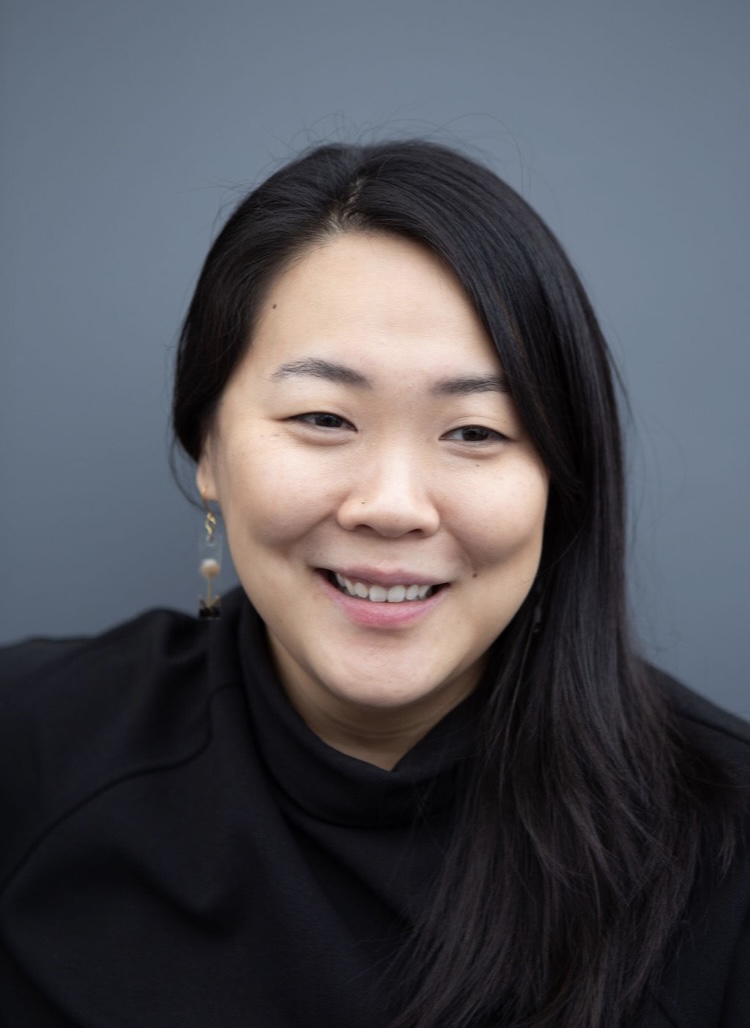
Chuqiao Yang’s poems have appeared in magazine suchs as The Walrus, Arc Poetry Magazine, Prism, Grain, CV2, Room, and on CBC Radio. She was a finalist for the Bronwen Wallace Award for Emerging Writers and her chapbook, Reunions in the Year of the Sheep, won the bpNichol Chapbook Award. The Last to the Party is her first full-length collection.

1 - How did your first book or chapbook change your life? How does your most recent work compare to your previous? How does it feel different?

Hi rob! Thank you for inviting me to do this. It means a lot.

My first chapbook, Reunions in the Year of the Sheep won the bpNichol Chapbook Award which was a huge honour. I have that chapbook, and baseline press (Karen Schindler, I am talking about you!), and the RBC Writers' Trust to thank as all of that led to my first collection, The Last to the Party with Goose Lane Editions' icehouse poetry imprint.

I am answering your questions immediately after the book's release so I really don't know how things will have changed yet. So far, my friends and family and community have been really supportive, which is wonderful especially since this is my first full-length book. Things feel a bit different because I wrote a lot of the book in my 'youth' and early 20s and left the poems alone while I was in school. Revisiting them and reworking them now in my 30s and adding new poems to the collection felt a bit like I was greeting and bidding farewell to who I used to be when I wrote them the first time. Editing and peer review was bot fun and odd because it felt like I was low-key saying 'get over yourself' to myself which was pretty, pretty humbling.

2 - How did you come to poetry first, as opposed to, say, fiction or non-fiction?

I'm not really sure. For me personally, at least in the beginning, it felt like there was more opportunity to say something through poetry than fiction, non-fiction or another genre. But I like to dabble.  

3 - How long does it take to start any particular writing project? Does your writing initially come quickly, or is it a slow process? Do first drafts appear looking close to their final shape, or does your work come out of copious notes?

As you hinted at in your review of my book (thank you again), it takes a very long time and it happens in spurts. I could be more disciplined. I notice that when I am reading a lot, I am more perceptive and open to writing.

4 - Where does a poem or work of prose usually begin for you? Are you an author of short pieces that end up combining into a larger project, or are you working on a "book" from the very beginning?

I piece things together over time. I learned a lot of new things about myself through the editing process working with Goose Lane and my editor. I'm excited to see how I've grown or changed or stayed the same, and I am excited to apply those lessons to other projects in the future.  

5 - Are public readings part of or counter to your creative process? Are you the sort of writer who enjoys doing readings?

I like to go to readings from time to time but I don't like reading. I know that it's a chance for me, reading it aloud, or someone hearing it, to experience or encounter new dimensions of the poem but I always worry I'm being gimmicky, pretentious, or boring. I will say though that it's very useful to hear your writing out loud when you are working on it, or to have someone read your work to you as you edit it.

7 – What do you see the current role of the writer being in larger culture? Do they even have one? What do you think the role of the writer should be?

People write for all sorts of reasons and those reasons can change with time. I really think it depends on the writer, their literary and/or personal goals, and what they hope to accomplish in their work.

8 - Do you find the process of working with an outside editor difficult or essential (or both)?

Essential.

9 - What is the best piece of advice you've heard (not necessarily given to you directly)?

Focus on the work.

12 - When your writing gets stalled, where do you turn or return for (for lack of a better word) inspiration?

I let it pass without judgment. I used to beat myself up about it. But I don't think a period of time away from writing means anything negative; life is happening all the time and it can feel more damaging if your mindset is that you have to keep your momentum up in order to be prolific, purposeful or inspired. I really think it's more than okay to have long periods of time where you are just absorbing the world, or living in it, or even struggling to make sense of it or yourself. You aren't wasting time. You are just chilling out and taking it easy on yourself.

Of course it can be hard, but in those times, I try to do mindfulness techniques. I read and spend time with family and friends. I watch comedy, I see movies, or I just do nothing. I bide my time to take care of myself. It's all a work in progress even if you're not working!

15 - What other writers or writings are important for your work, or simply your life outside of your work?

Li-Young Lee, East of Eden by John Steinbeck, Simple Recipes by Madeline Thien, T.S. Eliot. 

16 - What would you like to do that you haven't yet done?

More sports.

19 - What was the last great book you read? What was the last great film?

I've been reading some teachings by the Stoics lately. I find reading their reflections validating and reassuring.

Also, last year I read this book called Luster by Raven Leilani in literally one sitting, it was amazing. I just finished Based on a True Story by Delphine du Vigan (wow!). Deaf Republic by Ilya Kaminsky (also wow). Homie by Danez Smith (more wow). The Good Women of Safe Harbour by Bobbi French (WOW and so, so devastating).

20 - What are you currently working on?

Nothing has taken form yet, but maybe some stories.

12 or 20 (second series) questions;

Wednesday, March 27, 2024

Chuqiao Yang, The Last to the Party


Pompeii

The Lupanar walls speak of a woman,
her art was intercourse.
Here, once, she left lovers to quiet deaths
on hard beds, sharp edges softened,
vestiges of a century of pleasure.
A caged, beautiful bird of prey, a tourist imagines.
But you’d almost think the walls spoke
of a woman whose art was praying,
back turned to a man, knees bent,
body arched, god-searching.
A brave, dying bird of prayer.
Colours, clay, heat, Pompeii’s countryside
burning down her body, the walls speaking
of a woman whose art was pleasure;
exhalations come a long way,
remnants of her existence,
her worship painted on the walls,
les petities morts in the history of lost lives,
little deaths in the history of survival.

There are long-awaited debuts, and then there are long-awaited debuts, such as Chuqiao Yang’s The Last to the Party (Fredericton NB: Goose Lane Editions/icehouse poetry, 2024). Born in Beijing, raised in Saskatchewan and currently living in Ottawa, Chuqiao Yang is a poet I first discovered in the summer 2010 issue of Grain magazine (Vol. 37.4) [see my review of such here] as part of Sylvia Legris’ stunning and maddeningly-curtailed run as editor there. The Last to the Party follows Yang’s bpNichol Chapbook Award-winning Reunions in the Year of the Sheep (London ON: Baseline Press, 2017) [see my review of such here], a number of poems from which have been reworked and folded into this larger collection. In one of the finest debuts I’ve read in some time (tied with Ottawa poet Ellen Chang-Richardson’s Blood Belies, which I’m currently reading as well), Yang writes of a prairie childhood, various travel, family and family roots and youthful adventures, rebellions and reconciliations, her lyrics offering a richness that is confident and subtle, considerations so clearly evident even in those poems published in Grain, fourteen years back. “Sometimes I float backwards,” she writes, as part of the opening poem, “The Party,” “ten times / over the South Saskatchewan / until I’m only kite bones / and promise: watch me, / a mawkish pre-teen pedalling / uphill, licked by rime, / peering into a neighbour’s window.”

Set with opening poem, “The Party,” followed by four numbered sections of poems, Yang has a painter’s ability to evoke a scene, whether landscape or portrait. She writes of moments turned and returned to, or recalled, turned and turned over, to better see, or see differently, attempting a fresh perspective on something that clearly won’t let go. Consider the short poem “Phaethon,” the first half of which reads: “I dreamt my father was alive. // Old, but happy, just // as I had left him. // He was bicycling.” She writes of foreign travel and prairie landscapes; she writes of roads home, and roads that lead away, and the realization that these are but the same roads, even before and beyond the clarification of what home means, and where, from Ottawa to Saskatchewan to Beijing, centred around friends, partners, parents and grandparents.

There’s a thread of wistfulness, and even melancholy, that runs through these poems, as Yang articulates intimate distances, drifts and attempts to connect or re-connect. She writes of a closeness that never quite feels close enough, or is never meant to last, but occasionally, unexpectedly, might or even does. Listen to the lines of the wedding-poem “Epithalamium,” a poem that ends: “And while there may be // years so full of sadness // you will be reluctant to trek // the dogged trail ahead, // you will reach for each other’s // hand, feel the other’s pull, // and you will be at ease.” She writes of a lifelong search for connection and belonging, and of finally landing at a moment that allows itself that comfort. Her poem “Friday,” a piece that immediately follows “Epithalamium,” includes: “Now, we share the same space, and life is a wide, / paved driveway.”