
Monday, February 14, 2011
Sunday, February 13, 2011
The Dusty Owl Reading Series: February 20 + March 6;

The Dusty Owl Reading Series, for the next couple of months, will be featuring special guest-hosts in place of Steve Zytveld, as we support his ongoing schooling at St. Paul's University. Learning is good!
And note the temporary shift in venue from Swizzles on Queen Street to the upstairs of The Carleton Tavern in the Parkdale Market (watch for Dusty Owl’s anniversary party and new venue announcement coming up in May, alongside Dusty Owl’s fifteenth anniversary!);
The next two events at the Dusty Owl Reading Series are:
The next two events at the Dusty Owl Reading Series are:
1) Sunday, February 20, 2011
20 February – Christian McPherson

Christian McPherson is the author of Six Ways to Sunday (shortlisted for the 2008 ReLit Awards), "Poems that swim from my brain like rats leaving a sinking ship," and his new novel The Cube People. His new collection of poems The Sun Has Forgotten Where I Live is being launched at Collected Works on April 16th, 2011. He lives in Ottawa with his wife Marty and his two kids, Molly and Henry.
As part of Steve Zytveld's spring term at school, this event will be lovingly guest-hosted by rob mclennan;
2) Sunday, March 6, 2011
Ottawa poet Sean Moreland with Call Me Katie

Sean Moreland's poetry and short fiction has appeared in venues including The Bywords Quarterly Journal and the Malahat Review, and online in The Puritan, Experiment-O, bywords.ca and ditch. He won the John Newlove award in 2007, and was named one of Ottawa's Hot Voices in 2009. He co-organizes the blUe m0nday reading series and sits on the editorial board for Arc Poetry Magazine. He earned his Ph.D. in English literature from the University of Ottawa, where he currently teaches. His research interests include Gothic fiction, horror fiction and film, modern American fiction, and (post)modern poetics.
followed by a musical performance by fan-favourites, Call Me Katie!
followed by a musical performance by fan-favourites, Call Me Katie!
As part of Steve Zytveld's spring term at school, this event will be lovingly guest-hosted by Pearl Pirie;
And watch for the triumphant return of "Dusty Owl" Steve Zytveld on May 8st! Upcoming readers include jwcurry (as part of a special VERSeFest event, March 13) Gabriella Goliger (April 3), David Groulx (April 17), Ronnie R. Brown (May 8), Michael Blouin (June 5), and the Ottawa Slam Team (September 18). Check website for updates!
5pm with featured performer(s) and open stage by 6;
Admission is free. Donations will be lovingly accepted.
Admission is free. Donations will be lovingly accepted.
For more information please contact: Steve Zytveld and/or Catherine MacDonald-Zytveld, Reading Series Coordinator + Media Coordinator
Tel: (613) 230-7710
Tel: (613) 230-7710
E-mail: steve@dustyowl.com E-mail: media@dustyowl.com
Saturday, February 12, 2011
12 or 20 (small press) questions: Ken Edwards on Reality Street;

KEN EDWARDS’ books include the poetry collections Good Science (Roof Books, 1992), eight + six (Reality Street, 2003), No Public Language: Selected Poems 1975-95 (Shearsman Books, 2006), Bird Migration in the 21st Century (Spectacular Diseases, 2006), Songbook (Shearsman Books, 2009), the novel Futures (Reality Street, 1998) and the prose work Nostalgia for Unknown Cities (Reality Street, 2007). A book of short narratives, Down With Beauty, is in progress. He has been editor/publisher of the small press Reality Street since 1993. He is active in music as well as writing: he wrote the text for a piece by John Tilbury for piano, voice and sampled sounds, There’s something in there…, which was premiered in Leeds in 2003, and his music for Fanny Howe’s Spiral was first performed in Brighton and London in 2004. After 35 years in London, he now lives with his partner Elaine in Hastings, on the south coast of England, where he plays bass guitar with the band The Moors.
REALITY STREET was founded in 1993, as an amalgamation of Reality Studios in London and Street Editions in Cambridge. The press has been run solely by Ken Edwards since 1998, and moved from London to Hastings in 2004. It publishes contemporary innovative poetry and prose in English and in translation from other languages. More information at htttp://www.realitystreet.co.uk
1 – When did Reality Street first start? How have your original goals as a publisher shifted since you started, if at all? And what have you learned through the process?
I started Reality Studios magazine in London in 1977, and it ran for 10 years or so. Towards the end of that period, I started publishing one-off books, for example Unpolished Mirrors by Allen Fisher. Then in 1993 the press amalagmated with Wendy Mulford’s Street Editions, then based in Cambridge, to form Reality Street Editions. Wendy ceased being an active partner by the end of the decade. The press name has since been shortened to Reality Street. In all that time, the goals have been pretty much the same: to showcase new, innovative writing in the English language, and occasionally in translation from other languages. I have learned a huge amount over the years about editing, designing, producing and (wow!) selling books without compromising on innovation.
2 – What first brought you to publishing?
Frustration as a writer! It became apparent to me in my twenties that the kind of writing I was trying to do had no chance of acceptance by major publishing houses. Back in the 70s, I encountered amazingly exciting poets who were also publishers, such as Allen Fisher, Bob Cobbing and Bill Griffiths in London, and also the small press productions of Andrew Crozier, Peter Riley and Wendy Mulford in Cambridge (though I didn’t know those folks personally at the time). And I realised I could do it myself. The wonderful productions of Goliard and Fulcrum Press were beyond my capabilities at the time, but with a Roneo mimeograph machine and a lot of energy I could produce editions of a few dozen.
3 – What do you consider the role and responsibilities, if any, of small publishing?
The construction of writers’ and readers’ communities, for mutual benefit.

4 – What do you see your press doing that no one else is?
Well, I wouldn’t say no one else is doing what we’re doing, but everyone has their own way. I would say Reality Street tries to avoid being cliqueish or too strongly identified with one or other faction – a great danger particularly in the poetry world. Essentially, I try to publish writing that I enjoy reading, or that I wish I’d written, or that inspires me as a writer, and hope that others will see its value too. At present, I’m trying to stimulate, for want of a better term, experimental fiction, which is really badly served in the UK.
5 – What do you see as the most effective way to get new books out into the world?
Forget trying to get bookstores, particularly in Britain, to stock your books. It just won’t happen: the corporates have got it sewn up. But of course the most effective way to sell books these days is via the internet, either through one’s own website or via online retailers such as Amazon. And also at readings and other events such as bookfairs.
6 – How involved an editor are you? Do you dig deep into line edits, or do you prefer more of a light touch?
I’m 150% involved! But if you mean how much copy-editing do I do: well, like most small press poetry editors, I guess, I don’t generally involve myself in line-by-line editing on individual poems. Either I accept a poetry book for publication as is or I reject it. Having said that, I have made suggestions about losing whole poems or indeed adding them. Most poets I publish have a clear idea of how they want their work presented, but a few are more indeterminate, and then, if I really like their work, I’ll make strong suggestions. I have insisted on changes of title for a collection sometimes. Some poets are really bad at titles. Of course, I correct spelling and all that kind of thing when necessary.
7 – How do your books get distributed? What are your usual print runs?
Nowadays, all Reality Street books are print-on-demand (POD). This does not mean e-books or downloadable books. I only do paperback books with spines, the difference being that they exist primarily as digital files at the printer’s, with copies being printed only when they are required. So there is no longer a “print run” as such. In all other respects, they look like ordinary books. Most casual sales are fulfilment of customer orders at bookshops or online, and the wholesaler who works with our printers deals with these directly. After they have got their cut, this means the profit on each copy is very tiny, but at least there is a profit – and upfront production costs are limited, and there is no warehousing cost. Aside from that, an important element is the Reality Street Supporter scheme. Currently, about 80 people belong to this. For an annual subscription, supporters get one copy of every book the press publishes, and their names printed in the back of the books if they wish. This support, and the interest it creates, is absolutely vital to the press.

8 – How many other people are involved with editing or production? Do you work with other editors, and if so, how effective do you find it? What are the benefits, drawbacks?
It’s basically a one-man operation, except when I rope in my partner, Elaine, to help with the chores! However, I work with other editors on an ad-hoc basis: for example, with Allan Kolski Horwitz in Johannesburg on our South African anthology, Botsotso; with Jeff Hilson on The Reality Street Book of Sonnets; and with Alan Halsey on Bill Griffiths’ Collected Earlier Poems. I’m currently working with David Miller on an anthology of prose fiction by poets. Occasionally I use people as sounding boards, for example for advice on whether I should take a book on or not. I have found all these relationships fruitful and stimulating, but I don’t think I’d like to work permanently with another editor now.
9 – How has being an editor/publisher changed the way you think about your own writing?
The most important spin-off has been what I’ve learned from the poets and writers I’ve published. It’s been and continues to be an education.
10 – How do you approach the idea of publishing your own writing? Some, such as Gary Geddes when he still ran Cormorant, refused such, yet various Coach House Press’ editors had titles during their tenures as editors for the press, including Victor Coleman and bpNichol. What do you think of the arguments for or against, or do you see the whole question as irrelevant?
This is a difficult question. As I said earlier, the original impetus for becoming a publisher was largely frustration about the lack of outlets for my own writing. In some senses the press is a way of providing a context for my own writing. That’s the selfish bit. I have published three Reality Street books of my own, two of them prose books. In all cases they were books I either found difficulty placing because they didn’t fit market criteria or couldn’t get another small press to do in the way I wanted: I really needed eight + six to be a small-format book with 96 14-line poems one to a page, but I couldn’t get anyone to do it like that. There is still a residual stigma in self-publishing, but it was good enough for Shelley and Blake and many others. The other side of that particular coin is that once you get typecast as a publisher people tend to forget you’re a writer.
11 – How do you see Reality Street evolving?
We’re upping the production rate from a very modest four titles a year to six. Some of those will be innovative prose fiction. I need to change our printing/wholesaling arrangements to get better access to the US/Canadian readership, which is increasing all the time. I hope most of our forthcoming titles will be available at Amazon.com as well as Amazon.co.uk, which has not always been the case, and that generally I can achieve better fulfilment of customer orders in North America. Salt Publishing and Shearsman Books have pioneered massive production using POD, ie publishing in the order of a book a week. I’m not going down that route!

12 – What, as a publisher, are you most proud of accomplishing? What do you think people have overlooked about your publications? What is your biggest frustration?
There is a lot I am proud about. The anthology of innovative writing by women, Out of Everywhere, published in 1996, made a big impact and continues to inspire new young readers and poets. I’m proud of doing substantial editions of outstanding poets I first met 30 and more years ago, such as Allen Fisher, Maggie O’Sullvan and the late Bill Griffiths. Denise Riley entrusted her Selected Poems to Reality Street when she could have probably negotiated a contract with Faber or the like. I’m really pleased I took on Paul Griffiths’ amazing Oulipian short novel let me tell you, entirely constructed out of Ophelia’s vocabulary in Hamlet, when no one else would touch it, even though Paul has a high-profile track record as a novelist and a writer on music. And I’m excited to be co-publishing (with New Star Books in Vancouver) the much missed David Bromige’s Collected Poems next year – Ron Silliman and Bob Perelman are doing the editing. I’m only frustrated that many of the authors I’ve published have not had the acclaim they deserve.
13 – Who were your early publishing models when starting out?
See the answer to question 2.
14 – How does Reality Street work to engage with your immediate literary community, and community at large? What journals or presses do you see Reality Street in dialogue with? How important do you see those dialogues, those conversations?
In Britain, Salt, Shearsman, Barque Press, West House Books are some of the presses publishing similar kinds of innovative work, and also Oystercatcher Press, which publishes only pamphlets. But a number of mini-presses are starting to flourish, linked to younger poets in a rejuvenated poetry scene. There are interesting reading series in London (Crossing the Line, The Blue Bus, Openned), Brighton (Desperate for Love, Chlorine), Manchester (The Other Room) and Cambridge. There aren’t many print magazines left to challenge the more venerable ones such as PN Review. One that has emerged in the past year is the Cambridge Literary Review, and Poetry Wales has become more lively recently. On a smaller scale there is the irregular If P Then Q. Poetry Review, published by the Poetry Society, has reverted to conservatism after an interesting period four or five years ago when avant-garde poets were given house-room. Online is where much of the action is: Great Works, onedit, Signals, Intercapillary Space and various blogs and internet forums.
15 – Do you hold regular or occasional readings or launches? How important do you see public readings and other events?
Yes, it’s important; each Reality Street book gets a launch reading if possible, sometimes in conjunction with one of the reading series I’ve mentioned.
16 – How do you utilize the internet, if at all, to further your goals?
The internet is absolutely vital to small presses in this century. If you are not on the internet, you’re not visible. I completely refurbished the Reality Street website a couple of years ago, and added a blog. It now gets 20-30 hits a day – nothing compared to Silliman’s Blog, but it all adds up. It’s a shop window for the books and the authors – each author gets a page to him or herself.
17 – Do you take submissions? If so, what aren’t you looking for?
Being open to submissions is difficult when you’re only publishing 4-6 books a year and your shop window is open onto the world. Reality Street has published several books resulting from unsolicited submissions, but it’s not a completely open invitation. I would suggest writers aspiring to be published should have a look at the website if they are not already familiar with the press. If they don’t know any of the authors we’ve published and are not prepared to investigate them, then it’s unlikely they have anything to interest us. If they really think their work should be published by Reality Street, then they should contact the press through the website. I may then ask them to submit a manuscript for consideration. If they don’t get a reply from me, then that means the proposal is not of interest. I definitely do not reply to emails starting “To whom it may concern…”
18 – Tell me about three of your most recent titles, and why they’re special.
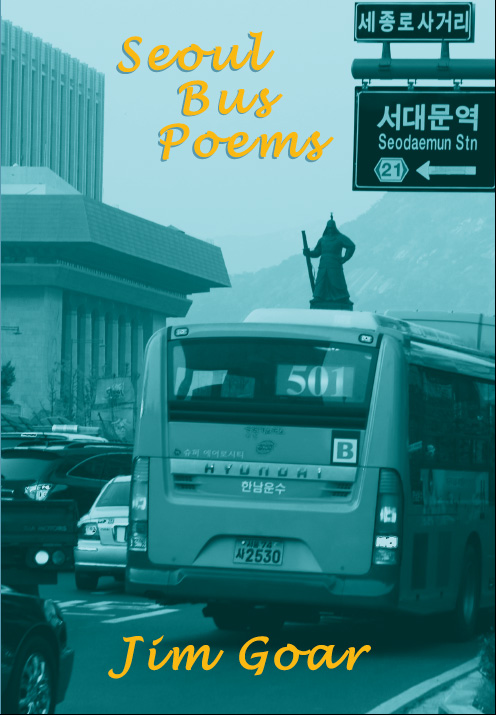
Bill Griffiths’ Collected Earlier Poems is probably the best introduction to this wildly innovative British poet, who died prematurely in 2007. The wonderful Fanny Howe has a small book of poems from her formative years in Emergence – this is her second Reality Street book. Jim Goar is a US poet previously based in Norwich in the UK and in South Korea, whose Seoul Bus Poems came out of the blue – it’s great, I loved it, I published it.
Friday, February 11, 2011
What I might have written about George Bowering
During the summer of 2010 and heading into fall, distractions increased, exponentially. I was sitting weeks with essays from Ian Rae’s then-forthcoming Open Letter issue on George Bowering, one he’d asked me to write an afterward for, an “afterward looking forward.” I was in Toronto while attempting to finish a novel and a creative non-fiction work on my Toronto time, and had just begun a housesit just west of Bathurst by College, when I received the call about the impending quick death of my mother. I sped immediately home, and she died after four hospital days, and forty-three years of ongoing illness, with the subsequent struggle-end of a relationship somehow existing concurrently. Before I left Toronto I had worked small notes, rereading bits of Bowering’s writing in hopes of triggering something worth adding to the already-ouvre of pieces on old uncle George. I managed but a single rough paragraph:
One of my earliest models for writing was George Bowering who, in my eyes, has always been a writer seeking to perpetually challenge and reenergize, constantly changing, in part through engagement with and critical encouragements toward the community of writers and writing around him, whether as a reader, through his editorial work or introductions to books, such as the years he spent publishing twenty issues of long poems through IMAGO (1964-1974) to his collaboration with Ryan Knighton (Cars, 2001) and the Friday night Shenanigan’s social group/magazine TADS. While compiling my own editorial project on Bowering, the perpetually-forthcoming George Bowering: Essays on his Works (Guernica Editions), poet Di Brandt mentioned Bowering’s years of essays and reviews, pointing out that Bowering has possibly done more critical work on those writers around him than any of his contemporaries. We spend so much time talking about Bowering’s range as a writer, editor, critic and the like, but so little time talking about what exactly that means, always back to the same centre, circling his involvement around the Vancouver newsletter TISH. Is that all there is? Is this focus something that Bowering himself has actively had a hand in? Possibly. Or the fact that, every time we turn around, another issue of some journal or other is acknowledging the work only through that old newsletter’s lens, refusing all other light?

Reading, inevitably, leads to other reading. I began writing poems and small fictions during high school, discovering Bowering’s writing through a circa-1987 gift of Poets of Contemporary Canada 1960-1970 (1972) from the eventual mother of my lovely daughter. My sense of history was geographic, the immediate world of Glengarry so rich it nearly choked, and my inevitable sense of “place,” when crafting my own, was one I quickly picked up through his poems as well. I might have read Irving Layton’s For My Brother Jesus (1976) during the same period, borrowed from the library as seemingly its only poetry title, but it was Bowering’s work that struck, the quick movement of line and line breaks, poems in clusters, whether written on geography, friends, other writers and various other baffles. His books, in my mind, were structurally anti-Layton, conceived as whole books, and not as random assemblages of “just enough” single poems. I began, through his writing, to see poems through the lens of larger structures, something that had to live side by side, in groups, sub-groups, to an eventual and possible whole. I began to understand, through his literary work, his editorial/publishing work, and critical work, that writing was something that connected to other writing in an essential way. Possibly being the son of a dairy farmer, who lived and worked in a community in similar ways, coloured my original perceptions, and prepared me for the epiphany. From Bowering, I discovered the works of Davey, Webb, Nichol, Marlatt, Blaser, Thesen, Spicer, McKinnon, Fitzgerald, Creeley. Artie Gold. One step leading immediately and directly to the next. Through Bowering, punctuating the idea that, as a writer, one required a community to exist, and to progress. From Bowering’s example, encouraged to constantly head further out, encouraged to keep and continue changing.
Thursday, February 10, 2011
Brenda Hillman: Pieces of Air in the Epic and Practical Water
Something about breathingThe air inside a war
As they approached the capitalWe couldn’t see what was breathing from the backCalves’ horns a-swizzleTen thousand years of instrumentsDecent amounts of free forevers
Horizons emphatically lifted in them
As they approached the placeThe size of B
Saw the exhalation of an “enemy”Breath being thought ofIt had a kind of lining in it
You believed in the tuneless yesBelieved in the O very tunelessnessAs they approached the capitalWith dusty signs and needs
All blendy breathingThereThere is
A river that would drink waterAn earth that would walk dirtA fire that would singe flameIn that air (“Nine Untitled Epyllions,” Pieces of Air in the Epic)

“Place” of course is and isn't metaphoric. When I need a snack a place isn't a metaphor, it's a refrigerator. Except in rare transcendental times, shifting internal geographies must be managed in relation to external ones. The question of place takes us automatically to the problems of reality and the ideal. During this writing I felt part of a collective enterprise that seems less local than a movement, say, or group of styles; that enterprise has to do with using an individual or personal mythology and an awareness of the purely abstract functions of language together, to recontextualize experience of several different kinds-in the case of this book, the mind's movement, the earth's movement, the movements of cultural knowledge. Much of the contemporary poetry of interest owes a debt to a felicitous combination of what could be metaphorically called "geological" forces: various kinds of early twentieth century avant-garde writing (Stein, Futurism) and some older impulses of revolutionary Worthsworthian unfolding lyric bumping up against the symbolist and late modernist and then postmodernist tragic play and self cancellation. Space and time work this way. Poetry that has been systemized by single ideologies is boring, so I hope the book seems uncategorizable. The geology is of course in the poems themselves. The book Cascadia seems granitic in that it was written under various kinds of emotional pressure. It is conglomerate and metamorphic in that it seems like a gathering of materials about change.
Hillman composes air and water through a structure of politically-charged and lyric urgency in a pair of works that are remarkable in their breadth, structurally, politically and lyrically challenging without being obtuse. Particularly striking in her Pieces of Air in the Epic is the sequence “Nine Untitled Epyllions,” writing “tiny epics” that include such striking lines as the couplet “I am a seamstress. // I have no country.”
Near The Great Arch
There, in the samespot as the annihilationof the world, loveof existence stood. Wewalked along. In boulevardwindows: plates, hatlike napkinsset for an imaginarymeal. Each act ofrevenge has love asa twin, but couldart convey this withoutviolence? In this parabola,i recalled the littledragon in the painting,that high, curly archof its tail likea syntax being inaugurated.Polka-dogs on emerald wings.The knight stabbed it;maybe the vertical princessprayed for it to live.This was the endof time. Dread hadnot returned to listen. (Practical Water)
In this pair of poetry collections, her pieces explore the objects of air and water, composing poems as simple as description that are never simple description. What does it mean to be a poet attempting to record and respond to the world through lyric? In the piece “Reportorial Poetry, Trance & Activism” from Practical Water, she writes:
I recorded notes in Washington while attending hearings & participating in actions to make the record collective & personal. Working with trance while sitting in Congressional hearings i recorded details into a notebook.
If bees can detect ultraviolet rays, there are surely more possibilities in language & government. The possible is boundless.

February Dawn
The near woketo a not-near
& in the heart’s brief VermontA fricative thaw—
(The spirits were beingextra quietso fear could finishits satin chasm);
out the window:ice-insects in a sequence
& children starting for the woodswithout their violins—
Wednesday, February 09, 2011
fwd; The Puritan, issue 12, winter 2011 now available;

Ladies and gentlemen, boys and girls,
The Puritan is back with a vengeance, and several major announcements!
First, we have a new submission format. You can now submit your work from within the thrilling confines of The Puritan website itself. Just access our new submissions manager located conveniently under the submissions sub-header. It's so magnificently efficient, you'll wonder what you ever did without it! (Please note that, after a token grace period, we will no longer be accepting work submitted directly to this e-mail address). So get with the program!
Second, and most importantly, The Puritan is proud to announce the release of its most dazzling and electrifying issue yet. Our 12th issue, Winter, 2011, is a true contender, glistening, gleaming with extraordinary vim, verve, and moxie. The fiction hits hard, the poetry dances circles around you, the interviews pull no punches! So lace up and grab your ring-side tickets for the show-of-a-lifetime.
The Puritan is back with a vengeance, and several major announcements!
First, we have a new submission format. You can now submit your work from within the thrilling confines of The Puritan website itself. Just access our new submissions manager located conveniently under the submissions sub-header. It's so magnificently efficient, you'll wonder what you ever did without it! (Please note that, after a token grace period, we will no longer be accepting work submitted directly to this e-mail address). So get with the program!
Second, and most importantly, The Puritan is proud to announce the release of its most dazzling and electrifying issue yet. Our 12th issue, Winter, 2011, is a true contender, glistening, gleaming with extraordinary vim, verve, and moxie. The fiction hits hard, the poetry dances circles around you, the interviews pull no punches! So lace up and grab your ring-side tickets for the show-of-a-lifetime.
FictionDaniel Scott Tysdal
Chistine Fadden
Joel McConvey
Sharon Erby
PoetryE Martin Nolan
George Moore
Kristine Ong Muslim
Martin Balgach
Bardia Sinaee
Mat Laporte
Richard Kostelanetz
Mark DeCarteret
William Doreski
Review
InterviewsAn Interview with John Lavery, rob mclennan
An Interview with Catherine Owen, Darryl Salach
An Interview with Daniel Scott Tysdal, E Martin Nolan
 This puritanical powerhouse would be nothing, of course, without your continued support. So please keep spreading the word. E-mail, tweet, blog, pamphlet, shout from the rooftops if necessary. The more you, our loyal fans, keep spreading the news, the more we can continue to produce this champion specimen of a journal each quarter.
Thanks again and enjoy.
Love,
The Puritan HQ
--
The Puritan: Frontiers of New English
Toronto, Ontario, Canada
www.puritan-magazine.com
puritanmagazine@gmail.com
Tuesday, February 08, 2011
12 or 20 questions: with Deb Olin Unferth

Deb Olin Unferth [photo credit: Margaret Olin] is the author of the memoir Revolution: The Year I Fell in Love and Went to Join the War, the story collection Minor Robberies, and the novel Vacation, winner of the 2009 Cabell First Novelist Award and a New York Times Book Review Critics' Choice. Her work has been published in Harper's Magazine, McSweeney's, The Believer, and the Boston Review. She has received two Pushcart Prizes and a 2009 Creative Capital grant for Innovative Literature, and was a Harper's Bazaar Editors' Choice: Name to Know in 2011. She teaches at Wesleyan University.
1 - How did your first book change your life? How does your most recent work compare to your previous? How does it feel different?
My latest book, Revolution, is a memoir, and my first book, Minor Robberies, is a book of short shorts. They feel similar in that I approached them with the same urgency and desire, and I revealed myself equally in both. But in Revolution I am better able to handle longer narrative, tell more of a story, I think. The short shorts are more obviously philosophical, perhaps. I think the answer to the question "why are you writing?" would be the same when I wrote each of them.
2 - How did you come to fiction first, as opposed to, say, poetry or non-fiction?
I never wrote poems, not even when I was in high school and in love, though my leap toward fiction was more rooted in philosophical and emotional interests, like many poets. I suppose it took me a long time to work my way around to nonfiction because I didn't see a lot of examples of nonfiction that used language and sound in ways that excited me. I'm not saying it didn't exist, I just didn't encounter it. Once I began finding it, I grew interested.
3 - How long does it take to start any particular writing project? Does your writing initially come quickly, or is it a slow process? Do first drafts appear looking close to their final shape, or does your work come out of copious notes?
It depends on the project. Short shorts come quickly, though I may revise them for years and they still may wind up looking very similar to how they started. My novel, Vacation, took tremendous reworking and changing, many, many drafts, notes, notecards, bargaining letters to God, and so on, but I began and ended the entire thing in a little over two years. With my memoir, Revolution, I had written bits and pieces of it over a period of many years without quite knowing what I would do with it. For a while I thought I'd write a spy novel -- ha! And then, after I wrote Vacation, I decided on a memoir and I spent a year and half gathering and rewriting and shaping.
4 - Where does prose usually begin for you? Are you an author of short pieces that end up combining into a larger project, or are you working on a "book" from the very beginning?
I do generally think of whatever I'm working on as either part of "the book" (whatever book I'm working on) or as some extraneous thing -- extra story, essay, exercise for no reason, outpouring of frustration, etc. There is always a "book" I'm working on -- or not working on, as the case may be.
5 - Are public readings part of or counter to your creative process? Are you the sort of writer who enjoys doing readings?
Readings are generally a positive experience, it's nice to get out and meet people. I've had plenty of the usual horror story readings though, the ones where two people show up, or where everyone is so bored that they are falling out of their chairs, etc. I've had enough of those to put the fear of God in my heart whenever I'm on my way to an event. But I've had lots of fun readings too.
6 - Do you have any theoretical concerns behind your writing? What kinds of questions are you trying to answer with your work? What do you even think the current questions are?
I think if the questions were easy enough to formulate that I could just write them down right here, I probably would have just done that instead of writing the books. But narrative communicates in a mysterious way. Through things like collage, repetition, the way tension is built, the note a piece ends on, the narrative is expressing something about the world, about morality, perception, time, the self, etc.
I would say my work has philosophical, political, and emotional concerns.
7 – What do you see the current role of the writer being in larger culture? Does s/he even have one? What do you think the role of the writer should be?
The role of the writer in the world is the same as it is for any individual. I happen to think every individual has a moral responsibility to, at the very least, not cause pain in the individuals (people and animals) around her.
8 - Do you find the process of working with an outside editor difficult or essential (or both)?
I have been very lucky with editors. I've had three fantastic editors work extensively on my books: Diane Williams, Eli Horowitz, and now with this most recent book, Gillian Blake. Also Dave Eggers edited my first book, but he did only a light edit -- and it too was just an outstanding edit. It is rare to have such luck, from what I understand. I loved working will all of them, and my books are much better for it.
9 - What is the best piece of advice you've heard (not necessarily given to you directly)?
Approach the form with daring and disregard for the norm.
10 - What kind of writing routine do you tend to keep, or do you even have one? How does a typical day (for you) begin?
I write every morning.
11 - When your writing gets stalled, where do you turn or return for (for lack of a better word) inspiration?
I do a lot of free-writing, a lot of exercises. I pull out things I never finished. I look at a part of the book that I haven't looked at in a while. I read.
12 - What fragrance reminds you of home?
What a question! Home? Several places have felt deeply like home. I felt deeply at home in Kansas, and the smell of skunk, of all things, reminds me of that (I had an entire family of skunks living under my house at one point and the smell lingered for a year). I felt at home in Chicago, of course, which is where I grew up, and each neighborhood I lived in had different smells. I spent a lot of time in Mexico as a child and certain fresh flower smells and the smell of exhaust reminds me of that. I now feel very at home in New York. I guess this is a question about sentimentality -- I suppose I can feel sensorally sentimental about any number of locations.
13 - David W. McFadden once said that books come from books, but are there any other forms that influence your work, whether nature, music, science or visual art?
I think visual art, especially the various kinds of modernists, had a big influence on me as I was developing my voice. Now I mostly listen to music for advice on how to think about structure.
14 - What other writers or writings are important for your work, or simply your life outside of your work?
Here are a few just off the top of my head of a few writers I currently love:
Living writers: George Saunders, Ben Marcus, Zadie Smith, Nicholson Baker, Jennifer Egan, Dave Eggers, Heidi Julavits
Also I'm a vegan and that's very important to me.
15 - What would you like to do that you haven't yet done?
Save the world. Like Superman, you know?
16 - If you could pick any other occupation to attempt, what would it be? Or, alternately, what do you think you would have ended up doing had you not been a writer?
I might like being a full-time animal rights activist. I might have liked to be a lawyer. Or do something with design. Definitely not a politician, firewoman, or anything having to do with cooking. Those are out.
17 - What made you write, as opposed to doing something else?
I took to it very quickly once I started. I started late (at twenty-five) and it never occurred to me to stop. Everything else I'd done up to that point, I stopped.
18 - What was the last great book you read? What was the last great film?
Zadie Smith's Changing My Mind is fascinating.
Hal Hartley's The Book of Life -- I can't believe how much I love this film.
19 - What are you currently working on?
A graphic novel.
Subscribe to:
Posts (Atom)

