Tuesday, April 15, 2008

Alberta dispatch: West Edmonton Mall

This most public of places, this marble mall
— Anne Swannell, Mall

Just how Edmonton became structured as a mall town is something I’ve been wondering about for years. Sitting at the Garneau Pub on 109th Street, I find two paragraphs in Linda Goyette and Carolina Jakeway Roemmich’s Edmonton In Our Own Words (2004) that explain a bit of the car/mall culture of the city of Edmonton. They talk about the creation of the interiority of the infamous West Edmonton Mall in the late 1970s, and the shifts in the construction of city that the mall might not have created, but was simply a part of.

Huge shopping malls were the consequence of rapid suburban growth in post-war Edmonton, not the cause of it. More than half of Edmonton’s residents lived in suburban neighbourhoods. Long before the Ghermezians arrived in town, Edmontonians had embraced Westmount Shopping Park, one of Canada’s first prototype shopping malls, and Southgate Mall, the largest mall west of Toronto when it opened in 1970. The city redesigned itself to serve drivers and their cars, not pedestrians or bus passengers. Public transit did not keep up with suburban growth. Suburban residents became impatient with Edmonton’s limited public transit to their neighbourhoods, not to mention winter waits at outdoor bus stops. They preferred to drive across a wide city to indoor shopping malls where they could park for free.

If you’ve never been here, you have to realize just how much the city is built for strip malls; strip malls, porn shops and liquor stores. There are far more here than in any other city I’ve been in the country; I’m still trying to figure out why that is. What makes a city? Is it population, construction (whether deliberate planning or accidents of movement), finances, cultural concerns, or all (or even none) of the above? Thinking, too, since Ontario was a creation of the Scots (and their dour moralism), it’s pretty much the only province you can’t purchase alcohol either in a convenience store or at the back of the bar to take home with you; what makes one geography have an idea and not another?

There is something about being in Edmonton that requires at least one visit to West Edmonton Mall. Mid-November, Lainna and I spent part of a Saturday wandering the Mall and watching roller coaster rides, the old-timey pioneer photo kiosk, the wavepool and skating rink; catching the movements and the human traffic and the coloured lights. As Alice Major suggested in an email, interesting for “how little use it makes of the traditional western décor or symbol. It tries to recreate Bourbon Street and beaches—places far away from here—not rodeos and wranglers.” I hadn’t been there in nine years, since the ottawa international writers festival’s Great Canadian Via Rail Tour back in 1998 with Sean Wilson, Kira Harris, David McGimpsey and Susan Musgrave, and going through as only tourists do—looking at everything, including participating in the shooting range, bowling alley and roller coaster—and buying (almost) nothing.

Years later, going through Elizabeth Smart’s journals [see my previous note on her here] from her own year in Edmonton as writer-in-residence at the University, I listen to the anger that comes out in her voice. Why did she hate her experience so much? I mean, apart from the fact that her youngest child, Rose, had died of an overdose six months earlier; is she complaining about the provincialism of the city or using that as her target, unable to process Rose any other way? How does (or even, can) one process the death of a child? Here is part of her entry for September 12, 1982:

To think! I was going to enrich their lives & I find myself poverty-stricken. A desert within, a desert without. Needing them—if only they’d take pity on—where can I find it—where is it hiding—the passion & the life.

Instead of the garden, what? (I’d hoped for the Wild)

Instead of friends? (Kind acquaintance? very different)

Instead of big resolving tension drinks? ( a civilized sip, stopped before one gets anywhere?)

Why is this Hell—& how shall I get out of it?

These terrible high-rises & fearsome geometry—not the breathtaking arrogance of N.Y. skyscrapers—& the muddy (but dried mud) parking lots—& the dominance of cars & the endless flat pavements, wide uneventful roads.

It stands to reason, there must be a pulsing human life somewhere, here as elsewhere, there must be. Does it take place in their homes—visiting back & forth, tiny exchanges, boring each other for a purpose?

O where for me shall my salvation come, from whence arise?

Twenty seven years beyond her, I can look into this passage and see shades of familiarity but I do not feel her obvious grief. Kind acquaintance? Am I simply too naïve, too polite (too “Canadian,” perhaps) and can see nothing else? Or is the difference itself in the city, the provincial aspect of Edmonton in the 1980s, highlighting the severe shifts from her many years in England and Ireland? How different this passage reads from her By Grand Central Station I Sat Down and Wept, despite being another book rife with heartbreak and disappointment. For Elizabeth Smart and Edmonton, there was certainly no love, or love lost. She might not have had anything left.

I can’t imagine she would have had any reason to go even near the mall, then bare a year old; the stories still float through the English department of her time here, unhappy, unkempt and worn out from drink. I only wish that more of her journals from this period were put into print; or was it simply more of the same? So much of the mall is certainly circus sideshow, yet so much is simply the same as almost any other mall, but one that continues, on and on with each turn of a hallway. With most of its space taken up on two levels, there are smaller malls that have spaces that seem much larger; the mirrored ceiling in the food court that allows the illusion of space, despite the lower ceilings.

West Edmonton Mall opened September 15, 1981, expanding further with three more phases of construction in 1983, 1985 and 1998. The mall was officially the largest shopping mall in the world until 2004, when the Jin Yuan, or Golden Resources Shopping Mall, also known as the “Great Mall of China” in Beijing, with over a thousand stores and a total area of 680,000 square metres. West Edmonton Mall might still be the largest in North America, but the current largest, constructed in 2005, is the South China Mall in Dongguan, with 1500 stores and a total area of 892,000 square metres. Edmonton’s almost seems puny in comparison, with only eight hundred stores, and a total area of 570,000 square metres.

Why did it take nearly a decade to get someone to take me back to the mall? In 2001, suggesting the same to a group of friends on Whyte Avenue, grad students at the University including poets Adam Dickinson and Andy Weaver, they looked at me and my obvious lack of better judgment without saying a word. I mean, how could I?

Nine years since I had wandered the mall, where we went bowling and for Budweisers (when in Rome, as they say) at the Hooters, simply because we thought it was funny (I think Canadians are far too subtle for Hooters, a family restaurant in the southern United States; over the past decade, three have opened and closed in Ottawa in quick succession). I won’t tell which author (I was told later) screamed like a little girl during that ’98 trip on the roller coaster. Edmonton in 1998, where we arrived by train, and somehow our hotel was out by the airport. At breakfast, seeing the sign that told of the daily special, eggnog paralyzers, preparing for the Christmas rush, perhaps? What, we asked, is in an eggnog paralyzer? The waiter slowly checked his 11am watch, looked at us disparagingly, and told us it was exactly what was in a regular paralyzer, except with eggnog. As though every school-child in Alberta had already been taught what we had yet to learn.

Even before I arrived, I knew: there is the mythological Alberta, and, even, the mythological Edmonton, holding on still to the myths of frontier. Robert Kroetsch wrote wild horses set loose over the High Level Bridge in What the Crow Said (1978), and wrote about the land he grew up on near Leduc in his first collection, his “Stone Hammer Poem” that now opens up Completed Field Notes (2002); the land his father and his grandfather owned; the land near where Alberta first struck oil, writing:

This paperweight on my desk

where I began
this poem was

found in a wheatfield
lost (this hammer,
this poem).

Cut to a function,
this stone was
(the hand is gone ―

There are the neighbourhoods, and then the city itself. In Strathcona, it’s still a walking neighbourhood, but no where else in Edmonton, it seems. What Donald Alexander Smith, Lord Strathcona (later, first Baron Strathcona) saw when he train travelled west, creating hotels and neighbourhoods in the wake of his rail. A section of what became Vancouver was built speculatively, waiting for what the advent of rail would bring; they say, for every mile of track, a dead Chinese labourer. Just what are these legacies built on? The Rideau Canal back in Ottawa, built on the blood and the bones of the Irish and French, brought in for the work and then abandoned, when work finally finished.

Former Edmonton resident George Melnyk, long moved to Calgary, also talked about the differences in Alberta of the provincial mythologies against those of the two major cities from his New Moon at Batoche (2000), writing:

My western Canadian identity has come to me through city life. I’m used to concrete towers, brick buildings, asphalt streets with long rows of houses, traffic jams and crowded malls. I’m not the only one. This is the way the majority of Westerners see the region every single day and yet that experience is viewed as incompatible with the agrarian myth of the region. The experience of city life from childhood to adulthood has moulded millions of Western Canadians but it is considered inauthentic compared to the genuineness of rural existence. The continuing self-image of the region is one of endless prairie fields or grasslands with their icons of farmers and cowboys holding us in its sway. The reason for this is obvious. The wheat farmer and cattle rancher are icons because they reflect the distinguishing feature of the region—its prairie geography and a livelihood tied to it—while the Western Canadian urban reality is viewed as the same as that of other cities. If you want a regional identity you have to take it from the land and not from the city. The land is distinguishing while the city is not.

Later on in the same essay, he writes:

Our culture has set landscape above the city. The city and the land are opposites in which the city is negative and the land is positive. That’s the myth we live by. Historical fact is a little different.
[…]
Where is Calgary’s mythical archetype? The glorification of the ranching life in the Calgary Stampede is the city’s association with the landscape, not Calgary itself. Edmonton’s archetype is Klondike Days and the heroic trek of gold miners to the Yukon.

But why, over my first Alberta weeks, did I keep returning to Kroetsch, to what I already knew? Why do these myths overshadow, and overtake, even against the weight of such otherwise fact? Editor Srdja Pavlovic encountered the same thing, writing the introduction to Threshold: An Anthology of Contemporary Writing from Alberta (1999):

I first encountered Alberta literature through Seed Catalogue, a collection of poems by Robert Kroetsch. The book was a present for my eighteenth birthday from my uncle, a sailor, who had just returned from one of his frequent exotic viaggi across the ocean. At the time, because of my limited English, I was not able to make out much of Kroetsch’s poetry. The verses sounded distant and complicated. But the book sat on my shelf for years and its dream-prints helped me imagine a distant place and wonder about the people living there. I was young and dreamed the symmetry of the world.

The dream-like Alberta, the imaginary Alberta; that urban prairie versus the rural prairie, and how, as far as the European settlers knew it, developed at the same rate. Writing about Alberta literary journals, Linda Goyette titled her piece in the same anthology “Imagining Alberta.” Flipping through pages of the first issue of filling Station magazine from Calgary, she writes:

I begin to wonder about the differences in perception between Alberta’s creative writers and journalists. Both are interpreters of place, but they see, hear, and tell stories differently. What are the poets and short-story writers discovering this year as they sift through life in a harsher province? Do they even live in the same Alberta? Do they like it better?

Further on, she offers an answer to her own speculations, some sort of conclusion:

Journalism is always about now. This imaginative Alberta has a past and a future, not just a present. Ghosts stick around.

There is the Mall, and then there is the myth of the Mall. There is the myth of the Mall imposed on the landscape but nearly invisible, unlike the century before, as railway hotels imposed themselves on the landscape from one coast to the other. As Edmonton poet Alice Major writes in the preface to her collection Tales for an Urban Sky (1999):

Mythologies are large things, continuous across the generations, marrying humanity to the earth and the sky. But it seems to me that myth-making is more local – a magpie impulse that catches sight of glittery things from the corner of its eye and builds them into some home structure. Myth is made up. It makes do with what it finds nearby.

When talking about Alberta or about Edmonton and any kind of deliberate or accidental mythos, why does it always keep coming back to Kroetsch? Why is one and not the other? Writing specifically of Edmonton and the myth-making of the annual July Klondike Days in his book Alberta, he explains that:

The image succeeds because it has a kernel of truth. The father who gets a gold-embroidered vest and a stovepipe hat for Christmas, the teenage boy studying his young beard in the locker room in January, the ladies, after bridge on a bitter February afternoon, looking at patterns and buying warm-coloured cloth by the bolt: they are part of a past that goes back to the erection of Fort Augustus in 1794, to the erection of its rival, Fort Edmonton, in 1795 – and in Alberta that ain’t history, it’s archaeology.

It is as simple as the difference between home and the dream of home? What if it was never your home to begin with? In the Strathcona Public Library, Myrna Kostach [see my previous note on her here and another here] explained the streetcar tracks down 104th Street to me from a photograph on the second floor wall, the days when they ran two-laned, across 82nd Avenue. A series of black and white photographs of historical buildings, and a group of bearded men. Why wouldn’t any of these framed portraits be labeled? Without even a year or address to place them?

Does West Edmonton Mall belong to the dream of Edmonton, the myth of Edmonton, or the harsh reality? It seems to be all of the above; it seems to be all of this and the nightmare too, as most of the local residents I’ve met wouldn’t be caught dead in the building, calling it Maul.

There is something very Canadian, one might claim, in the humble notions of self punctuated by the scattering of proud and remarkably (and often ironically) big, whether the giant Nickle outside of Sudbury, Ontario, the Big Apple along the 401 Highway near Coburg, Ontario, or the (now extinct) World’s Largest Lobster Trap that sat in Cheticamp, Nova Scotia, finally dismantled for parts by the owner in 1998. Kostash even responded to something out of her own Ukrainian background in her piece “Baba Was a Bohunk” (reprinted in The Vintage Book of Canadian Memoirs, 2001), writing of the large Easter egg in Vegreville, not far from Edmonton:

So, in Vegreville, in 1975, I, second-generation Ukrainian-Canadian, socialized Anglo-American, English-French bilingualist, confronted a festival organized from the consciousness of the first generation. I was amazed. It was obvious that the first generation had grown more self-confident, not to say boastful, and was now assuming that the Ukrainian-Canadian “fact” was of interest to all Albertans. No more church basements for them; the festival was held at the exhibition grounds. It was this generation which had erected last summer a monstrous, aluminum pysanka (decorated Easter egg) near the Yellowhead Highway in Vegreville, and dedicated it to the RCMP. (How short their memories are: it was the police who had broken up their hunger marches in the 1930s, closed down their Ukrainian-language concerts, spied on them in their Labour-Farmer Temples.) It was these same people who had scattered throughout Vegreville signs in shop windows saying “Vitayemo,” meaning “Welcome,” and innumerable plastic and china knick-knacks decorated with Ukrainian motifs. They operated concession booths at the festival selling kubassa-on-a-stick and T-shirts emblazoned with “Drink Molson’s Ukrainian” and “Kiss me, I’m Ukrainian.” The message seemed to be that anybody could be a Ukrainian; it was implicit that somebody would want to.

This is not about size, but identifying with a group; still, the marker is certainly there. There is gaudy big and then there is just gaudy; and then there is just big (again, with the associations often with kitch). What is this with our obsession with size?

In March, finding the Mall not big enough for a store from which I might find myself a pork-pie hat (think of Buster Keaton). Maybe had we been in Beijing, I said, which Lainna didn’t appreciate. In the end, it was easier to drive and find all of your stores in one place than to have them all scatterd, and still have to walk. In the end, Lainna and I using the Mall as a whole as a kind of exhibition space, parkland entertainment, taking pictures of the roller coaster I still won’t ride with her, the fake blue whale, the dragon in the movie theatre. Doesn’t it only become a carnival of commerce if you actually buy something?

Monday, April 14, 2008

12 or 20 questions: with Alison Pick

Alison Pick was the winner of the 2002 Bronwen Wallace Award for Poetry, the 2003 National Magazine Award for Poetry, and the 2005 CBC Literary Award for Poetry. Her first collection, Question & Answer, was short-listed for the Gerald Lampert Award for Best First Book and for a Newfoundland and Labrador Book Award. Her second, The Dream World, has just been published by McClelland & Stewart. Alison is also the author of the novel The Sweet Edge, a Globe and Mail Top 100 Book that has been optioned for film. Alison has lived, read, published and taught across the country. She now makes her home in Toronto where she is at work on a novel and a book of non-fiction.


1 - How did your first book change your life?

In every way—although I didn’t realize it at the time. I published it very quickly after starting out as a writer. In retrospect I see that having a book affords all kinds of cultural privilege, as well as giving membership into the world of letters. But then I thought it was simply par for the course. I also had no idea about any of the politics of the writing world in general and of the Canadian poetry scene in particular. There was a pure kind of pleasure to publishing Q&A that sometimes I wish I could get back to.

2 - How long have you lived in St John's, and how does geography, if at all, impact on your writing?

I don’t live in St. John’s anymore, actually, I live in Toronto. But The Dream World is a book that I wrote during the five years we lived in Newfoundland, and it is preoccupied almost entirely with geography (and with the intersection between language and place). I was what is referred to there as a “Come-from-Away,” and so the book looks at what it means to be a stranger in a new environment, both cultural and geographic.

3 - Are public readings part of or counter to your creative process?

Counter. I’m such a classic introvert, not in the sense that I’m shy, but that I get replenished by time alone and tired out by interaction. So a reading—even worse, a long series of readings—really takes it out of me. On the other hand, it’s incredibly rewarding to meet readers who appreciate the work, and a reading is most often where that happens. I’m getting to enjoy giving readings more, but it’s a skill I’m always trying to cultivate.

4 - Do you find the process of working with an outside editor difficult or essential (or both)?

Difficult, no, essential, yes. As a young writer the skill I am most focused on is learning to be my own best editor. I love editing my own work, but it’s still (and always will be, I assume) invaluable to have a set of fresh eyes. I’ve been incredibly lucky with my editorial experiences thus far. Lynn Henry at Polestar and Raincoast (now at Anansi) and Molly Peacock at M&S are both incredibly talented. Respectful, astute, deep listeners. I also have a whole army of friends whose feedback I trust: Steve Heighton, Michael Crummey, Anne Simpson [see her 12 or 20 questions here], David Seymour, Alayna Munce, Degan Davis

5 - When was the last time you ate a pear?

Last year. In Newfoundland. It tasted like a rock.

6 - How easy has it been for you to move between genres (poetry to fiction)? What do you see as the appeal?

I wouldn’t say it’s been easy, but it has felt necessary. I’m drawn to both genres, and take pleasure in the similarities as well as the differences. There are poets and novelists (although mostly poets, I think) who contend you can’t do both, at least not with success and/or integrity. To me, though, writing in two genres feels like exercising the same muscle but in different ways. My hope is that one strengthens the other.

7 - What is the best piece of advice you've heard (not necessarily given to you directly)?

It was threefold: read, read, read.

8 - What kind of writing routine do you tend to keep, or do you even have one? How does a typical day (for you) begin?

I write first thing in the morning. Ideally I don’t check email until I’ve put in four or five hours. The business end of things I deal with in the afternoons. I don’t take a weekend, not because I’m disciplined, but because I’m miserable without the time to write.


Black coffee is essential.

9 - What made you write, as opposed to doing something else?

I stumbled into it. Took a creative writing elective in the final year of my undergraduate degree. Published a couple poems in The New Quarterly (thrilling!). Got a small grant from the OAC. Travelled to St. Peter’s Abbey to attend the Sage Hill Poetry Colloquium with Tim Lilburn. Stayed on at St. Pete’s for several months, writing. Got another small grant. Published more poems, and then a book. Etc. I keep waiting for the day when I have to get a day-job, but so far so good.

10 - How does your most recent book compare to your previous work? How does it feel different?

It’s better!

Seriously, though. I wrote Question & Answer as a brand new poet with almost no training and with no background in literature whatsoever. I felt my way through it—it was an intuitive, visceral enterprise. The Dream World has not only more life experience but also more poetic training behind it. It’s a tighter book, better edited. I’m very happy with it.

11 – What do you think you would have ended up doing had you not been a writer?

I was thinking of being a therapist. The world is a better place for this not having had happened.


12 - What are you currently working on?

I’m working on two things, both big departures for me. The first is a novel set in Prague around the time of the Munich Agreement, in the autumn of 1938. It focuses on the “Kindertransports” that sent Jewish children out of Europe just before the war. My own grandparents came to Canada around that time as well, renounced their Judaism and raised my father and uncle Christian. The second book I’m working on is a book of non-fiction exploring my family’s relationship to religion post-Holocaust, my own accidental discover of my family’s secret in my early teens, and my subsequent exploration of religious and cultural identity.

12 or 20 questions archive

Sunday, April 13, 2008

The Ivory Thought: Essays on Al Purdy

eds. Gerald Lynch, Shoshannah Ganz and Josephene Kealey
I recently got a copy of The Ivory Thought: Essays on Al Purdy (Ottawa ON: University of Ottawa Press, 2008), produced out of the conference that the University of Ottawa had on the late poet Alfred W. Purdy a couple of years back [see my note on the conference itself here]. The event even included a poetry reading that Gerald Lynch had me host, with readings by conference participants George Bowering [see his 12 or 20 questions here], Steven Heighton and Laurence Hutchman and two locals, Stephen Brockwell [see his 12 or 20 questions here] and Gwendolyn Guth. The book from the conference itself, then, has a wonderful mix of formal and informal essays, as well as a couple of poems by Brockwell and Guth, written just for the event. I’m very appreciative of being able to go to these conference, with this being my third, after Modernism [see my note on the book for such here] and the Long Poem Symposium back in 1996; I should really start going to more of these things.

One of the highlights of the collection (and of the conference itself) had to be Steven Heighton’s piece “On Trying to Wear Al’s Shirts,” that even includes the editors’ note, “Steven Heighton did in fact deliver an earlier version of the following essay while wearing a loud blue polyester shirt that had belonged to Al Purdy.”

How do we come to wear the shirts of mentor poets? Is it a good thing, bad? Is it a gesture of loyalty or a ghoulish appropriation? Or is it neutral—utterly beside the point? I’m going to talk here in an impressionistic, non-syllogistic way about wearing the shirt of an admired older poet while trying to fill it out in my own manner.
The Bowering piece, while managing to work his way through all of the arguments and concerns of his TISH and post-TISH days, managed to distract just long enough to slip in some of the finest commentary on Purdy and Purdy’s work of the whole event, and is worth the price of the collection alone. Being that George Bowering wrote the first little mimeo on Purdy’s work back in 1970, many of the conference participants, whether they wanted to or not, had to reference what he had done (and a number of them really didn’t seem to happy about that). Bowering’s “Purdy among the Tombs” begins:

Al Purdy and I exchanged letters, as they say, for forty years, so of course we had some differences of opinion. The last time I saw him was a week before he died on Good Friday, 2000. It happened that I owed him a letter, so a couple of years later I left one for him on his book-shaped headstone at the bottom end of Purdy Lane in Prince Edward County, Ontario.

I never thought that he’d write back. I should have known. So here I am with another letter I owe him. I am really looking forward to his reply this time.
The next conference, Postmodernism, promises to be amazing, and happens from May 9-11, 2008 (I’ve already purchased my flight home for such), & even includes two different poetry readings, one by locals that I'm in, and another, with Frank Davey, Dennis Cooley [see his 12 or 20 questions here], Christine Stewart [see her 12 or 20 questions here], the Max Middle Sound Project, etcetera...

Friday, April 11, 2008

12 or 20 questions: with Dara Wier
Dara Wier was born in New Orleans, Louisiana. Recent books include REMNANTS OF HANNAH and REVERSE RAPTURE (awarded the Poetry Center & American Poetry Archives Book Award). A Selected Poems is forthcoming from Wave Books. Her poems can be found in Pushcart, Best American Poetry, Norton, Soft Skull and various other anthologies, and in American Poetry Review, Conduit, Crazyhorse, Denver Quarterly, jubilat, slope, Turnrow, New American Review, Volt. A limited edition, (X IN FIX), is in RainTaxi’s Brainstorm series. The Guggenheim Foundation, the National Endowment for the Arts, the Massachusetts Cultural Council and the American Poetry Review have supported her work. She's a member of the poetry faculty and director of the MFA program for poets and writers at the University of Massachusetts Amherst and co-director of the Juniper Initiative for Literary Arts and Action. About REVERSE RAPTURE Stephen Rodefer writes "...a paratactic and sometime screened poetic narrative of thought, time, room, face, secrets, address, body, relations, religion, casual philosophy, the domestic, demons and the demotic, language and much else--in a steady unfolding of distanced but under your skin mind-forms." With Guy Pettit and Emily Pettit, she edits and publishes chapbooks and broadsides for Factory Hollow Press.

1 - How did your first book change your life?

I was watching a deer lick a salt lick I'd put out by a creek I was living by then. The phone rang, someone said, we want to publish your book. I watched the deer look up to see if she was in any danger. She wasn't. Surprise, joy, fear. It took me out into the world in ways I hadn't anticipated. Most of which have been better, more curious, and tirelessly surprising than I could have imagined.

2 - How long have you lived in Amherst, Massachusetts, and how does geography, if at all, impact on your writing? Does race or gender make any impact on your work?

Since 1985. At first landscape, weather, New England's ways, being new and strong frightened and energized me. So much to see, to consider. To be quiet about. I didn't know how to wear a coat, how to nod in silence. I wanted to live in New England, since I was a kid, watching boats from around the world come up the river past our house south of New Orleans. Why? Because the stories and poems said so. A dead horse might float by on the river. I couldn't tell anyone.

Gender, race, we're dealt. Any gender, any race, we live with what we get, well, with exceptions finely tuned.

I've been asked Who Are You, Where Do You Come From, we're all asked this. Trouble is when asked one can't help but hesitate to think that no matter what one says one will be somehow or other be reduced, pigeon-holed, sometimes stigmatized, other times credited with things which one needn't be credited.

Just look at the public discussions of the 08 US presidential primary. It goes so many ways.

When I knew nothing but south Louisiana, its country, rivers, prairies, swamps, shell roads, New Orleans, little towns, cemeteries, houses on stilts, everyday transport on water, no mountains, no hills, the levee was the main artery next to the river's fierce, sometimes providing, sometimes destructive, ever-present power--these I loved, and wanted to leave to know other places. When I lived in Virginia in the mountains, daily I was surprised that I couldn't see past them. I think I'm a geographical literalist.

3 - Where does a poem usually begin for you? Are you an author of short pieces that end up combining into a larger project, or are you working on a "book" from the very beginning?

Sometimes a poem begins with a sensation, sometimes with a word, sometimes a combination of words, sometimes with a phrase, sometimes with a line, sometimes with a title, sometimes with a tone, sometimes with a sound, sometimes because I'm grieving or pissed or remote or estranged or one with the universe, sometimes because to write a poem is all I want to be doing. I've never started to write a book, never started a book until any book's been underway. Once I realize I'm in a book's midst, I try to forget that I am, fearful of self-consciousness spoiling things. I've always had faith in poetry's powers.

4 - Are public readings part of or counter to your creative process?

There have been times when reading in public I've seen a line coming that I knowI wouldn't want to read out loud. I change it as I go and try like hell to seamlessly keep the poem together. I like public readings, for the most part, I'm grateful to any audience that gives poems a chance to register. My favorite public readings are for radio, the sense of intimacy it provides is fairly wonderful. I'm surprised at how casually readings are often treated, room not so hot, acoustics an after-thought, lighting unconsidered, spell broken immediately following with pretzels and beer. But, no, I wouldn't say readings are ever counter-productive. I guess they could be if one lapsed into a routine that's demeaning.

5 - Do you have any theoretical concerns behind your writing? What kinds of questions are you trying to answer with your work? What do you even think the current questions are?

If there are any theoretical concerns behind, or inside my writing, I try to keep these unknown, ignored, better left unsaid. But I read philosophy, aesthetics, history, science. I've been around for rounds of barrages of language associated with theories. If a theory has at its center something orginally forceful, I enjoy following its logic. I'd never consciously apply any of that logic to something I'm writing within a poem. But I'd be wrong to say what settles in one's mind can be completely ignored.

6 - Do you find the process of working with an outside editor difficult or essential (or both)?

Not essential, but then I've rarely until recently had the advantage of an involved editor. Matthew Zapruder [see his 12 or 20 questions here], of Wave Books, has been involved in the final determinations of what's in and what's out of my last few books, and that's been helpful. We don't do much, hardly any, line-editing; we do culling and keeping. I would trust him to tell me if a poem could be saved or improved, I would trust him to say something like, you don't want to do that, do you?

7 - After having published more than a couple of titles over the years, do you find the process of book-making harder or easier?

Do you mean putting a book together after its poems are written?

8 - When was the last time you ate a pear?

Yesterday. It was a beauty, a quintessential pear, so fine that a friend who was visiting thought we shouldn't eat it.

9 - What is the best piece of advice you've heard (not necessarily given to you directly)?

Two things, Louis Pasteur's: Chance favors the prepared mind, and something someone said about how long it takes to make something, how little time it takes to destroy it.

10 - How easy has it been for you to move between genres (poetry to journalism/non-fiction)? What do you see as the appeal?

I've always written in several genres, though always, by far, have written more poetry. I think a visual artist would have an idea about whether she's working on a sketch, a collage, an oil, a 3 dimensional piece, a film, you know, one has a sense of materials and with that a sense of formal use. I first wrote poetry, and wanted nothing more than to write poetry. Then I wrote journalism to try to figure out a way to make a living while writing poetry. I was never a journalist in any significant way. I wrote stories when the fiction writers around me were whining about how impossible it was to write stories, to see what that felt like. I stopped that after three stories. But I liked writing them. I've written some reviews, some essays, lots of prose that's been for poets I've worked with in seminars at various times, and some of this prose is some of my favorite prose, and I've written. And lately, to get rid of the obsessive work of REVERSE RAPTURE, regular prose stories.

11 - What kind of writing routine do you tend to keep, or do you even have one? How does a typical day (for you) begin?

Over the years there have been several routines and non-routines. The best involve writing everyday, at least something, best of all, writing everyday to complete something on that day. When I wrote REVERSE RAPTURE I wrote 81 lines aday; I'd call that the best writing routine I've ever stumbled into. I think the most important routine might be one combining reading, writing, and living with loved ones, if one is so lucky.

12 - When your writing gets stalled, where do you turn or return for (for lack of a better word) inspiration?

I wish I could answer this question. What do I do, I get up and walk around. I go outside. I pick up a broom. If its really bad I go find a river. I walk around. I wish I could say there is a sure fire way to overcome being stalled. I lie down on the floor and kick my feet a little. I don't know.

13 - How does your most recent book compare to your previous work? How does it feel different?

REMNANTS OF HANNAH, it feels short and sweet, after a couple of longer books, I wanted a shorter one, and that's what it is.

14 - David W. McFadden once said that books come from books, but are there any other forms that influence your work, whether nature, music, science or visual art?

Yes, all those things are important, they make life worth living.

15 - What other writers or writings are important for your work, or simply your life outside of your work?

We are lucky we have these others outside of ourselves. There are so many.

16 - What would you like to do that you haven't yet done?

I don't know. A lot. Everything.

17 - If you could pick any other occupation to attempt, what would it be? Or, alternately, what do you think you would have ended up doing had you not been a writer?

A farmer.

18 - What made you write, as opposed to doing something else?

I don't think I can honestly say, I don't think writing has been opposed toanything. I wrote from when I first learned to write, around the age of 4. I know that's preposterous, but it's true. So lucky for me I never had the anxiety of having to make any decisions about this. Doesn't mean I should have never questioned the occupation, vocation, I just didn't.

19 - What was the last great book you read? What was the last great film?


20 - What are you currently working on?

Finishing a collection of short stories, finishing putting together a selected poems, arranging and editing a prose book of essays. New poems, stories. A trip to Virginia and back up the east coast. A trip to Spain. Thoughts about what to plant now that the season's changing, good friends' and family's futures, what to do next, tomorrow, what's next.

Someone once said to me, "Stop thinking." That seemed pretty strange.

Wednesday, April 09, 2008

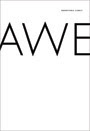
Dorothea Lasky's Awe

Be scared of yourself
The real self
Is very scary. (“Whatever You Paid For That / Sweater, It Was Worth It”)
Lately I’ve been reading American poet Dorothea Lasky’s first trade collection Awe (Seattle WA/New York NY: Wave Books, 2007), after her chapbooks Alphabets and Portraits and The Hatmaker’s Wife. Lasky is the sort of poet that has been much discussed lately, with her first collection highly anticipated, and rightly so.

WHAT YOU THINK WHEN YOU ARE CONFUSED

I knew that somehow in the midst of this confusion
Was the true dawning of myself.
My soul was a man and like a man
I would wander forever among the stars and flowers, lonely.
My heart a lonely star with no matching star
Anywhere in the universe and even so
Looking like a man for somewhere
To rest my freedom and resent it.
Lasky’s poems work both the amazement and the breaks; the chasms that exist between situations, moments and people and I am very taken with her use of the straight statement, the twists that come out into single lines. Lasky is a poet of amazing phrases and clear insights in such short, contained bursts, poking through and past what isn’t important, straight into the essence of things.

THE DODO BIRD

Some have described
The dodo’s beak as actually grotesque.

It was long, pale yellow, and crooked.
But what other thing is like that? The sun!

And the sun upon my winglets
Has made me something no other bird or sun can compare.

And in mediating myself upon the bird
I have found that I could actually love.

My love, what are you that the dodo isn’t?
Economy, the black mark on the sun,

The childless watch over the heavens?
Or is the dodo the thing growing from the sun spoke?

Yes, yes, that is you.

Monday, April 07, 2008

Rachel Zucker's The Bad Wife Handbook

The Tell

The basketball makes him not my husband
and saying so in poems makes me

the bad wife. Where is the private, i.e., impassive
mask I purchased for my wedding

but then forgot to wear?

My mind wrote me a letter requesting to be
left out of it. My body sent flowers

and a note: “sorry for your loss.”
But both paid to see the flop and stayed in ‘til the river.

Better to fold the winning hand than fall in love
with your cards
, says the husband.
In New York City poet Rachel Zucker’s [see her 12 or 20 questions here; see my earlier interview with her here] third poetry collection, The Bad Wife Handbook (Middletown Connecticut: Wesleyan University Press, 2007), she writes out the small, incongruous details of domestic life. The Bad Wife Handbook explores some of the nuances of living the world of husband, children and simply living, including the darker moments of being domestic, and being a wife, mother, neighbour, writer and lover (why she calls it the “bad wife” handbook; how to be a bad wife, perhaps, by watching her), as well as being the author of such poems as these, such as the poems in the “Autography” series:

Autography

I want to change your mind. Not
you.

You’re, as you are, what I want, even his
blinking neon: [no] indecision

vacancy sign. I have room
for you and these untrue

I mean disloyal
affections. I’m

a penny. Hardly
something. One

in a history of immodest
women: want, wants, wonton, I.
How is it possible for poems to be so easily self-aware without being self-conscious? Or, as she wryly states in the long poem “The Rise and Fall of the Central Dogma,” “That sex is an effective way of generating warmth.” Zucker’s poetry works with such a complicated ease, a collage work of words, image and phrases built in sequence and never apart, never separated from the poem and poems that follow.

Autography 2

Lied. Said I’d be
satisfied with ____.

Truth is:
I want to ruin your life.

Throw them over, some
overture, ignominious

ruin, some proven—

the rest is marriage
by which we bear up

and better ourselves.

Sunday, April 06, 2008

12 or 20 questions: with Rachel Zolf

[photo credit: Sharon Harris]

Rachel Zolf’s newest full-length collection of poetry, Human Resources, was released in spring 2007 by Coach House Books and recently shortlisted for a Lambda award. Her previous collections are Masque (The Mercury Press, 2004), which was shortlisted for the 2005 Trillium Book Award for Poetry, and Her absence, this wanderer (BuschekBooks, 1999), which was a finalist in the CBC Literary Competition and will be reprinted as a new edition this fall with a foreword by M. NourbeSe Philip. New York’s Belladonna books published a chaplet of Zolf's poetry in 2005 entitled from Human Resources and she has a new chapbook, Shoot and Weep, just released from Nomados Literary Publishers. Her work appears in the anthology Shift & Switch: New Canadian Poetry and a forthcoming Coach House anthology of innovative Canadian women poets. She has published and performed her poetry across Canada and the U.S., and her critical essays have appeared or are forthcoming in Xcp: Cross-Cultural Poetics, West Coast Line and Open Letter. She was the founding poetry editor of The Walrus magazine and has edited books such as Betsy Warland’s only this blue (The Mercury Press, 2005).

1 - How did your first book change your life?
I don’t know if I let it much, unfortunately. It’s taken me a long time to allow myself to be a writer. But yes, at the risk of sounding essentialist it gave me access to a medium of communication that I really really needed.

2 - How long have you lived in Toronto, and how does geography, if at all, impact on your writing? Does race or gender make any impact on your work?
I’ve lived in Toronto too long – I think 36 years or so. Certainly the polvocality of the city has a huge impact on my writing.

3 - Where does a poem usually begin for you? Are you an author of short pieces that end up combining into a larger project, or are you working on a "book" from the very beginning?
I tend to work in long forms, conceptual sequences.

4 - Are public readings part of or counter to your creative process?
They are in the sense that I don’t necessarily wait until a poem is perfectly finished (as if it ever is) until I read it in public. I like trying new work out in a reading, seeing what kind of responses it generates. There is a performative sound element that keeps coming up in my work and those poems are particularly interesting to play with in front of an audience.

And in fact reading can change the way both the reader and I perceive the book. I read from Human Resources very fast, for example, to enact the kind of information overload you experience in the text. but when you actually sit down to read it privately, you have to read it very slowly to tease out its associative strands.

5 - Do you have any theoretical concerns behind your writing? What kinds of questions are you trying to answer with your work? What do you even think the current questions are?
I don’t think you can separate theory from writing. All my work poses questions, many unanswerable, about knowledge, ethics, mastery, disaster.

6 - Do you find the process of working with an outside editor difficult or essential (or both)?
I’ve had mixed experiences with editors, but working with a good editor is definitely a useful process, a gift in fact. Working with an inexperienced editor or one too heavy-handed in attempting to impose their own will can be a real pain.

7 - After having published more than a couple of titles over the years, do you find the process of book-making harder or easier?
I definitely found my most recent book an easier process than previous ones. Hope that trajectory will continue!

8 - When was the last time you ate a pear?
I think someone like me is supposed to say she prefers peaches.

9 - What is the best piece of advice you've heard (not necessarily given to you directly)?
Sometimes you have to lie to the lover.

10 - What kind of writing routine do you tend to keep, or do you even have one? How does a typical day (for you) begin?
I’m trying to develop one but things get in the way.

11 - Where is your favourite place to write?
I try to write in my office but it isn’t heated so I’m spread out on the dining room table waiting for spring.

12 - When your writing gets stalled, where do you turn or return for (for lack of a better word) inspiration?
Ha, inspiration. I guess you could say I turn to research because most of my writing comes directly from the research I collect.

13 - How does your most recent book compare to your previous work? How does it feel different?
Every book is different. My most recent work is this chapbook, Shoot and Weep, and I think there are only three lines in it that come from “me.” This is a definite shift for me that I’m liking.

14 - David W. McFadden once said that books come from books, but are there any other forms that influence your work, whether nature, music, science or visual art?
Film techniques: montage, assemblage – documentary assemblage in particular – associative research practices, work with documents, found materials, etc.

15 - What other writers or writings are important for your work, or simply your life outside of your work?
The writers I look to depend on the project I’m working on. Lately, I’ve been reading folks like Judith Butler, Jacqueline Rose, Achille Mbembe, Hannah Arendt, Giorgio Agamben, Emmanuel Levinas, Wendy Brown, Ella Shohat.

16 - What would you like to do that you haven't yet done?
Write every day. Live by water. Feel good most of the time.

17 - If you could pick any other occupation to attempt, what would it be? Or, alternately, what do you think you would have ended up doing had you not been a writer?
I’m done attempting other occupations.

18 - What made you write, as opposed to doing something else?
The urge to inscribe.

19 - What was the last great book you read? What was the last great film?
The Battle of Algiers is definitely the last great film I’ve seen. I recently really liked reading Renee Gladman’s The Activist and Juliana Spahr’s The Transformation.

20 - What are you currently working on?
A book on competing knowledges in Palestine-Israel. Shoot and Weep is the first part of it.


12 or 20 questions archive

Saturday, April 05, 2008

12 or 20 questions: with Myrna Kostash

OH BOY, GOT AN HOUR OR TWO? ALL OF BABA'S CHILDREN WAS PUBLISHED IN JANUARY 1978 AND REMAINS THE BOOK MOST PEOPLE KNOW ME BY EVEN IF THEY HAVEN'T READ IT. I WORKED ON IT WHILE TAKING A SABBATICAL FROM THE TORONTO FREELANCE RUNAROUND. BUT HERE I STILL AM IN EDMONTON 30 YEARS LATER. ONE OF THE REASONS FOR THIS REROOTING IN MY HOME TOWN IS PRECISELY THE RADICAL CHANGE IN MY LIFE THAT BABA'S CHILDREN PRODUCED, NAMELY THAT THE UKRAINIAN-CANADIAN COMMUNITY 'NAMED' ME ONE OF THEIRS AND EVENTUALLY I ACCEPTED THE NAME OF UKRAINIAN-CANADIAN WRITER - WITH AN ATTITUDE, TO BE SURE - ALONG WITH MY OTHER LITERARY IDENTITIES SUCH AS NON-FICTION, FEMINIST, NEW LEFTIST AND WESTERNER, AND EMBRACED THE IDEA OF LIVING A UKRAINIAN-CANADIAN LIFE IN EDMONTON (FOR EXAMPLE, 17 YEARS IN THE UKRAINIAN-CANADIAN SOCIALIST FEMINIST HOUSING CO-OP, "HROMADA"). OVER THE DECADES THIS IDENTITY KEPT GETTING MORE COMPLEX AS I TOOK ON HISTORICAL, CULTURAL AND POLITICAL BAGGAGE FROM EASTERN EUROPE AND, MOST RECENTLY, SPIRITUAL INHERITANCE FROM BYZANTIUM. AND IT ALL STARTED FROM A MOTEL IN TWO HILLS, ALBERTA, IN THE SUMMER OF 1975.

2 - How long have you lived in Edmonton, and how does geography, if at all, impact on your writing?

I WAS BORN IN EDMONTON IN 1944, LEFT IT IN 1965, RETURNED IN 1975 AND AM STILL HERE, ALBEIT WITH FREQUENT ABSENCES OR GETAWAYS AS WRITER-IN-RESIDENCE OR VISITING LECTURER IN OTHER PARTS OF CANADA OR ON LENGTHY SELF-FINANCED RETREATS ABROAD. UNTIL A COUPLEOF YEARS AGO I WOULD HAVE SAID THAT LANDSCAPE HAS NO IMPACT ON MY WRITING, IN THAT I HAD NEVER ADDRESSED IT AS A SUBJECT OF MY WRITING (EXCEPT FOR ONE BRAVURA LITTLE ESSAY ABOUT MONTANA) NOR BELIEVED IT HAD ANY IMPACT ON MY STYLE OR TECHNIQUE. THIS HAS CHANGED SOMEWHAT. DURING THE COURSE OF THE LAST 10 YEARS IN WHICH I HAVE IMMERSED MYSELF IN THE STUDY OF BYZANTIUM, I HAVE COME UP FOR AIR IN MY OWN TIME, AS IT WERE, BY ALSO WORKING ON RADIO DOCUMENTARIES AND ANTHOLOGIES ABOUT WESTERN CANADIAN HISTORY, AS FOR EXAMPLE MY MOST RECENT BOOK, READING THE RIVER: A TRAVELLER'S COMPANION TO THE NORTH SASKTACHEWAN RIVER. FOR THE FIRST TIME IN MY LIFE ON THE NORTH SASKATCHEWAN, I TOOK AN INTEREST IN THE RICH HISTORY AND LITERATURE ASSOCIATED WITH IT, AND NOW I'M A TOTAL PARKLAND PATRIOT (NOTE: NOT THE PRAIRIE). HOWEVER,THIS PATRIOTISM WAS SEVERELY CHALLENGED RECENTLY WHEN I SPENT SEVERAL MONTHS IN CAMPBELL RIVER ON VANCOUVER ISLAND WHOSE GEOGRAPHY LET ME SWOONING.

Does race or gender make any impact on your work?

RACE HAS HAD A CONSIDERABLE IMPACT IN THAT, ONCE THE CULTURE WARS REDUCED ALL EURO-CANADIAN IDENTITIES TO 'WHITENESS,' LONG-LABOURED-OVER POLITICS AROUND UKRAINIAN-CANADIAN ETHNICITY BECAME IRRELEVANT IF NOT UNWELCOME. (SEE MY PERSONAL ESSAY IN BOOKS IN CANADA LAST NOVEMBER, "HOW I LOST MY HYPHEN AND FOUND MY GROOVE.") AS FOR GENDER, AS A NONFICTION WRITER I'VE HAD MANY MANY OCCASIONS TO ADDRESS THE SUBJECT DIRECTLY AS A FEMINIST. AS A CREATIVE NONFICTION WRITER, MOREOVER, I TOOK IT OVER THE EDGE IN A SERIES OF NONFICTION TALES ABOUT THE INTERTWININGS OF HISTORY, POLITICS, ETHNICITY AND HETEROSEXUAL LUST, IN MY BOOK, THE DOOMED BRIDGEGROOM.

3 -Where does a piece of non-fiction usually begin for you? Are you an author of short pieces that end up combining into a larger project, or are you working on a "book" from the very beginning?

I WRITE BOTH SHORT AND LONG ARTICLES AND ESSAYS AS WELL AS BOOKS AND RADIO DOCUMENTARIES. THEY HAVE ALL BEEN DISCRETE PROJECTS, I.E. I SEEM TO SENSE INSTINCTIVELY WHETHER I HAVE A BIG, MEDIUM OR SMALL SUBJECT. HAVING SAID THAT, MY BIG SUBJECTS TEND TO BECOME MONUMENTAL - A PROJECT TO WRITE ABOUT THE LIFE OF A BYZANTINE SAINT, FOR EXAMPLE, BECAME A SHORT COURSE IN BYZANTINE STUDIES, AND THEN A LIFE-CHANGING PILGRIMAGE BEFORE IT SETTLED DOWN INTO A LITERARY NONFICTION COMBINING TRAVELOGUE AND MEMOIR. MY MEDIUM-SIZED SUBJECTS ALSO TEND TO BECOME MORE AMBITIOUS AS I KEEP ON RESEARCHING AND READING. FOR INSTANCE, A ONE-HOUR CBC "IDEAS" DOCUMENTARY ABOUT THE FROG LAKE MASSACRE OF 1885 HAS BECOME A COUPLE OF HUNDRED OF PAGES OF A LITERARY ANTHOLOGY.

4 - Are public readings part of or counter to yourcreative process?

THEY ARE PART OF THE POST-CREATIVE PROCESS I.E. THEY ARE PERFORMANCES OF WORK I'VE ALREADY COMPLETED. I VERY MUCH ENJOY DOING THEM BUT IT DID TAKE SOME TIME TO FIGURE OUT WHAT KIND OF NONFICTION WORKS FOR A READING. IT BETTER HAVE A STORY ATTACHED! FOR THIS REASON, I'VE LEARNED TO COMBINE AD LIBBED CONVERSATION AND ANECDOTE WITH THE FORMAL READING. I'VE BEEN TOLD THAT YOU CAN HOLD THE ATTENTION OF THE AVERAGE LISTENER FOR 7 MINUTES BEFORE THEY DRIFT OFF.

5 - Do you have any theoretical concerns behind your writing? What kinds of questions are you trying to answer with your work? What do you even think the current questions are?

I BEGAN LIFE AS A PUBLISHED WRITER WHEN THE NEW JOURNALISM [THERE MUST BE A HOT LINK YOU CAN INSERT HERE] WAS AT ITS PEAK, IN THE EARLY 1970S. BUT I DIDN'T QUITE REALIZE THAT THAT WAS WHAT I WAS WRITING UNTIL I CAME FACE TO FACE WITH THE SNOBBERY OF THE ENGLISH-CANADIAN LITERARY ELITE TOWARD THE GENRE OF NONFICTION AND DECIDED, ALONG WITH OTHER NF WRITERS, TO FIGHT BACK. WE HAVEN'T ACTUALLY 'THEORIZED' OUR GENRE AS HISTORICIZED IT AND GRADUALLY MADE THE CASE FOR THE LITERARY VALUE OF THE BEAST-KNOWN-AS-CREATIVE-NONFICTION. THIS HAS OPENED A WHOLE NEW CAN OF WORMS ABOUT THE BOUNDARIES BETWEEN GENRES AND HOW MUCH CREATIVE LYING NONFICTION CAN GET AWAY WITH, AS WITNESS THE CURRENT KERFUFFLE IN THE U.S. ABOUT FAKED MEMOIRS. (CURIOUSLY THIS VIRUS DOESN'T SEEM TO HAVE INFECTED CANADIAN NF; I CAN ONLY THINK OF ONE HISTORICAL EXAMPLE - THE MEMOIRS OF GREY OWL - AND ONE CONTEMPORARY INSTANCE OF IFFY NF -FARLEY MOWAT'S EARLY WRITING ABOUT THE NORTH.)

6 - Do you find the process of working with an outside editor difficult or essential (or both)?

AS A YOUNG MAGAZINE WRITER I WAS BLESSED WITH TWO OUTSTANDING EDITORS WHO HELPED ME GROW: ROBERT FULFORD AT SATURDAY NIGHT, WHO ALWAYS SENT MY "FINAL" DRAFT BACK FOR A REWRITE AND THUS GOT THE BEST OUT OF ME, FINALLY; AND DORIS ANDERSON AT CHATELAINE, WHO GAVE ME THE CHANCE TO WRITE STUFF THAT MATTERED TO ORDINARY PEOPLE. AS A BOOK WRITER, I HAVE NEVER PARTICIPATED IN WORKSHOPS AND, UNTIL MY FOURTH BOOK, BLOODLINES: A JOURNEY INTO EASTERN EUROPE, NEVER HAD AN EDITOR WHO EDITED FOR STYLE, FORM, STRUCTURE, VOICE ETC AS WELL AS FOR ACCURACY. IT WAS A REVELATION, AND THE WOMAN WAS A GENIUS: SHE REALLY REALLY UNDERSTOOD CREATIVE NONFICTION. SINCE THEN I HAVE DISCOVERED THAT MOST CANADIAN PUBLISHERS SIMPLY WILL NOT PROVIDE THAT KIND OF EDITING, AT LEAST FOR NONFICTION, AND SO I DEPEND ON FINDING JUST THE RIGHT FREELANCE EDITOR TO COLLABORATE WITH. IN MY EXPERIENCE, THIS COLLABORATION IS MOST FRUITFUL WHEN WORKING ON A FINAL DRAFT; EDITORIAL INTERVENTION IN EARLIER VERSIONS HAS SIMPLY LED TO CROSSED PURPOSES.

7 - After having published more than a couple of titles over the years, do you find the process of book-making harder or easier?

IT HAS NEVER BECOME 'EASIER.' EACH NEW BOOK IS A KIND OF FIRST BOOK, IN THAT YOU HAVEN'T WRITTEN THIS ONE YET. AND EACH ONE PRESENTS ITS OWN SET OF DIFFICULTIES. ALSO, THE OLDER YOU GET, THE MORE SELF-CONSCIOUS YOU BECOME ABOUT HOW YOUR WORK FITS INTO THE GENERAL SCHEME OF WRITING AND PUBLISHING IN YOUR COMMUNITY; YOU CAN ANTICIPATE THE CRITICS; YOU'RE AWARE OF WHAT OTHER PEOPLE HAVE ACCOMPLISHED; YOU APPROACH AND THEN SURPASS THAT DREADED 'MID-CAREER' DOLDRUMS. YET SOMEHOW YOU KEEP ON WANTING TO WRITE ANOTHER BOOK EVEN THOUGH YOU SENSE YOUR SHIP IS NEVER GOING TO COME IN.

8 - When was the last time you ate a pear?

TWO DAYS AGO AT BREAKFAST, A NOT VERY SUCCESSFUL PEAR I'M AFRAID. YET I LOVE A CHILLED PEAR IN ITS PERFECT STATE, JUICY AND TENDER-FLESHED, AND I'VE DISCOVERED A BREAKFAST RECIPE OF BULGAR, PEAR NECTAR, PEAR AND VANILLA YOGURT. YUM. AND I REMEMBER A DENTIST WHO CHATTED ABOUT FOOD WHILE WORKING ON MY TEETH; THE PERFECT DESSERT, HE SAID, IS ROQUEFORT CHEESE AND A CHILLED PEAR...AND IN SLOVENIA I DISCOVERED VILIAMOVKA, PEAR SCHNAPPES. YUM YUM.

9 - What is the best piece of advice you've heard (not necessarily given to you directly)?

IN A PUB IN WINNIPEG, WHEN I WAS DOWN IN THE DUMPS ABOUT EVER FINDING A WAY TO WRITE WHAT WOULD BECOME BLOODLINES, I WONDERED OUT LOUD WITH ROBERT KROETSCH WHETHER I NEEDED TO WRITE THE DAMN THING AT ALL. HE SAID SOMETHING LIKE: WRITING A BOOK IS ONLY ONE WAY OF BEING IN THE WORLD. THERE WAS MORE BUT THAT'S THE PART THAT STRUCK AND STUCK: WRITING MY BOOKS IS NO MORE OR LESS VITAL A PARTICIPATION IN LIFE THAN IS CULTIVATING TOMATOES, RAISING A CHILD, FIXING CARBUETORS OR (KROETSCH'S EXAMPLE) RUNNING A BUTTON SHOP. LIBERATED, I WAS ABLE IMMEDIATELY TO RETURN TO THE MS.

10 - What kind of writing routine do you tend to keep, or do you even have one? How does a typical day (for you) begin?

AS A FULLTIME WRITER I DON'T HAVE TO COMPETE WITH A PAID JOB TO FIND TIME TO WRITE. NEVERTHELESS THERE IS NO SUCH THING AS UNFETTERED WRITING TIME. I HAVE TO BE MY OWN MANAGER, ACCOUNTANT, SECRETARY, HOOFER. I LIVE ALONE AND HAVE TO BE MY OWN HOUSEKEEPER, COOK AND GENERAL FACTOTUM. I HAVE AN ELDERLY MOTHER IN EDMONTON. AS A RESULT I WRITE ONLY ON ALTERNATE DAYS. (STAYING ON TOP OF EMAIL CORRESPONDENCE TAKES UP A HUGE AMOUNT OF TIME, AS I'M INVOLVED IN SEVERAL EXTRACURRICULAR ACTIVITIES.) JUST TWO MONTHS AGO I MADE THE BIG MOVE TO RENT PART OF AN OFFICE DOWNTOWN WHERE I HAVE NO PHONE. I NOW GO THERE TO WRITE, EVERY SECOND DAY, AND STAY AT HOME TO DO EVERYTHING ELSE. GENERALLY, MY DAY DOESN'T START UNTIL 10:00 AFTER A POT OF TEA AND A COUPLE OF HOURS OF READING NEWSPAPERS AND MAGAZINES. I SUBSCRIBE TO AN INORDINATE NUMBER OF MAGAZINES. (I DON'T HAVE TV BECAUSE I CAN'T IMAGINE WHEN I'D WATCH IT.) WHEN I'M IN FULL-TILT WRITING MODE, I CONSIDER A 4-5 HOUR STRETCH A FULL WORKING DAY. I TRY TO KEEP EVENINGS FREE FOR FUN THINGS OR FOR BEING ALONE AND VERY QUIET. CONTRARY TO THE NOTION THAT WRITING IS A LONELY SORT OF JOB, I FIND THAT, WITH NONFICTION, THE TRICK IS TO GET AWAY FROM PEOPLE.

11 - Where is your favourite place to write?

IN MY HOME OFFICE, AT A 1930S ARTS-AND-CRAFTS-STYLE DESK THAT BELONGED TO MY FATHER; DOWNTOWN AT A STYLISH WOODEN SURFACE NEXT TO LOTS OF WINDOWS. WHEN I TRAVEL I OFTEN WRITE IN LITTLE NOTEBOOKS WHILE LOITERING IN CAFES AND TAVERNAS.

12 - When your writing gets stalled, where do you turn or return for (for lack of a better word) inspiration?

I NEVER FIGHT IT. I WALK AWAY FROM IT. AND FROM ALL LITERARY REMINDERS. THIS IS WHEN I WORK ON MY MUFFIN-BAKING SKILLS OR DO THE PILE OF IRONING WHILE LISTENING TO "IDEAS" OR GO TO CHURCH AND PRAY FOR HELP. EVENTUALLY THE LEFT BRAIN ALWAYS KICKS IN.

13 - How does your most recent book compare to your previous work? How does it feel different?

I HAVE ALTERNATED BETWEEN 'STRAIGHT' NONFICTION AND 'CREATIVE' NONFICTION FOR SOME YEARS NOW, AND THE MOST RECENT MS - NOT YET A PUBLISHED BOOK - IS AN EXAMPLE OF THE LATTER. HOWEVER, UNLIKE THE EARLIER BOOKS, THIS ONE HAS TAKEN YEARS TO COMPLETE, MAINLY BECAUSE IT TOOK ME TEN YEARS AND FIVE DRAFTS TO FIGURE OUT WHAT IT WAS 'ABOUT.' THAT'S THE TOUGH THING ABOUT NONFICTION: THE 'APPARENT' SUBJECT CAN OFTEN FOOL YOU INTO THINKING IT'S THE REAL ONE.

14 - David W. McFadden once said that books come from books, but are there any other forms that influence your work, whether nature, music, science or visual art?

ALL THOSE FORMS HAVE INFLUENCED ME AS A BEING BUT THE MOST POWERFUL FORMAL INFLUENCE ON MY WORK WAS READING EDUARDO GALEANO'S DAYS AND NIGHTS OF LOVE AND WAR, WHICH GAVE ME PERMISSION TO FOOL AROUND WITH THE BOUNDARIES OF NONFICTION. OR WHAT THE THEORISTS OF OTHER GENRES CALL 'TRANSGRESSION.' WHOOWEE!

15 - What other writers or writings are important for your work, or simply your life outside of your work?

SEE ABOVE. AND, ALTHOUGH IT IS OFTEN ASSUMED, EVEN BY GOOD FRIENDS, THAT I DO NOT READ FICTION, THIS IS NOT ENTIRELY TRUE. MY LIBRARY IS ORGANIZED ACCORDING TO GENRE, AND I MOVE FROM ONE TO THE OTHER AS I CHOOSE WHAT NEXT TO READ. EVENTUALLY I GET TO THE FICTION SHELVES.... I'M SORRY THAT I DO NOT READ MORE POETRY, THOUGH... AT THE MOMENT I'M READING CLAIRE TOMALIN'S BIOGRAPHY OF PEPYS, A GIFT FROM A FRIEND WHO I WAS VISITING IN LONDON RECENTLY, AN EXCELLENT FUSION OF ERUDITE RESEARCH AND NARRATIVE WRITING CON BRIO. I HAVE THE BAD HABIT OF BUYING BOOKS I DON'T GET AROUND TO READING FOR YEARS, SO IT WAS A BIT OF A RUSH FOR ME TO START IMMEDIATELY READING A BOOK THAT HAD JUST BEEN GIVEN TO ME.

16 - What would you like to do that you haven't yet done?

I ONCE WROTE CABARET-STYLE THEATRE FOR AN EXTREMELY LOW BUDGET; BUT MY THEATRICAL IDEAS WERE SO INTRIGUING I'D LIKE TO CHANCE TO REMOUNT THEM WITH $$$.

17 - If you could pick any other occupation to attempt, what would it be? Or, alternately, what do you think you would have ended up doing had you not been a writer?

LET ME PUT IT ANOTHER WAY: IF I COULD COME BACK FOR A SECOND LIFE, I'D LIKE TO BE AN ITALIAN OPERA SINGER. HAD I NOT BECOME A WRITER - AN OCCUPATION I DID NOT PREPARE FOR BUT FELL INTO - I WAS BEING GROOMED FOR A PHD IN RUSSIAN LANG AND LIT AND DAYDREAMED OF A DIPLOMATIC CAREER IN MOSCOW AND MARRIAGE TO A FRENCH CHARGE D'AFFAIRES. BUT I QUIT AFTER THE MA AND LIT OUT FOR THE TERRITORY: IN THOSE DAYS OF 1969-1970, THE HITCH-HIKERS' ROUTE IN EUROPE, FROM LONDON TO ISTANBUL. I HAD A COIL-BOUND NOTEBOOK WITH ME AND WROTE A FEW PAGES OF A GREAT CANADIAN NOVEL (HA HA HA) WHILE LYING ON A SPANISH BEACH. THE NEXT TIME I PICKED UP PEN TO WRITE, IT WAS TO WRITE GONZO JOURNALISM FOR SATURDAY NIGHT MAGAZINE. (WHAT WAS THE QUESTION?)

18 -What made you write, as opposed to doing something else?

MY FATHER BOUGHT ME A LEATHER-BOUND JOURNAL ONE CHRISTMAS WHEN I WAS A TEEN-AGER AND INSCRIBED IT: MAY YOU BE THE SAMUEL PEPYS OF YOUR GENERATION. I REMEMBER WRITING AN IMPASSIONED ENTRY ON HOW LIBERATING IT WOULD BE FOR WOMEN IF BABIES REALLY DID COME FROM TEST TUBES. (I'D JUST FINISHED READING BRAVE NEW WORLD.) YOU CAN SEE RIGHT THERE THAT I WAS GOING TO HAVE PROBLEMS WITH THE IMAGINED RATHER THAN ACTUAL WORLD. LATER, I BECAME A HIPPY WITH AN MA AND DIDN'T WANT A JOB.

19 - What was the last great book you read?

KAREN ARMSTRONG'S THE BATTLE FOR GOD, A 'BROAD CHURCH' OF A BOOK AND ARGUMENT WITH ITS SYMPATHETIC TREATMENT OF THE DEEP GRAMMAR OF SPIRITUAL BELIEF AND ITS CAUTIONARY TALES FOR THE WEST OF THE LOSS OF THE SACRED. FOR SOME REASON, HAVING READ ARMSTRONG, I DON'T FEEL ANY NEED TO READ THE CURRENT CROP OF ATHEISTS...

What was the last great film?

IT WAS A VERY LONG TIME AGO BUT I NEVER GOT OVER THE LAST SCENE OF ONCE UPON A TIME IN THE WEST.

20 - What are you currently working on?

A LONG PERSONAL ESSAY ABOUT THE RE-ENCOUNTER WITH THE MOTHER CULTURE IN ENGLAND AFTER A DECADE 'IN' BYZANTIUM. (I'VE JUST SPENT A MONTH IN LONDON.)

Friday, April 04, 2008

launching bpnichol.ca an online archive (please forward)

Dear all,

After years of planning we are pleased to launch bpNichol.ca, anonline public archive of the works of bpNichol and his collaborators. Here (http://www.bpnichol.ca/) you will find audio, digitized printmaterials, photographs, links and eventually video, critical articles and curated exhibitions - all of which we expect to be tremendously useful for research and teaching.

The site was developed by the Artmob project in collaboration with Ellie Nichol, and is designed as a not-for-profit community initiative.

It is intended as the start of a process, and we encourage everyone to read our submission guidelines if you have material you would like to contribute or an idea for an exhibition of bp's work.

Artmob is a York University-based research project dedicated to building accessible public archives of Canadian art. Over the coming years Artmob will add tools to improve the browsing and cataloguing. It will also provide novel approaches to intellectual property, encouraging contributors to identify themselves and set the terms ofuse for their works. Artmob hopes that a spirit of fair dealing will assist in getting artistic materials out of shoeboxes and filing cabinets and into the world where they belong. bpNichol.ca is Artmob's pilot project.

Once again, if you or your students (undergraduate or graduate) would like to contribute to the site, please get in touch with us. Here are our submission guidelines:
http://www.bpnichol.ca/submission_guidelines

Please explore and enjoy!

http://www.bpnichol.ca/

best, Lori Emerson

related posts: my review of The Alphabet Game: a bpNichol reader, eds. Darren Wershler-Henry and Lori Emerson

Tuesday, April 01, 2008

rabbits, rabbits, rabbits (or, April Fool's)


rabbits, rabbits, rabbits; supposedly if that’s the first thing you hear in a month, yr to have a good month; I don’t remember where that came from; do you know?


Here is another side of Groucho.

It’s a dimension of this complex genius that you won’t find anywhere else, and a side of him many people will find surprising. Occasionally you hear admirers of his wit opine that he was probably a cold man, perhaps because wit by itself can be a chilling thing. I can honestly say that even before I got to know him I never shared this impression. Even at the relatively tender age at which I watched “You Bet Your Life” (I caught up with the movies in later life), anyone who didn’t find him funny was off my list; and any witless boob who added, “because he insults people,” received the full blast of my teenage scorn. It seemed clear to me that he was always good-natured and that only those insulated against humor and devoid of perception could take umbrage. [Foreword to Love, Groucho: Letters from Groucho Marx to His Daughter Miriam, Dick Cavett]
yesterday a book sale downstairs hosted by, I think, the English & Film Studies Department & picked up a copy of Love, Groucho: Letters from Groucho Marx to His Daughter Miriam (1992). a strange coincidence, considering just how much I was going on about that previous book of letters to my lovely daughter Kate in all of my other letters how many months ago; did you know (from the previous book I have in my apartment currently) that he used to correspond regularly with T.S. Eliot? I think that’s pretty bizarre (but hilarious!); here are 2 notes to his daughter that made me think of mine (keep in mind his daughter Miriam was 11 in 1938);


We’re very glad to know that you’re homesick because if you weren’t we’d feel that you were very happy away from us and this way, we know that you miss us. This is a very selfish viewpoint on our part but parents are frequently selfish, too, like children. [August 3, 1938]

Received your note this morning, from the length of it I wouldn’t dignify it by calling it a letter; all I can gather from it is the feeling that you never want to come home. It’s really not safe to allow a child away from home alone, because they get to realize too quickly that they don’t need their parents. [August 4, 1939]
oh, I told the English Department Grad Students selling the books, this will go nicely with my other book of Groucho letters; I mean, what are the odds? the book is warm, wonderful & hilarious, but somehow, all I can think about are the little notes I used to get in the mail from George Bowering; somehow they have the same voice; what’s that all about? I’ve barely started reading the thing & it’s pretty much all I’ve wanted to do the last day or so, read Groucho Marx letters; is that wrong? what the hell is wrong with me.

Dear Pooch,

As you can well understand, things are a little confused, and will probably remain that way for some time. I’m leaving here and will arrive home on the twenty-eighth. That’ll be two weeks from the day this letter is written. I would rather have come home sooner, but I have to play a benefit, called the Night of Stars, on the twenty-sixth, and will leave the day after. So you see, the whole thing comes out even.

Professionally, my plan is to begin almost immediately with Norman, rewriting our play, and should complete that by the first of January. If I do, I’ll get drunk New Year’s. From then in, my plans are up in the air. I probably won’t do much of anything. Perhaps a few radio shots, if I can get them. If not, you know the usual routine. Duke and the bicycle, Winnie and Frances, Gilbert and Sullivan, and Armstrong and Schroeder. [November 14, 1941]
Before that, I spent a few nights reading the entirety of Alberto Manguel’s The City of Words (Toronto ON: Anansi, 2007) [see my note on such here], the texts from the annual CBC Radio Massey Lecture delivered last fall (I missed the Edmonton version, unfortunately, because I was in Ottawa at the writers festival); thinking a lot about how the world is a creation of language, and perhaps, how Groucho’s letters might fit into that thesis?

strange to think I’ll be home in two months & all of this will be behind me, the opportunities for daily conversation around the department, various lectures I get to attend (one last night & another tonight & another on Friday), the all-day internet & computer, the letter-writing, the paycheque; I’ll have to go back to that thing I called a life; how will I survive? yesterday an hour or two with the song “Lydia” in my head (singing bits of it in my office, wondering just how far the sound travels down said hallway…), the one Groucho Marx used to sing;

oddly enough, when I looked for the lyrics to such online I also found this:

Interestingly, “Lydia the Tattooed Lady” was the favorite song of Jim Henson and was sung on the very first episode of ”The Muppet Show.” In addition, it was sung by muppet performers at his funeral.
so very sad; did you see that Muppet Show special/Jim Henson biography they did after Jim died? heartbreaking; they mixed stuff from the Muppet Theatre (the muppets wondering who Jim is/was) with clips of Henson’s biography; at one point the muppets think he’s an accountant, because they realize (Kermit, Fozzie & Gonzo) that he signed their cheques; then a whole bunch of accountant muppets dance through the back of the theatre; only at the end of the show do they all realize that he’s died & then the muppets all cry; its gut-wrenching (I saw it when it was on teevee; wouldn’t mind finding it again);

unfortunately I don’t know the song well enough to sing it proper; I’ll have to find it online first & listen;

I'm tomorrow night reading in Lethbridge; will I see you? Or the following night in Calgary?


related notes: just what was i a fool abt last year?