Showing posts with label Ad Hoc Fiction. Show all posts

Monday, January 15, 2024

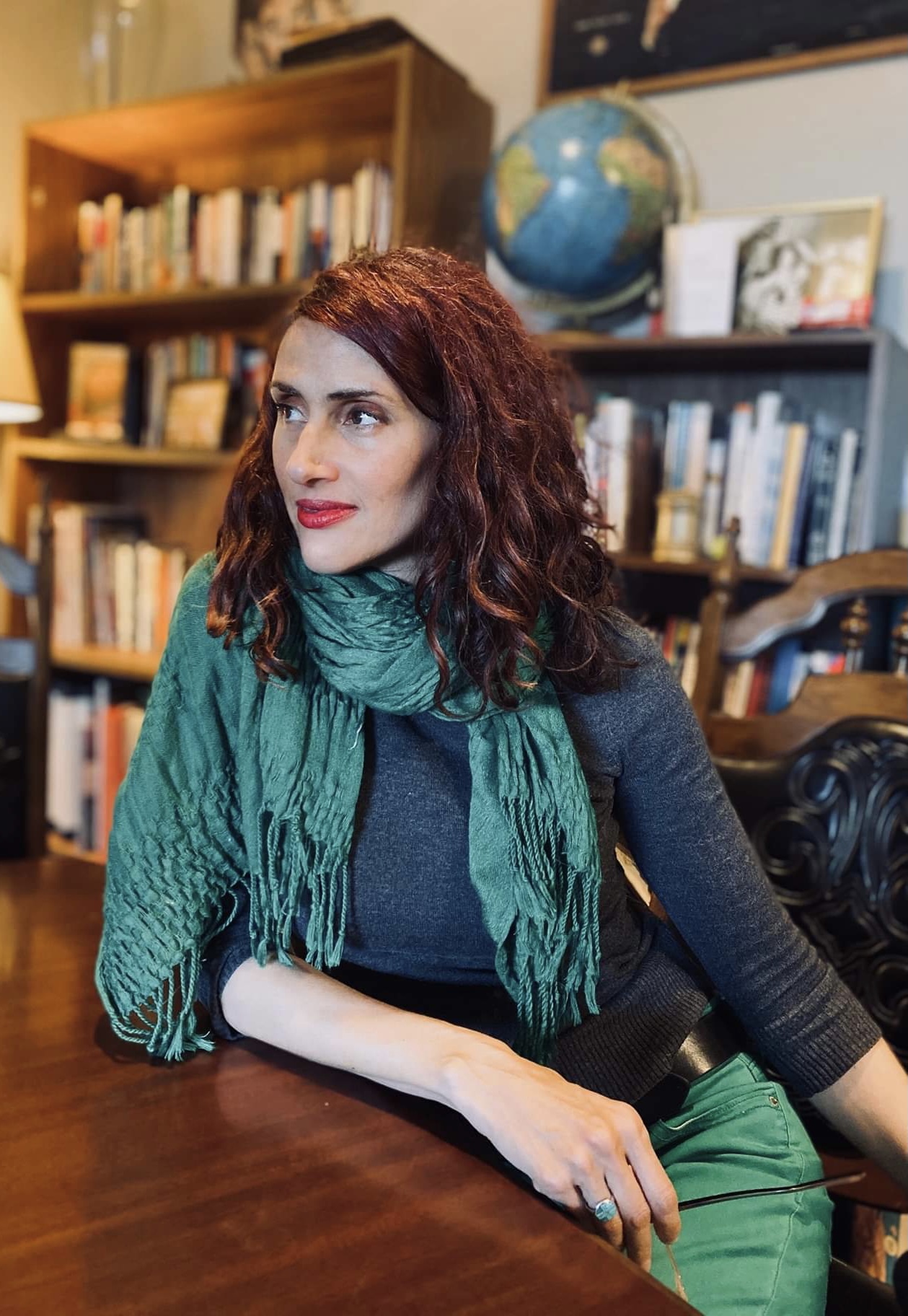
12 or 20 (second series) questions with Dan Crawley

Dan Crawley’s writing appears or is forthcoming in Lost Balloon, JMWW, Best Small Fictions, Flash Frog, Atticus Review, and elsewhere. His latest collection is Blur (Cowboy Jamboree Press). Find him at https://twitter.com/danbillyc.

1 - How did your first book change your life? How does your most recent work compare to your previous? How does it feel different?

My first book was a novella-in-flash. I loved working on this form, linking the flashes together as “chapters” in the book, uniting all the pieces into a solid thread that kept the story moving forward. It was challenging, but a blast to write. When it was published by Ad Hoc Fiction, I was grateful to finally have a “book on the shelf” after decades of writing. And more readers, writers and editors were able to experience my work, which opened more creative opportunities for me.

My latest collection, Blur, is a collection I’m very proud of. The gratitude I have is just as palpable as my first book. In fact, when I publish any story I consider myself lucky, truly. It feels like winning the lottery.

2 - How did you come to flash fiction first, as opposed to, say, poetry or non-fiction?

In the 90s, I remember flashes were called “short-shorts” or “sudden fiction.” I’ve been a fan of this genre ever since. And even though I’ve written long stories, these very tiny stories are a joy to attempt. I marvel at how you can achieve character revelations, strong conflicts, and play out a whole story in under a thousand words.

3 - How long does it take to start any particular writing project? Does your writing initially come quickly, or is it a slow process? Do first drafts appear looking close to their final shape, or does your work come out of copious notes?

Molasses slow. And I’m finding that the more I write, the process has become slower and slower. It could take months, even over a year to develop an idea of a story, then all the drafting in my mind, and finally getting something on paper. Next there is revising, revising, revising. And what is in my mind rarely is the finished product; the seed is still there, though.

4 - Where does a work of prose usually begin for you? Are you an author of short pieces that end up combining into a larger project, or are you working on a "book" from the very beginning?

This recent collection came from the many flash fictions I published the last few years. I wasn’t planning on putting out another book after my short story collection was published in 2021. The flashes in Blur just kept showing up. It is a nice surprise all around that a book flourished from these stories.

5 - Are public readings part of or counter to your creative process? Are you the sort of writer who enjoys doing readings?

I can read another writer’s work (I do this a lot in my teaching), but reading my own stories can be scary for me. I guess my own stories are too close, causing me to feel more vulnerable. Something like that. I’m getting better, I think. Slowing down, concentrating on the words rather than my own terror. These days, Zoom readings don’t scare me as much as reading to a live crowd.

6 - Do you have any theoretical concerns behind your writing? What kinds of questions are you trying to answer with your work? What do you even think the current questions are?

Infidelity. Financial straits. Anything to do with family dysfunction. These concerns seem to show up most in my stories. Also, I’m constantly wondering: why do we do what we do to each other? Ha. Sounds like a Carver story.

7 – What do you see the current role of the writer being in larger culture? Do they even have one? What do you think the role of the writer should be?

We need to keep holding up that fucking mirror. Keep revealing, to our last breaths.

8 - Do you find the process of working with an outside editor difficult or essential (or both)?

Hugely essential! I really appreciate the suggestions I’ve received from a wide range of editors. This writing biz is a lonely, isolating deal. I think it is important to get outside of my own thinking about a story and get another’s interpretation. Being a workshop teacher has made me even more adamant about seeking out an editor’s perspective.

9 - What is the best piece of advice you've heard (not necessarily given to you directly)?

Listen more than I talk. Still working on this one.

10 - How easy has it been for you to move between genres (flash fiction to the novella)? What do you see as the appeal?

Since I wrote a novella entirely of flash fictions, there hasn’t been such a chasm between the genres you mention. I’d like to write a few more novellas-in-flash, if I can. I find this format as one of the best ways to tell a longer story.

11 - What kind of writing routine do you tend to keep, or do you even have one? How does a typical day (for you) begin?

I tried writing to a schedule many times throughout my adult life. Sometimes I’ve been successful and other times I’ve floundered. These days, I’m taking care of my dad, and now he is bedridden and needs hospice care. My days and into the nights are taken up with attending to my dad, and some days are more challenging than others. A writing schedule isn’t in the cards, so I try to work on a line here and there, whenever I have the chance.

12 - When your writing gets stalled, where do you turn or return for (for lack of a better word) inspiration?

I read fiction daily. From the numerous books stacked around my bedroom to all the amazing works being published every week in journals across our writing community. A variety of stories have kick-started me out of my stall. And I’m grateful for all the work being published by a brilliant generation of writers.

13 - What was your last Hallowe'en costume?

I worked in an office once and my supervisor dressed in a very disheveled manner. So I showed up to work one Hallowe’en all disheveled. Wild thing is: everyone acted like they didn’t notice how messy I looked! They probably thought I was having a bad day. Finally, an Admin. Asst. said, “Oh, you’re dressed like _____! Nice costume!”

14 - David W. McFadden once said that books come from books, but are there any other forms that influence your work, whether nature, music, science or visual art?

I dig all music. Punk to funk to rockabilly to bluegrass/folk and everything in between. Usually, I listen to music while writing out first drafts, and I need silence when finishing up the final draft, before submitting a story. But initially writing any story and/or revising, I need that beautiful noise. Today I cranked up Cœur de pirate. Nice.

15 - What other writers or writings are important for your work, or simply your life outside of your work?

Since I’m so obsessed with flash fiction, and microfiction, I’m exclusively reading these kinds of stories. For years now, I’ve been influenced by too many writers to list here. And I’m finding new writers, seemingly, all the time on the socials.

16 - What would you like to do that you haven't yet done?

It would be nice not to worry. I worry a lot. Too much. To be in a relaxed state of peace would be great for a change. And sleep throughout the night.

17 - If you could pick any other occupation to attempt, what would it be? Or, alternately, what do you think you would have ended up doing had you not been a writer?

I don’t know, rob! Isn’t that wild? I have no idea what else I could do for a living. Writing is all I’ve wanted to do since an early age. Sure, I’ve worked at a variety of jobs in and out of higher education. And teaching seems to be something I can do. But I can’t imagine teaching without my writing. They’re so intertwined, you see.

18 - What made you write, as opposed to doing something else?

Another stellar question. I have no idea where this drive to get stories out comes from. I know that when I don’t write, I’m the most unpleasant person. Worse than that bear on cocaine. But even thinking about a scene, or writing a line or two in a day helps quell my irksome ways.

19 - What was the last great book you read? What was the last great film?

Book: Eleven Kinds of Loneliness by Richard Yates (holy moley, “Doctor Jack-O’-Lantern” and “The Best of Everything” and “No Pain Whatsoever”).

Film: The Florida Project. Seriously, the last few scenes knock me to the floor in the fetal position, bawling my eyes out.

20 - What are you currently working on?

A round of new flash fictions and micros. Trying, always trying.
12 or 20 (second series) questions;

Wednesday, March 01, 2023

12 or 20 (second series) questions with Nancy Stohlman

Nancy Stohlman is the author of six books including After the Rapture (2023), Madam Velvet’s Cabaret of Oddities (2018), The Vixen Scream and Other Bible Stories (2014), The Monster Opera (2013), Searching for Suzi: a flash novel (2009), and Going Short: An Invitation to Flash Fiction (2020), winner of the 2021 Reader Views Gold Award and re-released in 2022 as an audiobook. Her work has been anthologized widely, appearing in the Norton anthology New Micro: Exceptionally Short Fiction and The Best Small Fictions 2019, as well as adapted for both stage and screen. She teaches at the University of Colorado Boulder and holds workshops and retreats around the world. Find out more at http://www.nancystohlman.com

1 - How did your first book change your life? How does your most recent work compare to your previous? How does it feel different?

The first book is like the first wedding–everyone comes! Everyone is so happy for you. You get to open up that first box of books, hold it in your hand. Smell the ink! See your name on that cover! Have a book release event! Change your bio to say things like: I published a book. It’s crazy and amazing. For me this was 2009.

Fast forward almost 15 years, and After the Rapture is almost nothing like that first book in content or process. My first book was realistic, fictional but plausible. Every book I’ve since then has gotten weirder and more absurd, which is I suppose a good reflection of where I am these days. And, not only does the work itself feel more mature, but my identity as a writer just feels natural, an inherent part of who I am. Before we have published a book we have all these fantasies about how our lives will change…which they do…but also they don’t. Published or not, we still have to get back to work.

2 - How did you come to fiction first, as opposed to, say, poetry or non-fiction?

I don’t think it was a choice. I’ve always been a storyteller, so I was always leaning towards narrative. And I’ve always been in love with novels, so writing novels was the natural first thing for me. I’ve dabbled quite a bit in journalism, and I appreciate the writing of reality, but for me, the fun of being a writer is the license to distort reality and make interesting shapes where there were no shapes before.

3 - How long does it take to start any particular writing project? Does your writing initially come quickly, or is it a slow process? Do first drafts appear looking close to their final shape, or does your work come out of copious notes?

No notes. It happens like a relationship–slow and flirty at first, then hot and heavy. Then maybe after the initial burst it stalls out…and the project and I are forced to sit down and have a heart-to-heart: what are we doing here? Are we a couple or what? Then we figure it out, I have some sort of crucial epiphany about the work that changes everything, and then I finally know what I’m doing.

Followed by…a second draft of that process. And a third. Most of my books take me about 4 years to complete from beginning to end. My best advice to others (and myself!) is to remember that you are never in charge of the story. The story is always in charge–you’re just there to write it all down.

4 - Where does a work of prose usually begin for you? Are you an author of short pieces that end up combining into a larger project, or are you working on a "book" from the very beginning?

Actually, both. I’m a huge fan of flash fiction, and I’ve been working and playing in the house of flash fiction for years. But, as I’m mentioned, I’m also a big fan of the novel, the sweeping story that you can’t finish in one setting. So this intersection has become my sweet spot: playing and writing at the crossroads between flash fiction and the novel. I’m basically always writing a large-scale idea made from pieces, like a puzzle or a mosaic, and After the Rapture is the perfect example of that kind of play.

5 - Are public readings part of or counter to your creative process? Are you the sort of writer who enjoys doing readings?

I love public readings! I even love Zoom readings. Reading your work and writing that work are really two completely different things, but when you can do them both well, it’s magic. I’m very lucky to have a performance background, both as an actress and a singer, so I’m very comfortable on the stage, and I think it’s a skill and a gift when someone is also able to bring their words to life in a reading. Ten years ago I started the Fbomb Flash Fiction Reading Series (www.fbombdenver.com), which was the first and now longest-running flash fiction reading series in the country, and one of my main objectives, besides spreading the gospel of flash fiction, was to foster a space where we could all become better readers.

Speaking of reading, I also did the audio narration for Going Short: An Invitation to Flash Fiction last year, and I had to tap into all my stage and musical training in the studio during an epic one-day recording. Yeah. My face hurt for a week, but it was an incredible experience.

6 - Do you have any theoretical concerns behind your writing? What kinds of questions are you trying to answer with your work? What do you even think the current questions are?

Hmmm…I think the theoretical concerns bloom from my observations of and the way I engage with the world. I don’t sit down and think: I have a theoretical concern I would like to express through a story…and then try to craft a story to hold the container of that concern. For me, that would be a disaster. No. Instead, I lean into what’s interesting to me, knowing our bodies and brains are a kind of theoretical sieve and social commentary is likely to bleed into the text. We are all political creatures, whether we want to admit it or not, and when I arrive at my final result in this organic way, I am often as surprised as the reader.

7 – What do you see the current role of the writer being in larger culture? Do they even have one? What do you think the role of the writer should be?

I think the writer’s job is to hold a vision, and to create frames for others to see that vision. We hold up the frame and say: Look at that. Isn’t that amazing? (tragic, gorgeous, etc.) Which of course means that we need to always practice our own seeing, perpetually honing and polishing our own lenses of wonder and delight.

8 - Do you find the process of working with an outside editor difficult or essential (or both)?

Ah…it all depends on the editor! I’ve been on the other side as the editor much more often than I’ve been on the receiving end, so when I do find myself on the receiving end, I am very empathetic and attuned to the delicate relationship that must transpire if editor and writer are going to do their dance in a profound way. On the receiving end, it’s so important to be in the right frame of mind, receiving it from someone you trust or who at least understands what you are trying to do with your work (as opposed to what they would do if it was theirs). Not all criticism is equal or even valid. But sometimes it’s crucial.

I try to pay attention to two reactions: the instant yes and the instant no. Both of those tend to hold heat for me. I work with a lot of writers who think critique should be painful, who let me know they can ”handle it” and then brace themselves like a linebacker. I think critique can be soft and inspirational and enlivening. It can be like your best friend telling you an important truth. It can be like a brainstorm that leaves you excited and ready to play. So I attempt to put critique, both the giving and receiving, in that frame of mind.  And when it’s not, I recommend banana splits.

9 - What is the best piece of advice you've heard (not necessarily given to you directly)?

As a young writer I was very inspired by Stephen King’s attitude towards writing as a job, one with good days and bad days. Your job is to show up to work, regardless. That attitude helped me take a little bit of the preciousness out of the writerly identity. Because yes, a whole lot of magic has to happen between concept and artifact…but it doesn’t happen at all if we are in some sort of “waiting for the muse” holding pattern. James Clear says in his book Atomic Habits that the difference between an amateur and a professional is that the amateur only shows up when it’s fun, and the professional shows up regardless. I also love this quote by W. Somerset Maugham — '”I write only when inspiration strikes. Fortunately it strikes every morning at nine o'clock sharp.”

10 - How easy has it been for you to move between genres (flash fiction to the novel)? What do you see as the appeal?

For me, extremely easy. I love both so much that crossing the streams was just an organic process for me. Any big story is made up of a million tiny stories–a life is made up of millions of tiny moments. In many ways it feels like a more accurate and natural way to approach a longer story, and it’s a method I teach (and love).

11 - What kind of writing routine do you tend to keep, or do you even have one? How does a typical day (for you) begin?

I write every morning in bed while drinking coffee. Pretty much every day for 25 years. This happens in a journal, by hand, and it is messy and sloppy. And wonderful. It’s the way I plug my antenna into the universal goo each morning and say, ”Put me in coach, I’m ready to engage.” If I miss a morning due to travel or something I feel off all day.

The editing part, or more specifically the part that happens at a computer, comes later in the afternoons when my brain is sharper and more discerning, as opposed to the dreaminess of morning.

By the time the sun goes down I’m usually ready to read, listen to music, watch movies and disengage with the work until the next morning.

12 - When your writing gets stalled, where do you turn or return for (for lack of a better word) inspiration?

I absolutely love rereading and recommend it often, especially in those stalling moments. I know writers who lament that they don’t have enough years to finish all the books on their lists, let alone rereading! I get it.  But there is a special magic that happens in the rereading process. The beauty of rereading is there is no risk–you aren’t trying to figure out the plot, you aren’t even trying to decide if you like the book or not. With all that out of the way, rereading becomes a comfortable reunion with an old friend, words and stories that have moved you (at least once) already. You don’t have to pay such close attention–you can just enjoy the scenery a little more and watch how the whole mechanism gets put together.

Also getting outside of my head and off the page does wonders for my creativity. A solo trip to the museum or the symphony (yes, try it solo!) does wonders for me. I also love taking myself on a weekend retreat to a simple hotel–a kind of marriage encounter between me and the work where we dive in deeply and re-emerge refreshed. It works every time.

13 - David W. McFadden once said that books come from books, but are there any other forms that influence your work, whether nature, music, science or visual art?

Oh yes. All of them! I feel so lucky to be a creative individual in this life, because honestly everything is inspiration. Movies, especially the quiet foreign ones, the black and white ones, the dramas and the satires. Fashion, both wearing and contemplating it. Museums of all sorts. Classical music. Jazz. Smoky lights. Really beautiful food. Walking around the lake behind my house almost every day and becoming in tune with the miniscule changes of day-to-day nature. Photographs, both as the subject and the photographer. Travel in all forms. A good road trip, especially across the Zen flatness of the Midwest. I love to purposely wake up before sunrise and drive myself into the sunrise with coffee and Tom Waits’ Closing Time. Cathedrals and stained glass and carnivals and neon lights, and I get a lot of inspiration from Wikipedia, believe it or not.

15 - What would you like to do that you haven't yet done?

Ride in a hot air balloon. Float down the Nile. Live by the ocean. Be an ex-pat. Watch my book be made into a movie.

16 - If you could pick any other occupation to attempt, what would it be? Or, alternately, what do you think you would have ended up doing had you not been a writer?

As I said I went to undergrad for theater; I was planning to end up in NYC or Hollywood and become an actress, stage or screen. But at one point in the hustle I realize if you are going to hustle THAT much, and do all that work to twist yourself into a product …then you better be REALLY sure. I realized I wasn’t excited enough about the process, I just liked being on stage. So…I ran off and joined the circus instead! And that’s when I started writing seriously. But I can’t tell you how often my theater training comes up, even now. Here are a few examples of how I have crossed acting with writing:

Going Short Book Trailer https://youtu.be/lxrMMX81YXg

Madam Velvet Book Trailer https://www.youtube.com/watch?v=qZdOGFsjBlE&t=19s

The Monster Opera Book Trailer https://www.youtube.com/watch?v=HWxln66wxeg&t=4s

17 - What are you currently working on?

I’ve been working on a new project for about a year—it was initially inspired on one of those long, Zen drive across Kansas last year to visit a friend, and it has since blossomed into a set of fictitious Tarot-like cards telling a sort of Midwestern Gothic story. I’m in the fun part—still discovering , still turning over rocks to see what lives underneath. So far there are lots of elements of mythology and familiar mythological tropes meets Corn, Tornadoes, Guns, Flags and Jesus—etc. I love it, and I can’t wait to see it come into its own maturity. I’m just really sitting back and writing down what it wants to say. It’s like I’m writing the instruction manual for a game that doesn’t exist.

I’m also getting ready to run three flash fiction writing retreats in 2023—in France, Iceland, and Colorado. My two favorite things: writing and travel both together!

It's been so much fun chatting with you, thanks for having me!

Buy After the Rapture from Mason Jar Press https://masonjarpress.com/chapbooks-1/after-the-rapture

Retreats website www.flashfictionretreats.com

12 or 20 (second series) questions;