Showing posts with label patreon. Show all posts

Tuesday, August 11, 2020

Did I mention I’m working on a novel?


Admittedly, it’s a ridiculous thing to admit, so early on. Perhaps it is moreso now, given so many I know aren’t able to get any work done at all, or the possibility that much of my work will come to a halt once we officially begin with homeschooling, come September. This could all be summer love I don’t even think about again, until spring.

I know certain writers who refuse to discuss works-in-progress at all, concerned they might jinx it. Concerned that the thinking about a work-in-progress should be within the confines of the work, and not aloud to anyone else. To speak aloud would be to lose it. I’ve always found that to speak aloud provides an opportunity that doesn’t always emerge through the exclusive process of note-taking, editing or typing. The same comes from being well-interviewed: the potential emergence of a fresh perspective. Besides, what else are grant applications?

As well: knowing that others are aware I’m working on something is part of the push to keep working on it. How is that novel coming?

I have always been attracted to the novel as accumulation. From the vantage point of my twenties, when I was writing daily, and attempting to either start or complete three new poems per week, the idea of writing a full-length novel always intimidated. I had somehow imagined it as a single, unbroken and seemingly impossible task. It took me a decade or so to realize that what had been delaying my fiction writing was missing out on the sense of accomplishment I would garner at the completion of a single poem. Poem, poem, poem. It took a long time to realize that the novel doesn’t necessarily work that way. Lacking that little burst of satisfaction one gets from the completion of a single poem, say, doesn’t mean that the writing isn’t progressing, or even progressing well. I had to reshape the way I thought about the process, and my expectations around daily work. I had to keep going.

I think it was when I considered the structure of Richard Brautigan novels that first allowed me the idea of novels-as-accumulation. Trout Fishing in America is as much a gathering of short stories as it might be a novel: a gathering of short prose bursts, one after another. Really, any of his books are composed as an accumulation of short, self-contained sections. I could do that, couldn’t I? Since then, I’ve noticed numerous writers do versions of the same, which seem far different than working to sustain any longer, sustained narratives. Alternately, so much fiction feels cinematic, and that doesn’t appeal to me in the same way. I prefer the short lyric, the bursts of prose and musical language across pages. I think of books by Sarah Manguso, Ken Sparling, Nicole Brossard, Jean McKay, Diane Schoemperlen and Dany Laferrière: writers who have become influences upon my own work; writers who have become some of my favourite to read and reread. There are others, of course, but these are the examples that spring to immediate mind.

The ways in which I have approached fiction since the 1990s hasn’t changed that much. That first mid-1990s attempt was entirely collage, short prose bursts that layered upon each other, and at least one editor kindly read and commented upon as part of rejection. The books that ended up being published—white (Mercury, 2007) and Missing Persons (2009)—were also composed as accumulation. Most of the sections of white included less than half a page of text, and the pages accumulated until they reached a kind of ending, a kind of conclusion. By comparison, the longer sections of Missing Persons—two or three pages per instead of half a page—were my attempts to compose longer scenes, although I became aware that each scene I was writing was defined by an action that never sat in the frame. The stories in my as-yet-unpublished “On Beauty,” short stories each three or four pages in length, work as a sequence of short bursts that interplay, interact and accumulate. The narrative emerges through how each short section builds to the ending. This was during the days of Mad Men, a show that always sent me further into fiction writing after every new episode: you did not have to show the cause to be able to explore the effects. The effects, and even the build-up, were far more interesting.

I am working on what I hope might evolve into a novel, attempting multiple threads, to see where they go. I pull at threads from earlier works, from the short stories to the novels. Might this book connect properly with those previous works? As of yet, the pages don’t yet cohere, but these are early days. They don’t really have to. This is only a beginning.

And here, three untethered fragments of this early-days work-in-progress:

*

Patience knows that pain is no contract. She refuses it access. Felix had long claimed she was difficult to read. It took years for him to decipher the shifts in her mood: what they meant, and how he might navigate. She radiated stillness. Not a sense of calm, per se, but something quiet, unmoved. Still water runs, deep. A still surface that could, when required, allow something else to burst through from below. Stillness, and depth. As some know, this is where monsters lay.

Who will read the fall of this one leaf.

When their trio landed, there, in the new house, the first task she set herself was to resuscitate the flowerbeds, a moat of dead, empty soil surrounding the boundary of the house and the unfenced yard. Within the outline of where the barn once lay, she negotiated a vegetable garden. She broke through the earth, pulled scraps of metal, tin and wood, the occasional remnant of concrete floor. She discovered the old well, behind where the barn once stood. Turning in bags of fresh dirt, she planted an arrangement of perennials. The old farmhouse nestled among elm and maple, with scrapes of empty patches of grass and hard-packed earth. She would remake what had lain fallow. She would, in this small space at least, be a bringer of life.

*

Patience, her morning tea on the porch. It has been dry, lately. Her garden wilts. She will water it soon, before the day further unfolds. It has been too hot, lately.

Already the dry air curtain-thick against the bare skin of her arms, of her legs. What she brushes away with her skirt, the flush of her dress. The flies buzz, along.

She asks herself: Where is my rainstorm? Where is my sizzling, sopping heat?

The night prior, she’d caught a Richard Attenborough documentary that discussed fireflies caught in spiderwebs. They sparked light in an attempt to attract mates, and fell into a trap. Even in death, they sparked. They attracted potential mates. They attracted potential mates to their own deaths.

With her tea, on the morning porch, Patience ponders the passage of time. Sting sang “A thousand rainy days since we first met,” which could only happen in England. Out here, that kind of measuring stick would mean something different. It could be a whole lifetime.

*

The tree that killed Felix was a forty-foot maple, struck by lightning. The tree sat in a grove at the former properly line. After Peter’s father purchased the lands around the house next door, he allowed the fenceline between the two properties to wither. Fifty years later, his father, at ninety-two, still knew every line, stump and stone. He could walk through these acres blindfolded, he said, although this has never been challenged. The storm struck the tree in half, yet both halves held their ground. Peter knew it was only a matter of time before the tree fell, and thought it prudent to speed up the process. His girls played out there, after all. They sat on the large stone on the former property line and told stories. They named it their clubhouse. He wanted the tree safely down, and would cut it for the stacks in his woodshed. To feed the furnace, come winter. To feed the stove in the machine shop.

As the tree landed, it also killed a mother raccoon, leaving two kits. Peter only discovered this later, when he went back to clean up the site and retrieve the wood. He brought the two kits back to the house, too small to be left on their own. His wife, Charlotte, pulled baby bottles out from the back of a cupboard, attempted to wean them with raw cow’s milk. Their two girls, five and seven years old, bottle feeding baby raccoons in the yard, set in the barn in a nest he has built them. Built out of straw. They squeak and chirp as the kits see him coming. Felix is dead, and now all he has are these two small raccoons. These kits and the firewood. His heart heavy as stone.

A rock is an object. A stone is a tool. What might he do with it.


Saturday, July 20, 2019

rob mclennan round-up: some poems, two interviews, etcetera

I feel as though I keep forgetting to mention things such as these, but I do have some poems from "the book of smaller" up in the twelfth issue of where is the river, as well as new poems up at Selcouth Station and Empty Mirror. I was even interviewed over at Train : a poetry journal! And by Paul Brookes for his Wombwell Rainbow Interviews series! [you can see a full list of interviews with me online here] Thanks so much to the editors of all! Further links to further poems, short stories, essays etcetera of mine online also appear (as best as my ability provides) over at my clever author page. Oh, and did I mention that I'm posting poems over at my Patreon page? I'm totally posting poems over at my Patreon page.

Monday, April 01, 2019

rob's Patreon page : offering my Gaspereau Press chapbook as a special (limited time) gift,

I thought that it would be fun to help celebrate National Poetry Month [see the Chaudiere Books blog for daily poems throughout April], with a special offer: anyone who signs up to support my Patreon page during the month of April with $3 or higher a month will receive a copy of my Gaspereau Press chapbook, Mother Firth's (2013), a lovely limited-edition chapbook produced as part of their occasional chapbook series. It really is a lovely little chapbook, with a poem I'm still rather pleased with, and I've a handful of copies, so why not?

I am also sending out copies to current supporters, as a thank-you for ongoing support.

The short sequence "Mother Firth's" is also included in A halt, which is empty, due very soon with Toronto's Mansfield Press. Keep an eye on this space for availability, as well as potential launch details!

My Patreon page exists here.


Pledge $1 or more per month
Patrons will have access to a password-protected blog that will include updates of not only published works of poetry, fiction and non-fiction, but work-in-progress excerpts of poetry, fiction, essays, creative non-fiction and interviews.

Pledge $3 or more per month
Patrons will have access to the password-protected blog, as well as a signed copy of any new chapbook (as they appear).

Pledge $5 or more per month
Patrons will have access to the password-protected blog, as well as a signed copy of any new trade book (as they appear).

Pledge $6 or more per month
Patrons will have access to the password-protected blog, as well as a subscription to above/ground press, including all the chapbooks and broadsides produced through the press.

Pledge $10 or more per month
Patrons will have access to the password-protected blog, as well as signed copies of BOTH any new chapbooks and books (as they appear).

Pledge $16 or more per month
Patrons will have access to all the above! The password-protected blog, as well as signed copies of BOTH any new chapbooks and books (as they appear), and a subscription to above/ground press.

Tuesday, February 13, 2018

my Patreon patron-only blog : The Ottawa City Project:


Since building myself a Patreon page, I've also been posting to a password-protected patron-only blog (I've actually been posting a small mound of a longer poem-in-progress there over the past few weeks). I thought it might be worth reprinting the occasional post here, for the sake of general interest. Access to the blog comes with donations as low as $1 a month, all of which goes toward me working on all of my (mostly payment-free) writing, editing, reviewing and publishing.

Here's a post from February 8, 2018:

I recently did an informal classroom reading and talk, answering questions around my poetry collection The Ottawa City Project (Chaudiere Books, 2007) at the University of Ottawa, thanks to the fact that Cynthia Sugars has been teaching a class on writing on Ottawa. Apparently other titles they’re going through in the class include Monty Reid’s Garden (Chaudiere Books, 2015), Andre Alexis’ Despair and Other Stories of Ottawa (Coach House Books, 1994) and a novel by Priscila Uppal (I don’t know which one). It was fascinating to revisit a book I’d composed over a decade earlier, from reading aloud from the book to taking a field of questions, as well as listening to the students work line-by-line through a couple of pages. How does the book hold up? How does it compare to some of the Ottawa-specific work I've been exploring since, including the Alta Vista-specific A perimeter (New Star Books, 2016)? (Not that these last few bits were discussed, but they were close to my own thoughts.)

It was a bit unsettling, catching the occasional reference in The Ottawa City Project has become hopelessly outdated. The University of Ottawa building that held the large mural of Pierre Trudeau’s eyes is no longer there, for example. I speak of the Somerset foot-bridge over the canal as not yet constructed. Does this make the book temporaly fixed in a good way, or a bad way? Does the book capture a particular period or simply exist as an outdated text? Am I simply saying the same thing? Given the bulk of the class (save one) were born after the 1998 ice storm, what chance had they to catch every detail? It was cool, at least, hearing that two of the students looked up information on Paul Chartier’s doomed attempt to bomb Parliament and a sitting House of Commons in 1966. “Why did we not know about this?” they asked. They were thrilled for the discovery, and a bit baffled as to why this was something they weren’t aware of.

I completely agree. Why did they not know? And why did I only know the same information due to catching it in a Judith Fitzgerald poem?


Tuesday, October 03, 2017

my Patreon patron-only blog : Journeying, and the returns;

Since building myself a Patreon page, I've also been posting to a password-protected patron-only blog (I've actually been posting a small mound of previously-unpublished poems there over the past few weeks). I thought it might be worth reprinting the occasional post here, for the sake of general interest. Access to the blog comes with donations as low as $1 a month, all of which goes toward me working on all of my (mostly payment-free) writing, editing, reviewing and publishing.

Here's a post from September 17, 2017:

[the young ladies providing an essential grocery assist]

While posting another of the “12 or 20 questions” interviews today, I saw someone refer to a good book as a “page-turner.” I realized that this is perhaps the last thing I would aim my own writing towards. I suppose the difference is in the goals of the writing itself: plot-driven prose vs. the more lyric language and/or character-oriented fictions I’ve been attempting to compose.

While I tell myself that I would rather not be composing “page-turners,” that isn’t the goal of the work, either. I’m not writing plot-driven, get-to-the-next-plot-point works; I want to compose fiction where the reader is occasionally held in place by a line, an image or an idea. I want to be able to cause the reader to go back to passages, to see what they might have missed.

My own early reading, catching something on page fifty of Sheila Watson’s The Double Hook when I was still in high school, a book recommended by my then-girlfriend: realizing I had missed something important on that very first page. I had to go back.

Friday, March 03, 2017

my Patreon patron-only blog : On creating (female) characters


Since building myself a Patreon author page, I've also been posting to a password-protected patron-only blog. I thought it might be worth reprinting the occasional post here, for the sake of general interest. Access to the blog comes with donations as low as $1 a month, all of which goes toward me working on all of my (mostly payment-free) writing, editing, reviewing and publishing.

Here's a post from January 12, 2017:

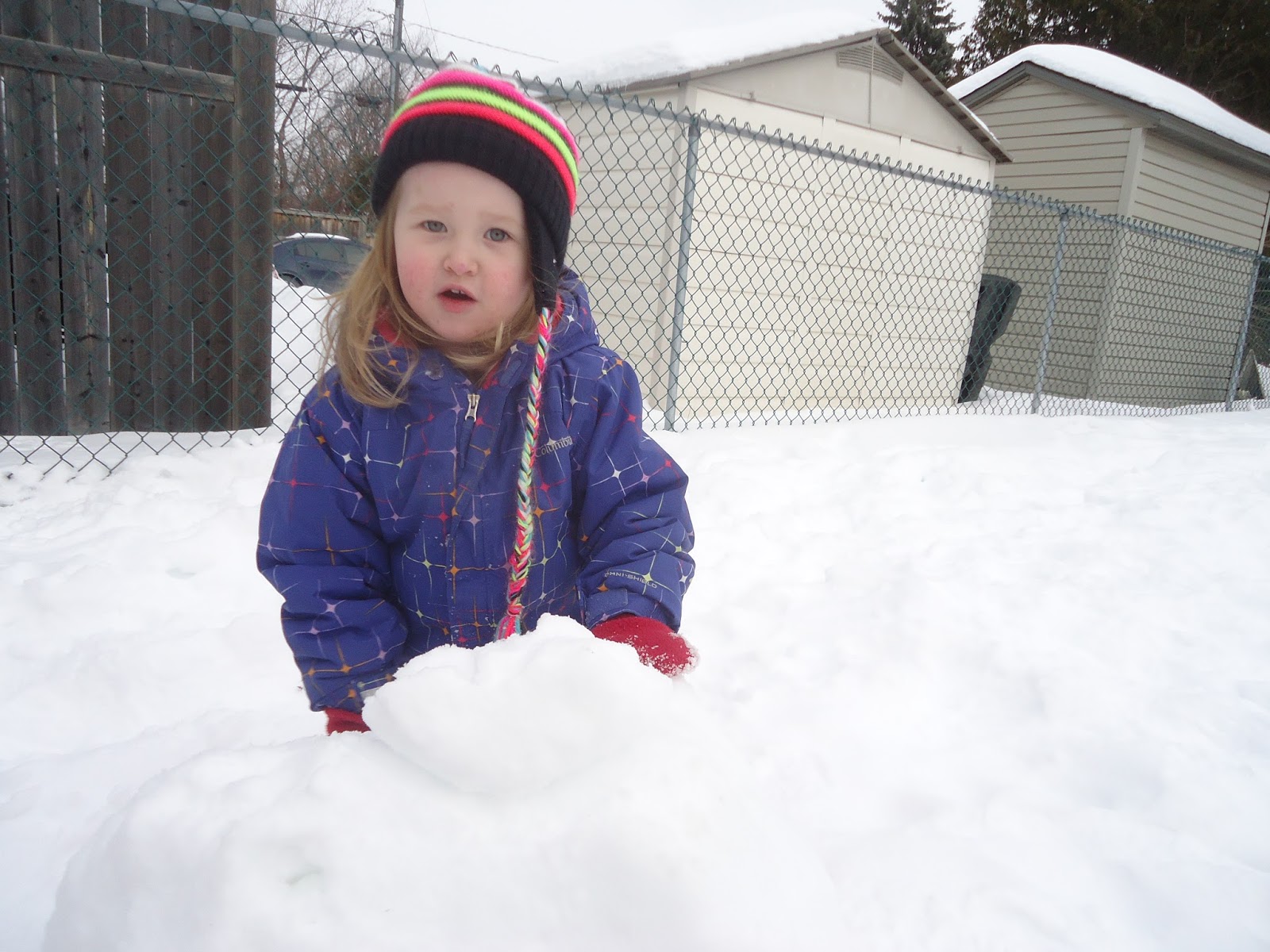
[Emperor Rose working hard at a snow sculpture]

While pulling our eldest in her sled en route to preschool the other morning, I was mulling over the ways in which I attempt to create characters in my fiction. I’m still scratching away at that short story around Verity, and where her new-found freedoms might take her. Why am I so often writing a female protagonist?


I’ve written before that I floundered in my fiction for quite a long time, writing perpetually unformed male leads as unclear variations on myself and my own thoughts. To write out a female character forced me to actually form a real character: she could not be me. I’ve attempted since to write out male characters, to varying degrees of success. It’s something I have yet to completely figure out.

It made me, then, wonder if that’s why Paul Auster writes himself, or at least a version of himself, as a side-character into so many of his novels: it’s not that he’s writing himself, but that he’s writing something to allow him to create a character entirely outside of himself. He writes “Paul Auster” to help clarify his protagonist.

Should I be adding a fictional version of myself into my stories, to help clarify my own potential male lead?

And then we with sled arrived at the front door of her preschool, and we focused on that for a while.

Monday, December 05, 2016

A perimeter (New Star Books) : my latest poetry title is now available,


My latest poetry collection, A perimeter (New Star Books), is now available, and actually has been for a couple of weeks. Thanks so much to everyone at New Star, especially the brilliant editor/publisher Rolf Maurer, for incredible support, and for assisting in putting together what might easily be one of my strongest collections.

Maybe someone out there can request a review copy, and/or interview me around the collection, hmmmmmmmmmmmmmmm? I even had copies at those two recent small press fairs I attended (as well as sending out copies to some of my Patreon supporters), and you can either order directly from the publisher here, or pick up a copy through me (or: send me $20 through paypal and I’ll even mail you one, signed, if you wish; for American addresses, send $20 US; anything further away, send me an email and we shall discuss). I’ve been a month or so thinking about a launch, but haven’t been able to grasp the attention span to actually plan anything. Maybe something in January? As they say: “Watch this space.”

Back in September, my neighbourhood newspaper, Vistas, was good enough to request I do a short write-up on the whats-and-whys of the collection. They published this in their October issue:

rob mclennan, A perimeter

Books are made through and for a variety of reasons. My new poetry collection, A perimeter (Vancouver BC: New Star Books, 2016), emerged, in part, from our appearance onto Alta Vista Drive three years back. After two-plus decades renting in Centretown, I’ve now been a homeowner for three years, with wife Christine and two girls under three. What does it mean to own property? In a climate increasingly aware of ‘unceded territory,’ what does it mean to be ‘settler,’ or even, owning a house on former farmland? We settle ourselves into arbitrary boundaries, property lines, and hold on for dear life. I’m also now in an area familiar to family history: my maternal grandparents original owners of a house on Kirk Drive, a street later renamed Ridgemont. My parents married in the church across the street from our front door, and relocated nearly an hour’s drive east, near Maxville, to his home property. How do I rewrite myself into this familial space?
Also, the book explores the newness of (new) fatherhood, and include an array of scratched lines that make up all I managed to accomplish during the first three months after my daughter Rose was born. While I’m uncertain A perimeter is necessary built with any quick or easy answers, these are some of the questions and queries I’ve been exploring (and continue to explore). How did I get here? And what and where is here, exactly?