Showing posts with label X-Men. Show all posts

Friday, November 16, 2018

Stan Lee (December 28, 1922 – November 12, 2018)


Given his death a few days ago, I feel like I have to talk about Stan Lee, well-known as one of the most important elements of establishing Marvel Comics, making the “Silver Age of Comics” an actual thing (apparently DC started it officially with a reboot of the Flash; who knew?), and promoting himself as much as he promoted anything else (I shall miss his movie cameos; having him sit with the Watchers was a thing of genius, connecting all of his cameos together in onebrief clip). Co-creator (with Jack Kirby and/or Steve Ditko) of what would appear to be nearly the entire original Marvel stable of characters, the effect and legacy of Stan Lee is complicated, enough that it is equally both overblown and understated. He helped create himself in his own image, after all, something that took away from Kirby and Ditko for many years, only recently acknowledged as co-creators of all those characters Lee was supposedly singularly responsible for (I didn’t think I could begin without at least acknowledging that).

There have been some wonderful appreciations and hefty obituaries posted so far: what would I even have to add? Not much, possibly. Nothing that hasn’t been thought or said a thousand times over, I suppose. But here goes.

What can I say? I’m a Marvel guy from way back, and still visit Heather over at Comet Comics (now ensconced in the basement of Black Squirrel Books) on a weekly basis. Over the past few months, finally bagging some twenty-plus years worth of comics (post-basement flood, as a way of organizing), I’ve discovered that I actually have some 10,000 comic books sitting in our wee house (not to mention the growing collection of trade editions). I’d say some 95% of these are Marvel titles.

I was a quiet, solitary kid, and comics provided touchstones to the larger world. The stories were funny, and touching, and personal, alongside the big explosions and sequence of conflict upon conflict. There were words I picked up I hadn’t seen or read previously; there was a consideration of helping others without the expectation of reward. There was the idea of doing something for someone else simply for the sake of doing it, for the sake of making things generally better for everyone. The idea of doing something because you should, even though it might be hard. Especially if it might be hard. There was the idea that one could work slowly, consistently and solitary on something that others didn’t know, didn’t understand or actively despised, and still be able to continue. The value lay in acknowledging that such value was in the doing.

Superman or Batman seemed pretty abstract, but a character like Spider-Man, created by Lee and Ditko, felt different. I identified with him at a pretty early age, with the early/mid-1970s run of Amazing Spider-Man, as well as those first few years of Peter Parker: The Spectacular Spider-Man, being pretty foundational for me. Despite a 1974 issue of The Fantastic Four being one of my first purchases, it was a while after before I managed to regularly get into non-Spider-Man titles (my mother’s lack of interest in assisting my purchases, as well as our rural address, did make following titles regularly pretty difficult).

I saw that it was possible to be lonely, unpopular and bullied and still not get worn down. It was okay to worry and be anxious and even a bit neurotic. And still be able to help. Be heroic without focusing on the hero part. Just be fucking helpful, whether saving a life or just making someone else’s day just a small bit better. And help because you should, understanding that even the smallest act could make a very big difference. It was possible to win while still losing. It was possible to keep going, and know it would eventually, always, improve.

And that you don’t have to show off how smart you are. Just be smart. A sequence of panels from the second Marvel Two-in-One annual (1977) was always one that stuck with me, Thanos seeing how intelligent Spider-Man actually is, getting Thanos to pause, talk, and allow for him to formulate a plan. I like your friend, Grimm. He’s a schemer.

Years before comics were taken seriously by the mainstream, I learned as a very young person that it was possible to tell good stories in comics; good stories that were worth telling. Important stories. When Harry Osborn overdosed, or the death of Gwen Stacy. Loss upon loss, one might say, throughout the entire history of Spider-Man, losses that were rarely pushed aside, or forgotten about. Losses that weighed upon him (do you remember him smashing a table in Avengers Tower after House of M? gut-wrenching). And yet he kept going, keeps going; with optimism and good humour, in part due to sheer bloodyminded resilience. Keep going. Keep fighting. Don’t give up.

And bad jokes were always a good deflection. And if only you laugh at your own jokes, that’s okay too.

I know that a number of the examples I’ve offered weren’t actually done by Lee himself (Rascally Roy Thomas, for example), but I feel as though there’s a worldview I have in my head that was created, in part, by those three gentlemen at Marvel Comics, way back in the 1960s. As a kid, I saw Stan Lee as the man behind it all (the self-promoting front-man that he was), since coming to realize how it really was the triumvirate of Lee/Kirby/Ditko who created the foundations of the Marvel Universe, but for me in the 1970s (and, I’m sure, thousands of other readers). What did I know? Stan Lee’s Bullpen Bulletins made one feel included in a secret club, one that only those of us who were serious readers could belong to, although I’m still annoyed that a) I was too young to catch the Friends Of Old Marvel and The Merry Marvel Marching Society and b) I never did win a coveted No-Prize.

Thanks for this, Stan Lee. Thanks for all of this, and to Kirby and Ditko as well. With Lee gone, he’s the last of the lot, the last man standing of a particular era of storytelling, but one that opened up an incredible array of other possibilities. And, as the Man himself said: Excelsior,


Friday, January 30, 2015

The Marvel Universe is coming to an end in May 2015


As a long-time follower of Marvel Comics, I’m intrigued at the idea of the announcement that came recently about “the end of the Marvel Universe,” as it blends (or, really, crashes into) the Ultimate Universe this coming spring. Unlike DC Comics’ “the new 52,” which everyone seems to have hated (and managed to wreck my enjoyment of some of the very few mainstream DC titles I even paid attention to: Hellblazer (Constantine) and Batwoman), or even the 1980s reboot of Superman, Wonder Woman and other titles, this isn’t a reboot or a switch of any sort, but a way for the characters and universe to develop.

I’ve been following Marvel for quite some time, since I picked up my first issues in the early seventies, focusing heavily on The Amazing Spider-Man and Peter Parker: The Spectacular Spider-Man, and eventually extending further out into The Avengers, The Fantastic Four, The Uncanny X-Men and many others. I must have at least six thousand comics by now. Gerry Conway on The Amazing Spider-Man. John Byrne and Chris Claremont on the Uncanny X-Men rebuild, or Byrne on The Fantastic Four. Jim Starlin, really, anywhere in the 1960s and 70s. J. M. Dematteis throughout Captain America or just about anything Spider-Man. Wow.

There are plenty of other examples. Obviously.

As I saw it, the 1980s into the 90s were an interesting time for Marvel, shifting their attentions from individual titles and individual issues to longer and interconnected storylines, the beginnings of time travel storylines and the experimentation with “other universes,” to the frustrations of long-time readers like myself when Marvel would return to the “basics,” whether bringing back Aunt May or re-breaking Charles Xavier’s legs. Think of Peter David’s brilliant run which saved The Incredible Hulk, forced by the company to make the Hulk “stupid” again, thus erasing any character evolution he had accomplished throughout his run (he quit the book as a result). Think of the character Toad, who changed entirely throughout the X-Men books to coincide with the character as it was built in the movies; done to bring in new readers, but damned annoying to those of us who had been there the whole time.

And yet, how do you allow entry for new readers without forcing them to read half a century (or more) worth of continuity to know what the hell is going on? It made a certain sense, and at least one cynic I know in the industry claims that the real money in Marvel is in selling bedsheets to kids and not in selling books, so there’s only so much they can alter the characters (I hate that he is most likely right). Death is never permanent, and returning characters from the dead often belittles (in my mind) earlier plotlines and developments. They killed and brought back (as a clone) Gwen Stacey (mediocre). They killed and brought back Jean Grey (with X-Factor, which was pretty interesting) only to kill her again (which seemed rather arbitrary, but I enjoyed the development of Cyclops and Emma Frost). They killed and brought back (very well done) and re-killed Charles Xavier. They killed and brought back Norman Osborn (brilliantly, I thought). They killed and brought back Ben Reilly, the clone of Spider-Man (very nice). They erased Spider-Man’s marriage to Mary Jane Watson (unforgivable). They killed and brought back Guardian (nicely done) and killed and brought him back again (very poorly done). They killed and brought back Alpha Flight (unforgiveable; really, after Bill Mantlo left the book after following John Byrne’s incredible run, Marvel seems to be pushing the idea of “if we do it badly enough, readers will just stop asking us to bring it back.” Shameful).

Some of these deaths have actually allowed some interesting possibilities, temporarily allowing other characters to develop more prominence, whether Xavier’s death allowing Cyclops to develop further, or even Captain America’s death prompting Bucky’s own version of Captain America (I was disappointed to see that go). DC did the same when Bruce Wayne died, allowing the original Robin, Dick Grayson (Nightwing) to temporarily take over the role (another shift I was disappointed to see end).

Sean Howe’s 2012 book Marvel Comics: The Untold Story, unfortunately, shattered a few long-held beliefs I’d been carrying about how the stories at Marvel were build, shaped and told over the long years (and it made me grieve, just a bit, for the dark, petty and even ridiculous origins of many beloved tales).

The strength of Marvel against DC was supposed to be in the fact that it refused to remain fixed. A far older company, DC held to archetypes (which made reboot far easier than rebuild, and movies far less complicated to get off the ground), and Marvel kept developing, shifting and building. The X-Men team was never stable for terribly long, nor were The Avengers, and yet, at some point, Marvel decided to stop moving, perhaps to keep a non-reading audience interested in what was happening. Teams and characters had to look familiar. It took Brian Michael Bendis destroying and rebuilding The Avengers into a decade-long arc to break down so many standards and held assumptions (including Civil War, the Skrull Invasion, Siege, Age of Ultron and other impossibly good storylines), thus saving Marvel, ultimately, from itself. Suddenly, it seemed, Marvel had the permission to change: Nick Fury no longer ran S.H.I.E.L.D. (allowing an evolution that saw it run, variously, by Tony Stark, Captain Rogers and Norman Osborn), Daredevil took over the territories of both the Kingpin and The Hand, and Spider-Man was taken over entirely by Doctor Octopus. The Human Torch took over the Negative Zone. The Shi’ar Empire saw the return of D’Ken, the savagery of Gabriel Summers and the beginning of the reign of Gladiator. Cyclops became an angry rebel, and Wolverine became Schoolmaster. The Black Panther lost his throne to his sister. The Illuminati were created. The Inhumans returned to earth and broke apart. The status quo could shift, and allow characters, situations and stories to develop in real, permanent ways, without betraying the central core of certain characters.

I’ve followed a few iterations of Marvel’s alternate universes, from Jim Shooter’s “New Universe” titles from 1986 to 1989 (including Star Brand, Spitfire and the Troubleshooters, Nightmask, Mark Hazzard: Merc, Psi-Force, Justice, DP 7 and Kickers, Inc.), the multiple 2099 titles that ran from 1992 to 1996, the Marvel 2 titles that launched in 1998 (Spider-Girl, Fantastic Five and A-Next, among others), the completely terrible “Heroes Reborn” titles from 1996-1997 that directly rebooted Captain America, Iron Man and other characters (thankfully, the entire experiment, seen as horribly failed, was reversed) and the “Age of Apocalypse” storyline throughout all of the X-Men titles from 2011 to 2013 (a rather good run; rumours had at the time that this storyline might have remained, had it been more popular). Most of these have been rather interesting, and some, like the first three examples, simply didn’t catch on, and were seemingly cut off at the knees. One wonders if this constant refreshing has been a matter of attracting new readers, while attempting to keep from alienating long-time readers, many, I’m sure, who either age out, get tired of the constant “back to basics,” or move their comic reading out of the “big company” stuff into more independent titles. I never have enough time or money for all of my reading, but some of the important titles on my own shelf also include Neil Gaiman’s Sandman, Mike Carey’s Lucifer, Warren Ellis’ The Authority, Grant Morrison’s Kill Your Boyfriend, Kyle Baker’s Why I Hate Saturn, Peter Milligan’s Shade, the Changing Man and Garth Ennis’ The Preacher. And does anyone remember Beautiful Stories for Ugly Children?

The “Ultimates” universe, one of the main components of this new collision, was launched in 2000, allowing new origins for a variety of characters already familiar in the main universe: Ultimate Spider-Man, The Ultimates (The Avengers), The Ultimate X-Men and The Ultimate Fantastic Four (for example), and opened new readers to an entirely different world of well-known characters. Readers could see how Spider-Man, for example, might begin today (and the first three feature films were very much based on Ultimate Spider-Man storylines, as opposed to the original), or The Avengers (two animated features, again, based on The Ultimates, as are much of the current live-action features). Because they weren’t part of the main continuity, characters and stories were allowed to develop, and a number of main characters have even been killed off, seemingly permanently, including Spider-Man, Captain America and Wolverine, something the main continuity could never imagine doing. Imagine the Hulk actually killing Wolverine, for example (it happened).

I’ve been reading with great interest the work that Jonathan Hickman has been doing with The Avengers over the past couple of years, a storyline that seems directly heading into this new collision, as is Bendis’ incredible work in All-New X-Men. What is impressive to me is how well some of these stories are being written, and how the interconnectedness of it all I didn’t even see coming. There is a very long game being played here, and I’m thrilled for it, even if I might not agree with every single choice of every single title or character (Civil War, for example, broke apart a stellar run on the then-new Young Avengers title, from which it never fully recovered; the subsequent run of the book had some intriguing developments, but overall, was mediocre at best).

What has also been interesting about how the current Marvel continuity has developed is how they’ve slowly brought a number of these “alternate universes” into normal continuity, reintroducing Star Brand and a few other ideas from Shooter’s “New Universe,” stranding Spider-Man 2099 into the present, or the current iteration of Spider-Man (a storyline I am not entirely convinced by, as unwieldy and as silly as the “Maximum Carnage” or “Clone Saga” storylines), bringing in every iteration of the character that has ever been written (from Spider-Girl and Spider-Ham to multiple new iterations).

I wonder if this collision of universes might even be Marvel’s way of ending the Ultimate Universe, even as they rejuvenate their main continuity. Possibly?

Okay, Marvel: you have my attention. Just don’t mess it up.

Saturday, April 02, 2011

12 or 20 (second series) questions: with Mike Carey

Mike Carey was born in Liverpool, but moved to London in the eighties after completing an English degree at Oxford.  He taught English and Media for several years before resigning to become a freelance writer in 2000.

After working for several UK and American indie publishers, Mike got his big break when he successfully pitched the Lucifer ongoing series to DC Comics’ Vertigo division.  Since then, he has written Hellblazer for DC, X-Men and Fantastic Four for Marvel, Vampirella for Harris and Red Sonja for Dynamite Entertainment.  He also wrote the Marvel Comics adaptation of Orson Scott Card’s Ender’s Shadow, and has recently launched a creator-owned book at Vertigo, The Unwritten, which has twice made the New York Times graphic novel bestseller list.

More recently, Mike has moved into prose fiction with the Felix Castor novels, supernatural crime thrillers recounting the exploits of a freelance exorcist.  Five have already been published in the UK, subsequently going into reprint several times, and three in the US.  The series will run for a minimum of six novels in all.  Mike is working on a movie screenplay for UK’s Slingshot Studios and a novel, The Steel Seraglio, commissioned by Canada’s Chizine Publications, which he is co-writing with his wife, Linda, and daughter, Louise.

1 - How did your first book change your life? How does your most recent work compare to your previous? How does it feel different?
If you mean the first novel, it didn't change my life all that much. I'd been writing full-time for about six or seven years by then, and moving from comics into prose fiction seemed like a very natural progression. Maybe I should say extension, rather than progression, because I haven't given up comics: I just had a yen to try writing in another medium, too.

Writing prose is chiefly different from writing comics in that you work in much larger blocks of time and also of material. A comic book is an ongoing project in every sense. As soon as you submit a script and finish revisions on it, you're planning the next issue. And at the same time you're doing dialogue revisions on the previous issue, which is probably at lettering draft stage by then - so it's always moving, and you have to stay on top of it all the time. With a novel, obviously, your deadline is going to be a lot further ahead: you'll be living with it for many months, and you submit it as a complete, monolithic thing. that gives you a greater degree of freedom, in some ways, in that you can revise at any stage, even change your mind about fundamental aspects of structure. With a comic, you're continually bolting new pieces of narrative onto the front of a moving train. Which, come to think of it, is the biggest challenge in getting into writing for comics in the first place.

2 - How did you come to fiction first, as opposed to, say, poetry or non-fiction?
I like stories. Outside of my family, they're the thing that matter most in my life, and they always have been. I've done a lot of different kinds of writing, now - comics, novels, short stories, radio plays, computer games, movie and TV screenplays - but at the end of the day, what I love to do in any medium is to tell stories. That's the common thread.

I tried my hand at poetry when I was younger, and I got a lot of pleasure out of it - but nothing I wrote was fit for publication, really. I was just using poetry as a way of working through some personal stuff. I did submit a few to magazines and such, and I got exactly one poem - called "In Thule With Jessica" - published on a website and later in an anthology. It must be ten years now since I tried to write a poem.

3 - How long does it take to start any particular writing project? Does your writing initially come quickly, or is it a slow process? Do first drafts appear looking close to their final shape, or does your work come out of copious notes?
I'm a compulsive note-taker, and always have been. I tend to use those big page-a-day diaries, and I wear them out in less than a year, so we're talking about hundreds of pages of scribbling. I use a schizophrenic catechism approach, interrogating myself and then trying to come up with answers in a rolling, pugnacious conversation with myself.

Planning is slow, writing - once you feel like you know what you're doing - is fast. I can footle around for days or weeks when I'm roughing out a plan, and seem to have nothing much to show for it, but I've learned over the years that the slack periods are part of the process too. Eventually you get a lead and you follow it. I imagine writer's block is what happens when you wait around for that lead and it doesn't come.

Redrafting varies a lot depending on what I'm writing. I've been working on a movie screenplay recently, and it's been an intensely rewarding experience despite - or maybe because of - the fact that over several drafts, almost nothing has stayed in the same place. Structure, characters, motives, plot beats have all been through some profound metamorphoses. In other circumstances that could be nerve-wracking and demoralising, but it actually felt exhilarating - as though we were triangulating on the actual plot by writing different scenes set in the same story space until everything reached a kind of critical mass. I'm very happy with the final draft, which is, astonishingly, the seventh.

By contrast, with the Castor novels, except for Dead Men's Boots, none of them required structural changes at all. There was a draft and then an intense polish.

4 - Where does fiction usually begin for you? Are you an author of short pieces that end up combining into a larger project, or are you working on a "book" from the very beginning?
Usually the latter. I plan stories out in advance in quite a high degree of detail. I don't always stick to the plan, but it has to be there so that I've got a sort of map of the territory.

Recently, though, I've been involved in a project that grew in a very different way. I'm co-writing a novel with my wife and daughter, which has been commissioned by Canadian publishers Chizine. It's called The Steel Seraglio, and it's a suite of stories somewhat in the style of the Arabian Nights Entertainment, which nonetheless grows in the end into a coherent novel. We have multiple protagonists and we write in a variety of styles, with each story being to some extent a self-contained entity with its own pay-off. That meant we were able to have a lot of autonomy in the chapters that we were writing, but could still incorporate and strike off from each other's ideas. The result is pretty astonishing, I think. Very different from anything else I've done, and - for me personally - very exciting.

Comics, of course, are always about the local as well as the global. The monthly instalments are intended to work both as stand-alones and as chapters in an ongoing narrative.

5 - Are public readings part of or counter to your creative process? Are you the sort of writer who enjoys doing readings?
I love doing readings - and I make a lot of use of test audiences when I'm working on a book. That's a grandiose way of saying that I bend the ears of my friends and family by asking them to sit still while I bounce a chapter at them, then ask them what they thought of it. It's a great way of finding out whether you said what you thought you said.

Public readings are different from that, but still very pleasurable. And I love them from both ends, as it were - I enjoy being read to as much as I enjoy doing the reading.

6 - Do you have any theoretical concerns behind your writing? What kinds of questions are you trying to answer with your work? What do you even think the current questions are?
Oh man, I have to throw up my hands on this one. Trust the tale, not the teller. I think there are some themes that keep cropping up in my writing. Families - and especially parent/child relationships - are everywhere, and there's a polarity. My happiest characters have stable, supportive families: my most messed-up characters have families that are like torture chambers. I write about children trying to pull away from parental influence, and about children who are trapped in the child role in perpetuity.

I write a lot about guilt as a motivating force.

I write a lot about storytelling itself, and why it's important. That's the main focus of The Unwritten, of course, but it was also a recurring theme in Lucifer, culminating in the storytelling competition in the issue called Fireside Tales - and it's very important in Steel Seraglio, which has stories within stories and is ultimately about the way memory both falsifies and preserves things.

7 – What do you see the current role of the writer being in larger culture? Does s/he even have one? What do you think the role of the writer should be?
Well, referring back to the previous question, I think stories tell us what we are, both as individuals and as a culture. We use stories as buoys marking little bits of reality or little bits of ourselves. We use them to orient ourselves. Sorry, I can’t really explain what I think about this topic without resorting to mixed metaphors. But I think stories are important – hugely important. The writer of stories is a public mirror, a public filter, a public conscience, a public id.

When Britain and the USA decided that torture was cool after all, so long as you called it something else, I was fascinated and appalled by the number of stories that started to surface in which torture was framed as the solution to the narrative problem. It’s not just that it was sympathetic characters who were doing the torturing, it was that the torturing was key to the denouement. In real life, I don’t think there’s a single example of intel obtained from torture saving a life, but in movies, TV, comics, I was suddenly seeing all these situations where the hero has to find a bomb or rescue a hostage or whatever the hell, and the only way to complete the mission is to hack pieces out of someone until they talk.

I don’t see any grand conspiracy in that. I just think that a lot of writers saw this thing – this toxic thing, in my opinion – lying in their path and picked it up. An idea was floating around, so they used it. Going back to the mixed metaphors, we’re like birds that pick up any piece of garbage and use it to make our nests. Whatever’s in people’s minds, whatever’s being seen or talked about, all the acknowledged and unacknowledged obsessions of the moment, will make it into fictions and surface there in different forms. Fiction is a talking cure. It’s where we lay all our sick shit out on the table.

8 - Do you find the process of working with an outside editor difficult or essential (or both)?
Both, very definitely. I've tried working without an editor, and it's hell. You always need someone to be a resistant reader, to tell you what's not working, to hold you to your stated aims and not let you get away with stuff. Your best work often comes from collaborations with really spiky and difficult editors. The process can even be traumatic, but what comes out at the other end is the beter for it.

The other face of that coin is editors who tamper just to show that they’re there, because really they don’t have a clue what you’re talking about. Way, way back at the start of my career, I wrote (in a comic book) a description of Lucifer’s fall from Heaven. I wrote this, or something like it: “He fell for nine days and nights, we’re told. By the ninth day, his speed, his energy, must have been impossible to calculate”. The editor came back to me with this: “Well, the acceleration due to gravity is 9.8 meters per second per second, so at the start of the ninth day his speed would have been…” Oy.

I’ve learned a lot from editors. I look back and I can mark the stages of my progress as a writer in terms of relationships with specific editors. I’ll go further: Vertigo was the house that spawned me. Before I met Alisa Kwitney and Shelly Bond, I couldn’t write to save my life.

9 - What is the best piece of advice you've heard (not necessarily given to you directly)?
Relating to writing? Probably Peter Gross’s maxim, the two-out-of-three rule. There are three virtues a writer (or artist) can have: they can be very good, very fast, or very nice. Any two out of the three will do. One from three is not going to get you there.

10 - How easy has it been for you to move between genres (fiction to graphic novels to monthly comics)? What do you see as the appeal?
My comfort zone is actually a lot narrower than you'd think! For all the volume of what I've written, the genres spanned aren't that many. I write overwhelmingly within the scope of what's now being called "speculative fiction" - in other words, the bit of the literary spectrum that goes from magic realism through sci-fi to fantasy and then to horror. You could argue about that spurious sequence, obviously, but that’s what I almost always work with. I’ve done a couple of YA stories (for Minx) that had no fantastic elements, and now I’ve written a mainstream thriller. It was great to do those things, but when I started out on them, I felt like a tourist in a dangerous city where I didn’t know the rules that would keep me from being mugged.

11 - What kind of writing routine do you tend to keep, or do you even have one? How does a typical day (for you) begin?
My average day is chaotic, and it’s always been that way. There’s a T.S.Eliot line about being distracted from distraction by distraction. That’s me. What saves me is that I’m obsessive and I don’t rest. I’ll waste an hour looking out of the window or playing a computer game, but then work right through the evening to make up the time.

A typical day begins with a cup of tea being shoved into my hand by my wife, Lin, who works in central London and has a really early start. If I’m lucky, she’ll also drop the daily paper on the bed, and I’ll leaf through it while I’m drinking the tea and waking up.

The kids need breakfast, then they head out to school. After that, I go right to the back of the house, to my study or whatever you want to call it (it used to be a shed once, but now it’s attached to the rest of the house) and start writing. From there it’s anyone’s guess. The day has whatever structure I can impose on it. On a bad day there’ll be lots of false starts, random web searches, fruitless scuffing around the house. On a good day I get the wind behind me and I’ll work right through until the boys are suddenly home from school and there’s dinner to be made. In the evening I’ll come back and do at least a couple more hours.

12 - When your writing gets stalled, where do you turn or return for (for lack of a better word) inspiration?
Music. Mostly folk music.

13 - What fragrance reminds you of home?
Wet plaster! I work in a tiny room at the back of the house, and there's a problem with the roof of the hallway leading to this tiny room that we've never really fixed...

14 - David W. McFadden once said that books come from books, but are there any other forms that influence your work, whether nature, music, science or visual art?

This is going to sound banal, but in my late teens and early twenties I was hugely inspired by the work of M.C.Escher. They seemed to be glimpses into other words, and probably fuelled by already obsessive interest in sci-fi and fantasy.

I read a lot of popular science books, especially stuff relating to genetics and paleontology. I don’t know whether those ideas surface in my writing, but they certainly fascinate and excite me – contribute lumber for the furnace.

15 - What other writers or writings are important for your work, or simply your life outside of your work?
That would be a big list, and not a particularly stable one. At the moment:-

Writers of prose fiction – China Mieville, Mervyn Peake, Ursula LeGuin, Ted Chiang, Roger Zelazny, Gene Wolfe, Terry Pratchett, Joe Hill, Tony Hillerman, Raymond Chandler, Charles Dickens, Gionanni Guareschi, Angela Carter, Donald Barthelme.

Comics writers – Alan Moore, Neil Gaiman, Grant Morrison.

Non-fiction writers – Stephen Jay Gould, Henri Bergson, Lewis Hyde.

Poets – Wallace Stevens, Mark Strand, Gerard Manley Hopkins, Wilfred Owen, little bits of T.S.Eliot, the Fitzgerald translation of Omar Khayyam.

16 - What would you like to do that you haven't yet done?
I’d like to travel more. And I’d like to write a stage play.

17 - If you could pick any other occupation to attempt, what would it be? Or, alternately, what do you think you would have ended up doing had you not been a writer?
I was a teacher for many years, and I'd probably still be doing that if I hadn't dropped out to write full-time. I was okay at it. Not great, but okay. To be honest, quite good at the classroom side of it and pretty awful at everything else - and everything else was a big part of the job.

Once, back in the day, I temporarily left teaching and trained to be a chartered accountant, in the mistaken belief that it was a nine-to-five job and would allow me to write in the evenings and at the weekend. Those were a bad couple of years. I had no aptitude for the work at all.

Maybe if I wasn’t a writer I’d be out of work and living on the streets.

18 - What made you write, as opposed to doing something else?

I enjoy it more than anything else. That sounds glib, but it's true. I suspect it's true of most writers, that they do it mostly for the intrinsic rewards of doing it. If you can make a living out of it, that's something else again and it both complicates and simplifies things. But the pleasure comes first.

19 - What was the last great book you read? What was the last great film?

Last great book... probably The Gift, by Lewis Hyde. But that's non-fiction. Last great novel was China Mieville's The Scar. And last great short story was The Story of Your Life, by Ted Chiang.

Last great movie, I think, Winter's Bone.

20 - What are you currently working on?

The Steel Seraglio, this co-written novel I mentioned above. X-Men Legacy and The Unwritten. The final draft of a movie screenplay. The sixth Castor novel. Enough to be going on with...

Mike Carey reads in Ottawa as part of the ottawa international writers festival on May 1 + 3, 2011

12 or 20 (second series) questions;

Wednesday, December 28, 2005


drinking red wine in glengarry county

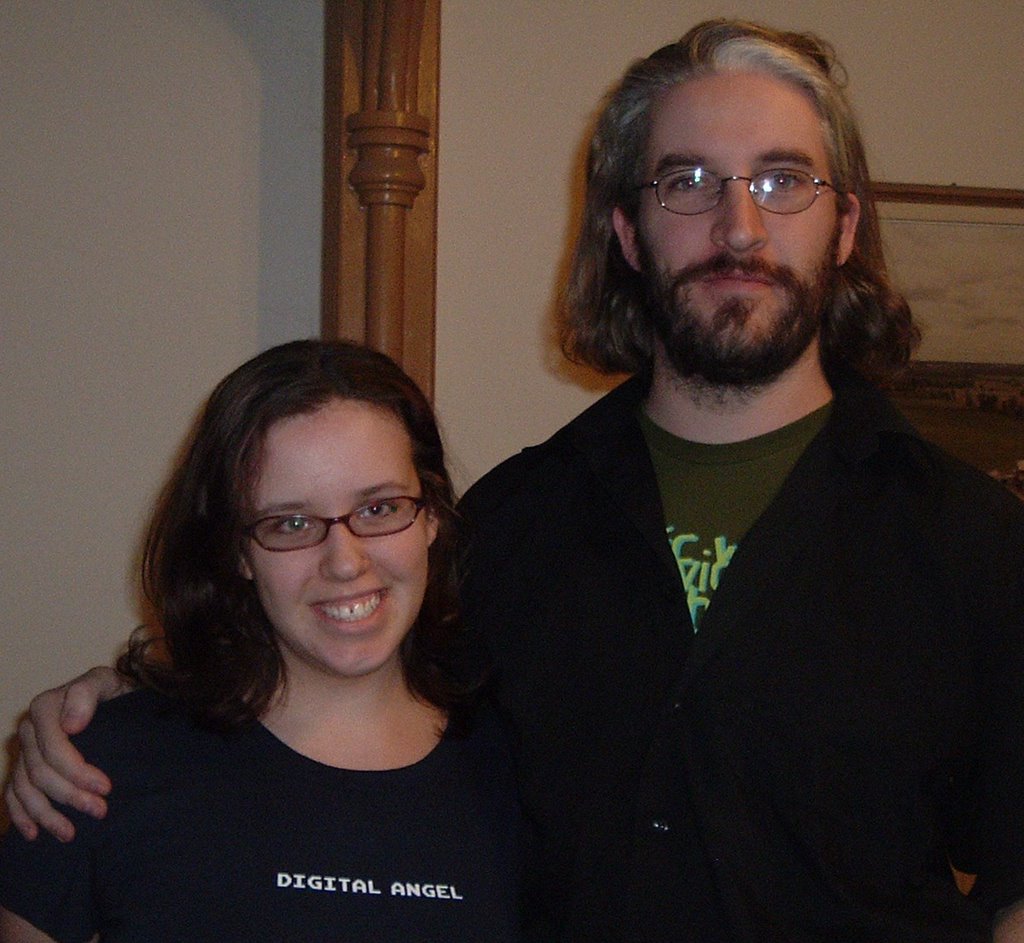
me + my lovely daughter Kate

It’s most of what I’ve been doing since coming out to my parents farm on December 23rd, just five miles west of Maxville, Ontario (home of the largest Highland Games in North America); that, and posting bits I wrote before I left Ottawa. Spending time with parents on the homestead, and my sister, her partner Corey and their daughter Emma (who just turned 2 years old; Kate and I take turns teaching her strange phrases to repeat very loudly) who live in the log house across the road (we’ve been on the same road since 1845). The poet Nicholas Lea is about two miles away on Norman Drive with his family, doing whatever it is they do.

I spent much of Christmas Eve reading a badly written book about Paul Chartier, who tried, unsuccessfully, to blow up Canada’s own Parliament in May 1966 (our own Guy Fawkes!'; see the related blog entry here). All he managed to do was accidentally kill himself, but only because he had no idea what he was doing. Reading the book, it’s actually rather frightening how close he came, failing only due to his own incompetence. The book, The Mad Bomber of Parliament (Nepean ON: Borealis Books, 2005) by James Fontana, seems to be well-researched enough, and Fontana was even on the front lines as a young lawyer (assistant Crown prosecutor in Ottawa), but really isn’t that well-written or compelling, despite the material, and presumes that the reader knows as many facts as the author does, such as mentioning the bus station on Albert Street (someone should tell him that it has long since moved; I have no recollection of it ever being there. Isn’t this something the author should be mentioning?).

Otherwise, I’ve been watching plenty of documentaries (The Real Da Vinci Code and Worst Jobs in History, both hosted by Tony Robinson, who seems to host a multitude of extremely interesting docs through BBC, and was Baldrick on Black Adder...), and episodes I missed of the past few months of Smallville (while waiting impatiently for the summer movie).

Yesterday, I went back to collect my daughter Kate (who turns 15 on January 4th; does that mean I'm an old guy?). We spent today wandering parts of Alexandria and Cornwall, doing nothing in particular (while listening to the mixed CD she made me for Christmas, with songs by Death Cab for Cutie, The Donnas, Air, The Bloodhound Gang, Coldplay and plenty of others; extremely cool). Our usual stops always include the Dairy Queen in Alexandria (I liked the building better, before the fire a few years ago; when on the farm without her, I spend most afternoons in there writing...) and the new/used bookstore on Main Street, where I usually leave handouts and pick up books on Glengarry history (if I can; most of them are bloody expensive). This time around I found The Scottish Pioneers of Upper Canada, 1784-1855: Glengarry and Beyond by (Toronto ON:Natural Heritage Books, 2005). Hopefully they'll be nice enough to send me a review copy if I ask all nice?

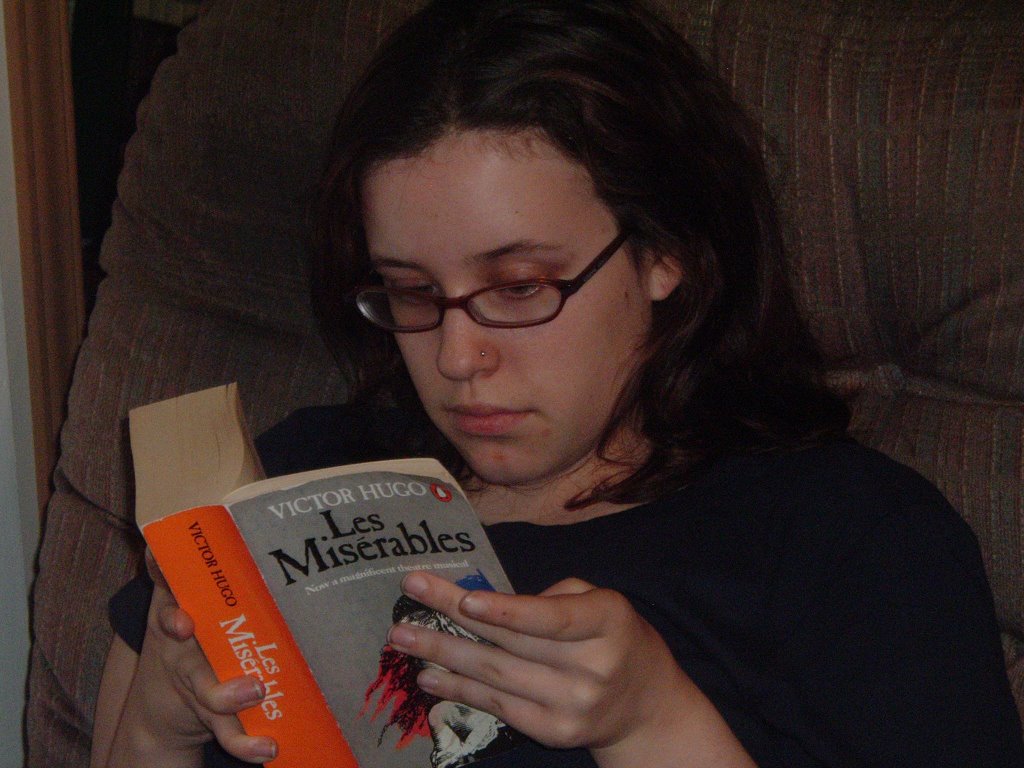
We return to Ottawa tomorrow, for whatever it is we do in the Capital. She’s been reading through the books I gave her, including Les Miserables (she requested it; she's actually a huge fan of musicals...) and The Astonishing X-Men: Volume Two, collecting the last six issues of the year long run of The Astonishing X-Men written by Josh Whedon (the guy who invented Buffy[I much preferred the movie], Angel and Firefly; I am very much hoping his run continues). In the kitchen, my father is currently working on his train (a lego-type huge model he got yesterday from Uncle Bob with nearly 1,000 pieces; he’s always been a big fan of puzzles, and other such things you have to figure out; far better than the 1980s, when he was the only one who played with my Rubic’s Cube by taking it apart and putting it back together in the right order, or the 1990s, when he would spend entire winters playing and solving the King’s Quest games, annually for the first three versions).

I was hoping to get a group photo of the whole bunch of us -- parents, sister, etc --but that doesn’t seem to have happened, again (couldn’t get one during the August long weekend either, during my sister’s third annual pig roast). At least something to show season (I'll just have to remember what they look like between now and March, when Kate and I come back here for March Break + my 36th birthday). Once I’m back at my desk, I’ll be producing smarter blog entries in no time. But one wonders, why?