Showing posts with label Anne-Marie Albiach. Show all posts

Tuesday, June 10, 2025

Meditations: The Assorted Prose of Barbara Guest, ed. Joseph Shafer


I’m so pleased to be here and of course one of my difficulties in life is not just writing poetry; it’s collecting my particles and wondering what I’m supposed to do where, so I thought today was going to be a discussion, of what the poem is about, so I brought a poem on Anne-Marie Albiach. About two weeks ago, at home, I was looking through some old diaries that of course weren’t completed but still had white pages and I saw at the top of one page—oh this was ten, fifteen years ago—“Wrote a letter to Prynne,” “Received book from Anne-Marie Albiach,” and, in little brackets, “She inspires me,” and now that I know her and know her work more, she inspires me more. So there was a birthday celebration for Anne-Marie in San Francisco and I wrote a poem to her in celebration of this, of her, of her poetry, and after I’d finished it, I realized that what I’d written about, because she is very much on my horizon, that I’d written about the process of writing a poem. So I’m going to read this [poem, “Startling Maneuvers”] and we’re going to discuss it—Mei-mei’s going to tell you what it means… [laughter]. (“A Talk on ‘Startling Maneuvers’,” 1998)

There is a lot to admire across the three hundred-plus pages of heft in Meditations: The Assorted Prose of Barbara Guest (Middletown CT: Wesleyan University Press, 2025), edited with an introduction by Joseph Shafer and foreword by Marjorie Welish. Assorted, it is called, as it is neither collected nor selected, a process of assemblage, “six decades of writing on literature and art by one of the most significant poets of our time,” the late Brooklyn poet Barbara Guest (1920-2006), a poet who first came to prominence as one of the New York School. “Barbara Guest is a poet, first and foremost. And so, when reading her writings otherwise, it is with this vocation in mind.” writes Marjorie Welish, to open her “Mysteriously Defining the Foreword.” “A celebrated New York School poet, Guest assumes that daily life, the intimacy of conversation, and friendship real or imagined are ever at hand. Presupposed also is the cultural life of the city: cafés, painters’ studios, bookshops—at least as New York was in the 1950s, 1960s, and 1970s. But she sees all these as prompts for writing through an imaginative style that invents worlds she knows are out of reach as projected fantasies of another time and place, and yet worth the challenge: the challenge to make of style a palpably lived atmosphere.”

The book is assembled into thematic sections—“LECTURES, ESSAYS, & POETIC PIECES,” “PROFILES,” “H.D.,” “OTHER FICTION” and “REVIEWS”—the breadth of such showcase a writer and thinker deep in the trenches of artistic engagement. She writes on her own practice, and the work of numerous writers and artists surrounding her, including Frank O’Hara, Charles Olson, Richard Tuttle, Helen Frankenthaler, Piet Mondrian, Anne Waldman, Kenneth Koch, Dennis Phillips, Robert de Niro (Sr.), Mei-mei Berssenbrugge, Harry Mathews, Anna Balakian, James Schuyler, Louise Bourgeois, Robert Duncan and numerous others. Her work displays a curious mind, one deep in the thick of it. As Guest quotes from Plato in her piece “Forces of Imagination,” cited as a “talk delivered in April 1999 at Guest’s award ceremony for the Robert Frost Medal for Lifetime Achievement in Poetry by the Poetry Society of America”: “If any poet were to come to us and show his art we should kneel down before him as a rare and holy and delightful being, but we should not permit him to stay. We should anoint him with myrrh and set a garland of wool upon his head and send him away to another city.”

I’m struck by numerous lines throughout this collection, including her opening commentary on a poem by French poet and translator Anne-Marie Albiach (1937-2012), the opening paragraph of that particular lecture I quote above, at the offset of this particular review. Further along in the same piece, responding directly to that particular poem by Albiach, Guest offers: “My interpretation of this is that when you come to the point in a sensibility when you’re approaching a poem, that is the preparation, and there is always a stasis, which contains balance and then non-movement. You are prepared to move but you’re still balancing yourself. And the pull in the composition, which is physical because it has to announce itself and it announces its frailty, its physical presence, and that’s why its tug is phantom-like. And it’s beginning to have its phantom-shadow on the poem. And this pull is so extraordinarily important because if you don’t feel the pull between the poem and you, then you somehow or other don’t manage to produce anything that has much energy.”

As most books of this nature, this scale, have worthy stories to tell of how they came to be, this particular project’s timeline is a bit longer than most, as editor Joseph Shafer writes to open his introduction:

In the summer of 2004, Barbara Guest signed two contracts with Suzanna Tamminen, the editor at Wesleyan University Press. One was for a collected poems and the other for a collected prose. The projects were actually proposed together five years earlier in 1999, after Wesleyan published Guest’s Rocks on a Platter: Notes on Literature, a turn-of-the-century quasi-manifesto in the spirit of Stéphane Mallarmé’s Un coup de dés. But several years went by between that initial proposal and the eventual signing because Guest and Tamminen were busy publishing Miniatures and Other Poems (2002). Once those contracts were filed, conversations about what either a collected prose or poems would entail had to be postponed as their attention was directed back toward the release of The Red Gaze (2005). Thus, when Guest passed away on February 15, 2006, neither a collected poems nor a collected prose had taken shape.   

I’ll admit, I’ve been aware of Guest’s work for some time, but have only taken cursory glances at The Collected Poems of Barbara Guest (Wesleyan, 2013), a project begun while the author was still alive, but completed by her daughter, Hadley Baden-Guest, for the sake of publication. A collection such as Meditations, offering her conversation and thinking on writing and visual art, I would argue, makes for a remarkable entry point to her work, one rife with stellar lines and numerous prompts into other directions. Her work on H.D. (1886-1961) alone is intriguing, and would make for an interesting counterpoint to the extensive work by Robert Duncan (1991-1988) [discussed at length by Toronto poet and critic Michael Boughn through his own essays, which I reviewed here], which she references as well, within her pieces assembled here. “Since the completion and publication of my biography of H.D.,” she writes, to open “The Intimacy of Biography,” “I now realize that I have been seeking that special state of grace I had experienced while writing this book, and this has departed with the disappearance of H.D. and her companions from my immediate life. I reach out in search of that powerful light, or that sombre candle that lit the landscape of my own life as I struggled through the successive vales of a heretofore uncharted realm.”

Separately, I’ve heard talk of Norma Cole co-editing a forthcoming new volume of collected or selected poems of Guest’s poems, which is intriguing, given the fact that the prior volume assembled all of Guest’s published work. It makes me curious at the framing, the argument, of this upcoming collection. Will it include work previously uncollected, unpublished or otherwise unseen? Or will it focus more on certain aspects of her larger publishing history, certain collections, with a refreshed or expanded framing? Either way, I am intrigued.
Tuesday, September 07, 2021

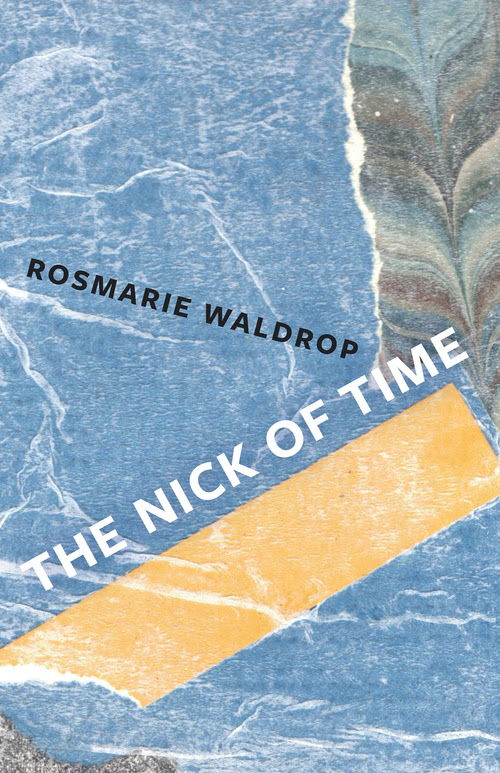
Rosmarie Waldrop, The Nick of Time


Meanwhile you cling to your book. Do the words still float you to Prospero’s island? Or drop, separate coins, bringing no dew from the Bermudas? I put my hope in the fundamental difference between local time and time at a distance. Make a show of clearly contoured identity, no matter if you can connect it to family structure. A stable body with only occasional modification. Rather than molecules and feelings in violent agitation. Let alone quanta dissolving into vibrations of light. You stare at your left little finger, which is crooked. (“BITS AND PIECES”)

The latest from the legendary German-born American poet, editor, translator and publisher Rosmarie Waldrop is The Nick of Time (New York NY: New Directions, 2021), a collection self-described as: “Ten years in the making, Waldrop’s phenomenally beautiful new collection explores the felt nature of existence as well as gravity and velocity, the second hemisphere of time, mortality and aging, language and immigration, a Chinese primer, the artist Hannah Höch, and dwarf stars.” The author of numerous titles over the past five decades-plus, this is her first full-length collection of new work since Driven to Abstraction (New Directions, 2010), although the past decade has also seen the publication of multiple chapbooks, as well as the impressive (and, I dare say, essential) volumes Gap Gardening: selected poems (New Directions, 2016) [see my review of such here] and Rosmarie and Keith Waldrop: Keeping / the window open: Interviews, statements, alarms, excursions, edited by Ben Lerner, with an introduction by Aaron Kunin (Wave Books, 2019) [see my review of such here].

The Nick of Time is a book of mortalities, writing her book-length suite of prose poem sequences and short bursts, each of which are constructed as collages of strands that form new quilts of meaning. “The difference of our bodies makes for different velocities.” she writes, as part of the final poem in the collection, “AGING,” the final poem of the suite “REHEARSING THE SYMPTOMS,” “But gravity / is always attractive, and my higher speed. Cannot outrun the inner / fright we seem made of. Though I gesticulate broadly. As in a silent / movie. Running after the train, waving goodbye.” As one could speak of her writing at any point across her lengthy publishing history, Waldrop writes on language, reading and perception, and the ways through which we think of the relationships between and amid meaning. The poems that shape to form The Nick of Time also incorporate and investigate concepts such as America, mortality and aging, crafting each poem as a furthering of her decades-long investigations into language, theory and philosophy. As she writes as the third of the eight-part “INTERVAL AND HIGH TIME”:

Am I one of those immigrants who never discover America? Never truly arrive? Am I trying to reconstruct the places I left behind with French wine and books from Germany? Though words like raccoon, skunk, hickory, Narragansett, Pawtucket, and Pawcutack. Have entered my vocabulary. Am I focused on the wake behind the boat that brought me rather than its destination? But you, through from heartland Kansas, are not all forward-looking either. You see a shimmer of sun on water. And don’t go build a boat.

As part of her conversation around mortality, the poem-sections are interspersed with a string of single, self-contained “Laments,” each composed for late friends and literary contemporaries: Barbara Guest, Robert Creeley, Anne-Marie Albiach, Michael Gizzi and Edmond Jabès. “My book is the fall of a body, you said.” she writes, to open “A COMLICATION OF GRAVITY,” her “Lament for Anne-Marie Albiach, 1937-2012,” “Yours, fragile, premeditated. / Into the depth of the page, where mysteries might still speak. And / time passes with infinite resources of slowness and is its own project / of erasure.” Through The Nick of Time, Waldrop writes more overtly of mortality, but her writing has always been aware of not only the passage of time, but time’s measure, cadence and relation. In an interview conducted by Matthew Cooperman in 2006 for Denver Quarterly (an excerpt of which is included in Keeping / the window open: Interviews, statements, alarms, excursions), she responds:

In language, it is the space between words that lets us recognize the words as words. And in poetry, it is the interval, the empty space from one line ot the next that defines the verse. It sets the rhythm and also makes visible the nothing, the not-said, against which we pit our words. For the fraction of a moment, this void stops everything. It suspends the assurance of statement to reintroduce uncertainty, doubt, potential. It makes visible the possibility of language, of representation, of music.

There is such a music to her writing, one that (in recent conversation) Christine McNair suggested was in part due to the fact of Waldrop composing English-language sentences and phrases utilizing German-language structures (as German was Waldrop’s first language, naturally), something that might not have occurred to omnilingual me. Perhaps in no small part to her existing within that space between and amid multiple languages (both through writing in English as someone raised in German, or her lengthy career as a translator), Waldrop’s work has always been attuned to the minutae of how language is structured and constructed, allowing the collisions that emerge from unexpected assemblages and phrasing. How she is saying impacts and reveals the what of her communication, propelling the possibilities of language across her lyrically-dense sentences. And through her longer prose sequences, she pulls at the threads of expected meaning, furthering a thought and a line out into such wonderful spaces. As she writes as part thirteen of the nineteen part poem “WHITE IS A COLOR”: “I make random forays. From your gravitational pull. As if there were / paths out of orbit. As if not every second were unraveled. As if I were / not locked in lost for words. You cling to your bed as if it were the / frame you’re painted into.”

Friday, May 10, 2013

Letter to Norma Cole (some notes on the prose poem)


July 17, 2012
Ottawa, Canada


It’s been two years since I stayed in the nearly-former apartment of Toronto writers Stephen Cain and Sharon Harris, after helping them move into their new house. They had a box of books they were sending to Goodwill, and I picked out a couple of items, including the anthology you edited and translated, Crosscut Universe: Writing on Writing from France (Providence RI: Burning Deck, 2000), along with some other titles I probably shouldn’t mention. They had too many books. I’ve been meaning to thank you, and thank them as well.

The anthology contains works by sixteen writers, which the introduction describes as a series of “Texts, interviews, critical pieces, journal entries, letters, worknotes and at least one simple list make visible and audible an openwork of embodied voices in conversation, in the deliberate breaking open of intentionalities, isolating single elements at one extremity, multiple folds, complex rhythmic architectonics in the process of being constructed and deconstructed at the other.” You translated from the French works by Joë Bousquet, Emmanuel Hocquard, Claude Royet-Journoud, Anne-Marie Albiach, Raquel and others. It would be hard for anyone to not get caught up in the lyric prose line being presented. The lyric flows like water, here; why do so many lines of prose by English-language writers fail to float so smoothly in comparison?

The activity of writing is more than activity, as you wrote in your introduction, “Writing is action, the phenomenological self entering language, already a specific set of conditions within conditions.” I would enter the language, during daily writing sessions at The Good Neighbour Café on Annette Street, just by the Junction. The cadence and the lyric of the French abstract in some of the pieces immediately struck me, especially the work of Emmanuel Hocquard, which slowly began to impact the short short stories I’d been working on, and later, the prose poems I was only beginning to compose. Here is one of those stories:

I am writing a novel called ‘James Joyce in Montreal,’ to accompany the drawing you left. Ten chapters each featuring an entirely different character, but all sharing the same, ordinary name. There are no coincidences. In Labyrinths, Borges repeated, what we seek, is often nearby.

I admired Hocquard’s series of compact, straightforward lines that accumulated to become something slightly less concrete, and yet, far more than their sum. There was something to the connections made between and amid the disconnect that was astounding.

By that point, I’d been at least half a decade reading examples of the American prose poem, something far more prevalent than its Canadian counterpart, from writers such as Sheila E. Murphy, Lea Graham, Noah Eli Gordon, Joshua Marie Wilkinson, Kathleen Fraser and Rosmarie Waldrop. My own poems had been years experimenting with rhythm, sound and line breaks. I was in the midst of the “Miss Canada” manuscript, a book that stretched the length and breadth of 2010, composing poems that held and broke breath. I knew that once I had finished that collection, I wanted to move in another direction; I wanted to see what might happen if and when I stopped relying on line breaks and spacing. I wondered, what surprises might the prose poem hold? Once you learn how to do something, the painter Diane Woodward told me, move on.

Before this, I’d been intrigued by the use of the poetic line, and the sentence, through the work of Americans and Canadians alike, such as Cole Swensen, Lisa Robertson, Lisa Jarnot, Erin Mouré, David Donnell, Nicole Markotić and Robert Kroetsch. There is so much untapped potential in the sentence. How does one even start to approach the possibilities? I had long filed the prose poem away in the back of my head, waiting for other writing and editorial projects to come to maturity; to be able to bring my full attention to the form. I don’t need to completely understand a form to begin, but at least some kind of initial comprehension is required. Often, I know, the best way to understand is to simply begin. Specifically, I was struck by the way Hocquard’s prose-pieces blended elements of poetry, fiction and the short essay, opening up the form to a kind of “catch-all,” able to hold just about any idea, concept or subject matter.

ROBINSON METHOD

When Crusoe landed on his island after the shipwreck, he was not yet Robinson. He would be Robinson from the moment that, finding neither pen nor pencil in the jetsam, he liberated a cutter and some books. from these found objects would be born the method that names him.

            Robinson speaks alone (V. Solitude), in words he learned while he was still Crusoe, words he arranges as memories, that is, as objects of memory-language. Robinson on his island acts like Crusoe before the shipwreck but makes the same thing resonate differently.

            The island is elegiable. Cut off from the world, with the fated means that are his, Robinson will reproduce Crusoe’s world. He is a copier. And every copier, even the little classroom copier ripping off his desk partner, is an islander. Oliver Cadiot’s Future, ancient, fugitive is, just like Perec’s I remember, a splendid elegy. (Emmanuel Hocquard, trans. Norma Cole)

The French writing I’d predominantly been aware of previously had been Canadian, including the work of Nicole Brossard and AnneHébert, but remarkably little else in regards to poetry. Despite a series of translations through Coach House Press from the 1970s onward that focused on fiction, the divide between French and English Canada remains. Perhaps for this reason, it was the prose out of Quebec that resonated most, the novels of Dany Laferrière and Daniel Paquin informing my writing far more than any Quebecois poets. It’s an interesting difference, to be influenced by the French writers of Canada versus the French writers from France. As you know, it’s an entirely different vocabulary. To understand the difference of influence might mean comprehending the mechanics of the language, and the divergence from European to Quebecois French. Something about the limits of translation or the delicacy of translating these differences. I have no idea; haven’t even begun.

Today I am not writing, I am seeing to the house of writing, and you are there, in the garden light. (Edith Dahan, from “Giudecca,” trans. Norma Cole)

In these works translated from French, there is such a lovely abstraction of subject and meaning the prose allows. It wraps around ideas as opposed to the physical. In contrast, I’ve been quite baffled reading Russell Edson, having heard he is considered the father of the American prose poem, and how much writers such as Deb Olin Unferth and Sarah Manguso (a writer I greatly admire) are influenced by his work. His poems read like short stories, known by Geist magazine and others as “postcard fiction.” Lydia Davis reads more lyric than these. Where is the poetry in Russell Edson? Whereas Unferth and Manguso have far surpassed him in quality and vigour, turning the influence of his prose poems into spectacular prose. I don’t understand the appeal. I suspect in some parts of the United States, this might be akin to a heretical statement.

This collection of yours has informed pieces of mine in various poetry manuscripts, an influence running through the length and breadth of my poetry since. Crosscut Universe: Writing on Writing from France taught me how to begin. Does that make sense? Perhaps it came at the right time. Perhaps I give the collection itself too much credit. I have been learning, learning and re-learning the sentence. There is a fragment of an interview I keep repeating, conducted by Kai Fierle-Hedrick in The Chicago Review (51:4/52:1, spring 2006), as Lisa Robertson responds: “I’m really a gentleman collector of sentences. I display them in cabinets.”

The Sentence

The sentence always translated from an other language, the sentence unfounded, the sentence of liquid shadows beyond which we do not look, writing it, (Dominique Fourcade, trans. Norma Cole)

In your collection, the distinctions between genres don’t seem to even exist. My explorations in short prose and the prose poem overlap so heavily, and yet, a line divides the two. Some have suggested my short stories might do better if I called them poems, but they aren’t poems; they’re stories. Despite their brevity, they each tell a deliberate narrative in a linear fashion. In the poems, I’m interested more in what I’ve long been exploring through the form – movement, sound and abstract, lyric exploration, composed more as an accumulation or collage. The logics needn’t be apparent and the narrative is non-existent. It might not be how I distinguish the forms generally, but its how I do for my own writing. There is no story, but instead, a series of sweeping gestures, such as this piece from the sequence “Escarpment pages,” a prose poem sequence from “If suppose we are a fragment.” The twelve poem sequence opens with a quote from Kathleen Fraser, “Dear other, I address you in sentences.”

The invention of writing

Ingrained, this resistance to struggle. Mathematical points. I repeat the arousal song of her borders, even as I step back. Sometimes I get turned around. Snow squalls, threatening daybreak. Had you ever wondered. Had she. We were marking up hours. Filament of the speed that the brain changes colour. We have not arrived. We are here. An experience of spiders. Saw you last from those uppermost branches. Or was that her. Words trickle down into feeling. New paper we press with first language, our hands.

I sound obsessed with boundaries, and perhaps I am, but as a series of guidelines as opposed to strict rules. I want to know where to blend one into the other. The works in Crosscut Universe, on the other hand, define no line at all. Have you read any of the work of Vancouver writer Michael Turner? His work manages the chimera between what isn’t entirely a poem, and isn’t entirely a story, but something else, entirely. I am seeking to open a series of possibilities. Or perhaps, I wasn’t listening in the right way until now. I’ve been interested, too, in discovering more of your own writing, the influences that some of these texts may have had, along the lines of influence I’ve seen from the Galacian in Erin Mouré’s poetry, or the French in the poetry of Cole Swensen and Rosmarie Waldrop. Perhaps I should start translating. Is it essential to know a second language to begin?

best,